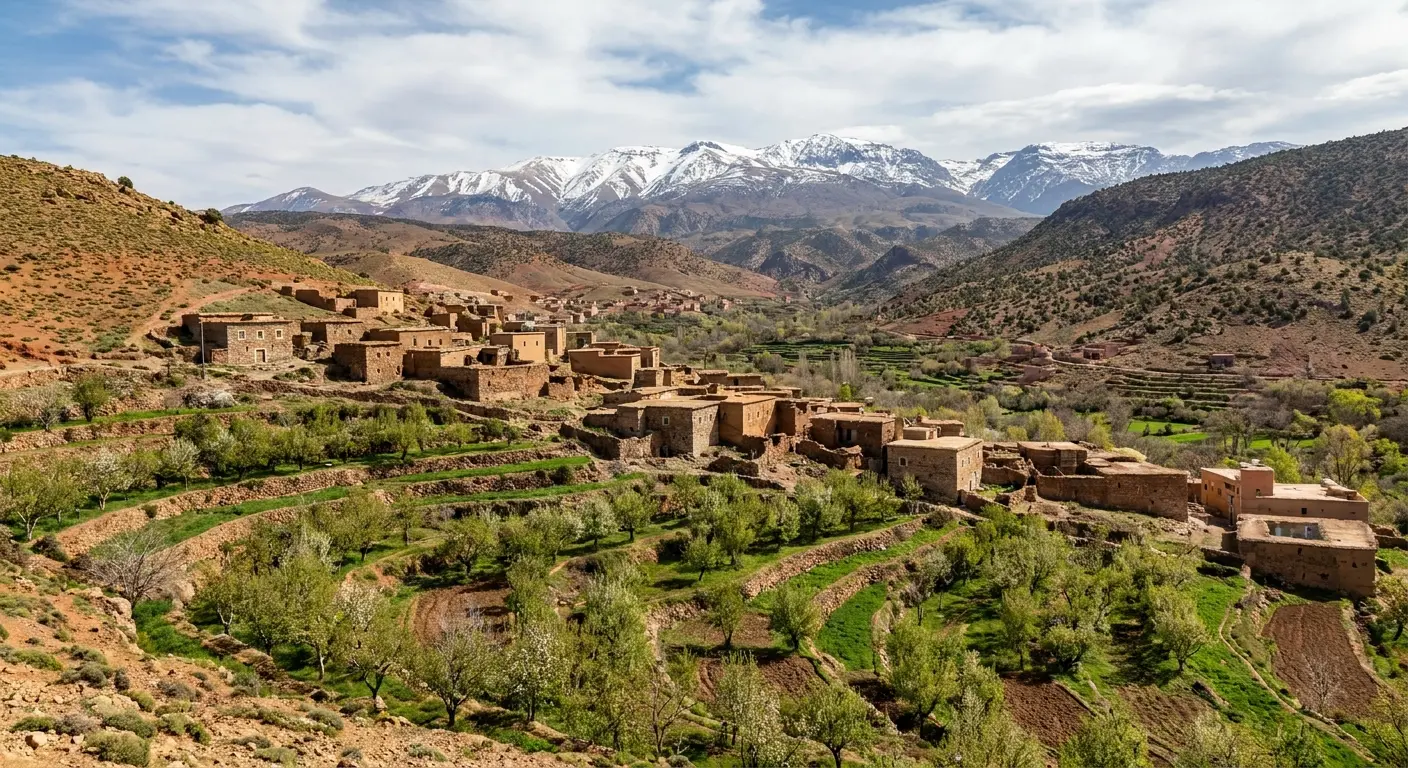
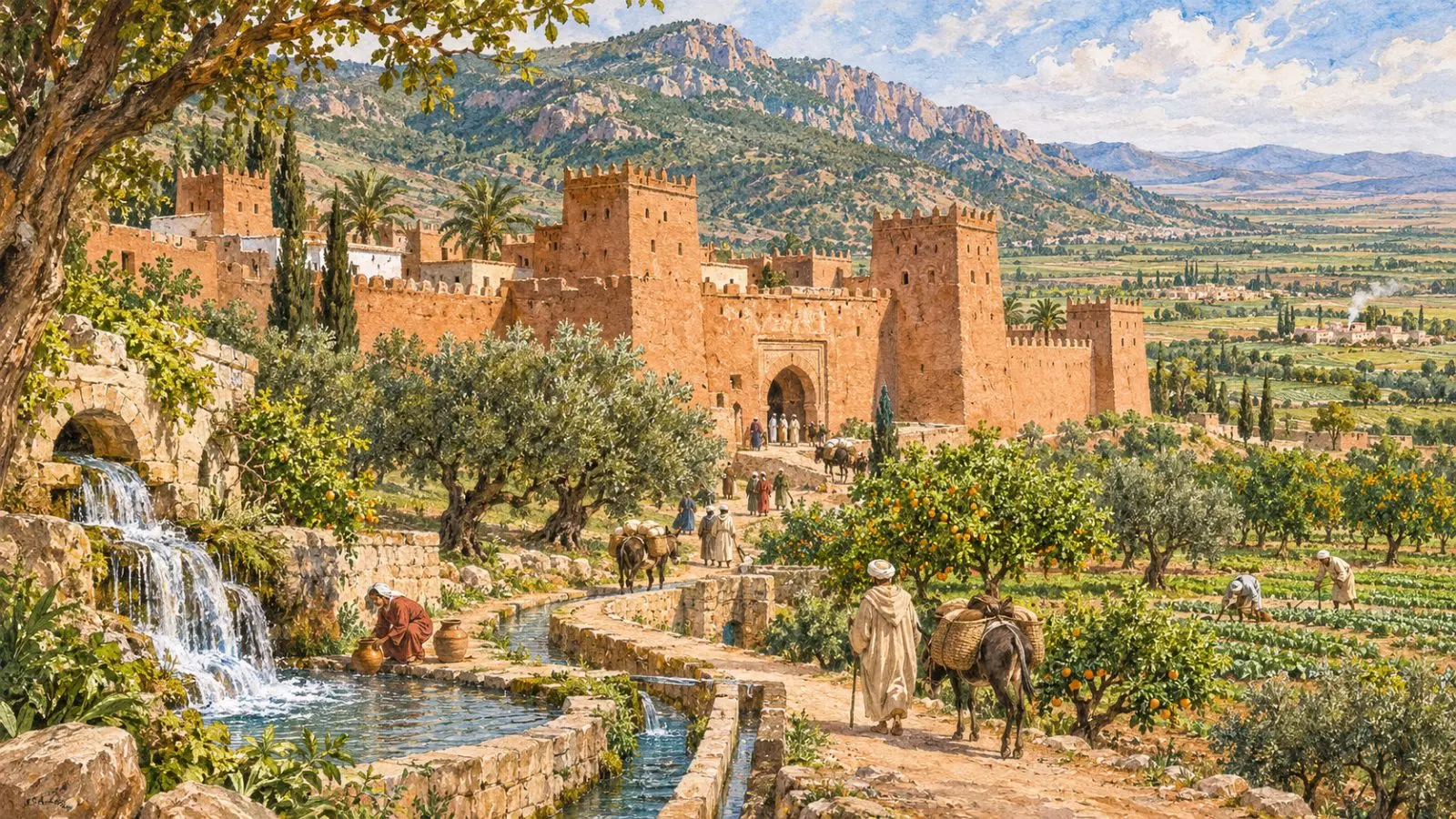
the kasbah of Beni Mellal at the foot of the Atlas

THE BOOK OF

Beni Mellal — All about Beni Mellal

بني ملال

History, places, people, culture and food of Beni Mellal, told by two Moroccans.

10 chapters3 min readBy Yassine and Issam
Things to do in Beni Mellal
CONTENTS · I
  1. I. At a glance
  2. II. History
  3. III. Key dates
  4. IV. Landmarks
  5. V. People
  6. VI. Culture and traditions
  7. VII. The people
  8. VIII. At the table
  9. IX. Did you know?
  10. X. Frequently asked questions

CHAPTER I

At a glance

Backed against the Middle Atlas and facing the great Tadla plain, Beni Mellal lives from its springs, olive trees and orange groves. Its Ras el-Ain kasbah dates from Moulay Ismail, and the Ouzoud falls are under two hours away.

Arabic name
بني ملال
Other names
Day · Kasbah Bel Kush
Coordinates
32.3373, -6.3498
Best months
Apr, May, Sept, Oct

CHAPTER II

History

Hisn Dai, a medieval stronghold
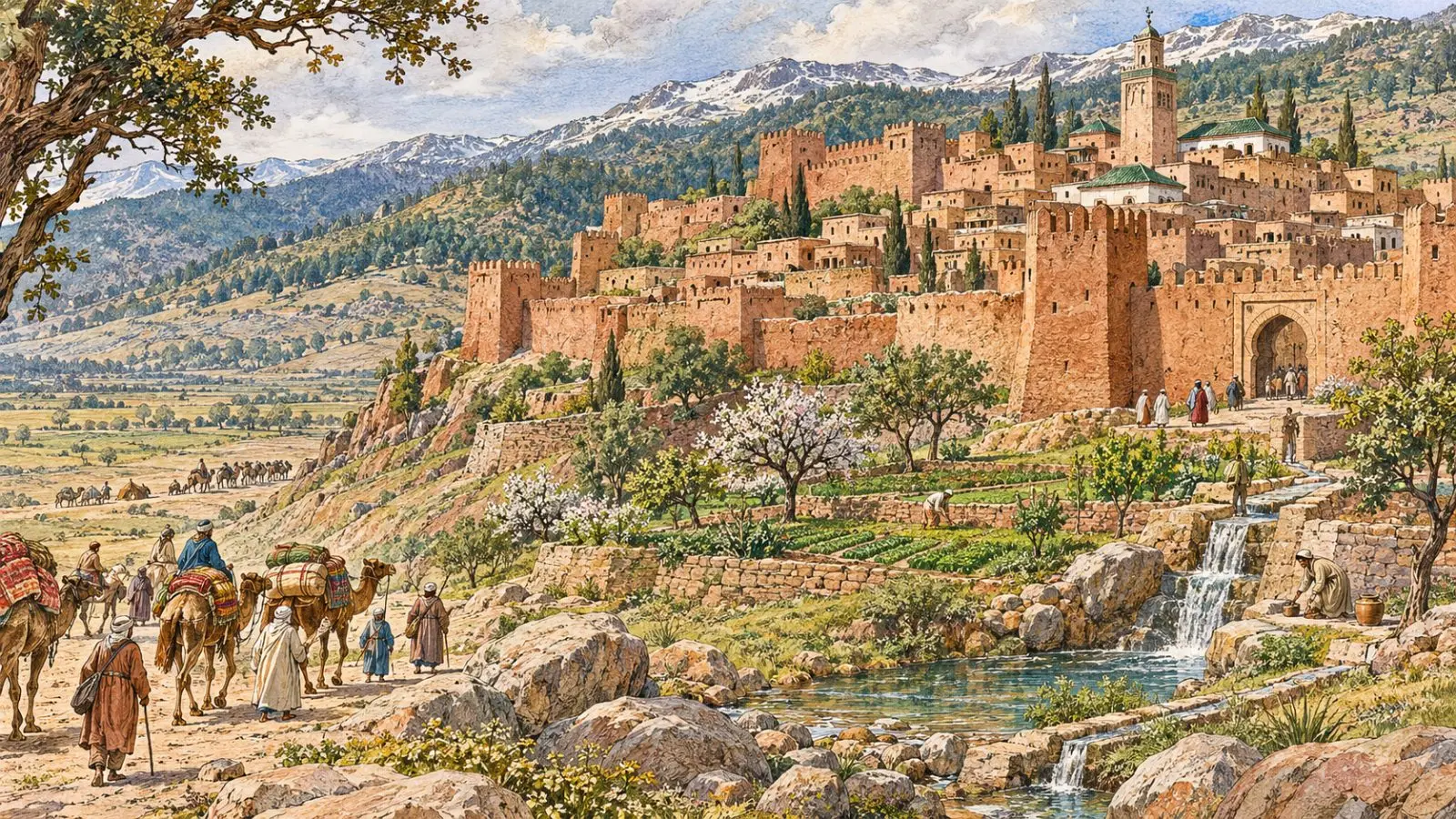
Hisn Dai, the medieval stronghold

Medieval Arabic sources say little about the site. It may correspond to Hisn Dai, a town entrusted in the 9th century to the Idrisid prince Yahya ibn Idris, son of Idris II, and taken by the Almohads in 1141.

The town was called Kasbah Beni Mellal, but also Bel Kouch, from "kouch", black in Amazigh. Its present name comes from the surrounding tribe, the Beni Mellal, an Arab tribe of Jusham origin whose ancestor is said to be Muhammad al-Mallal.
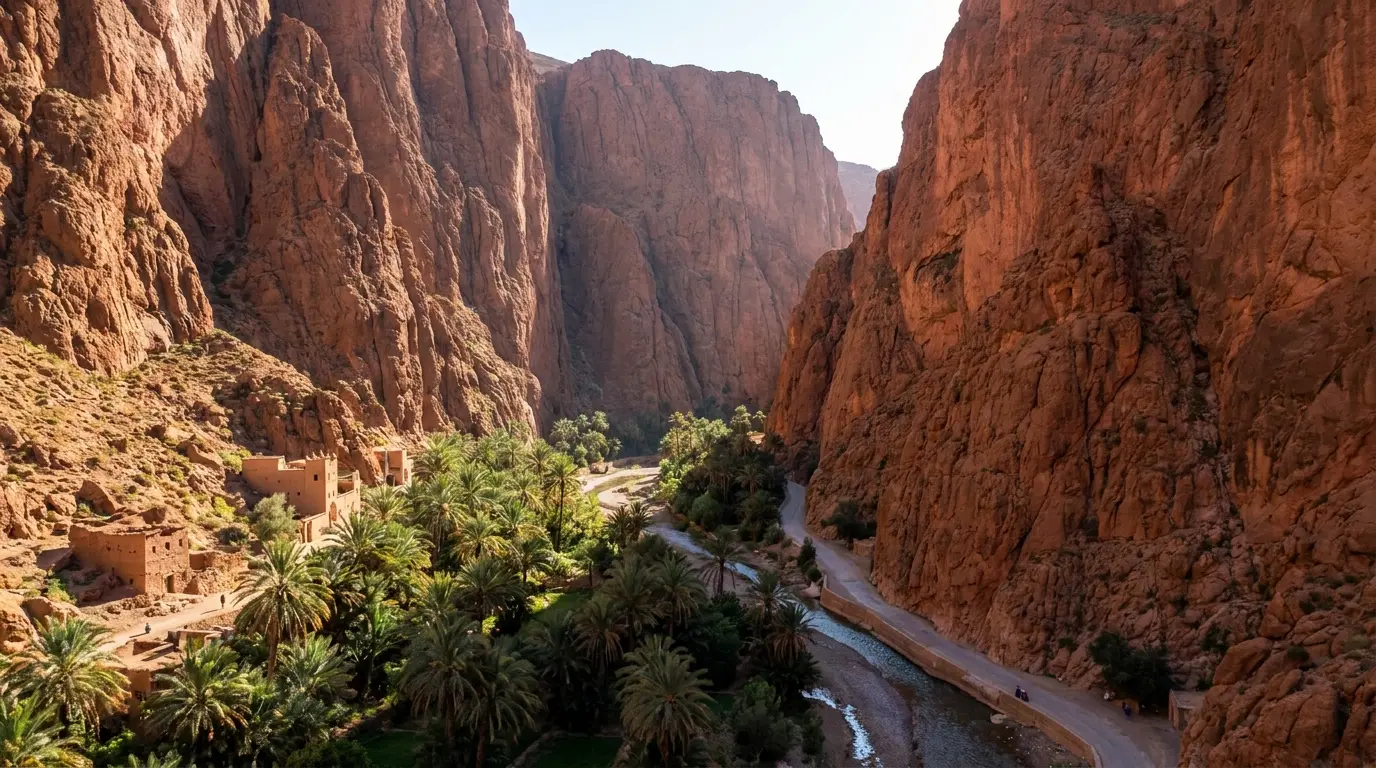
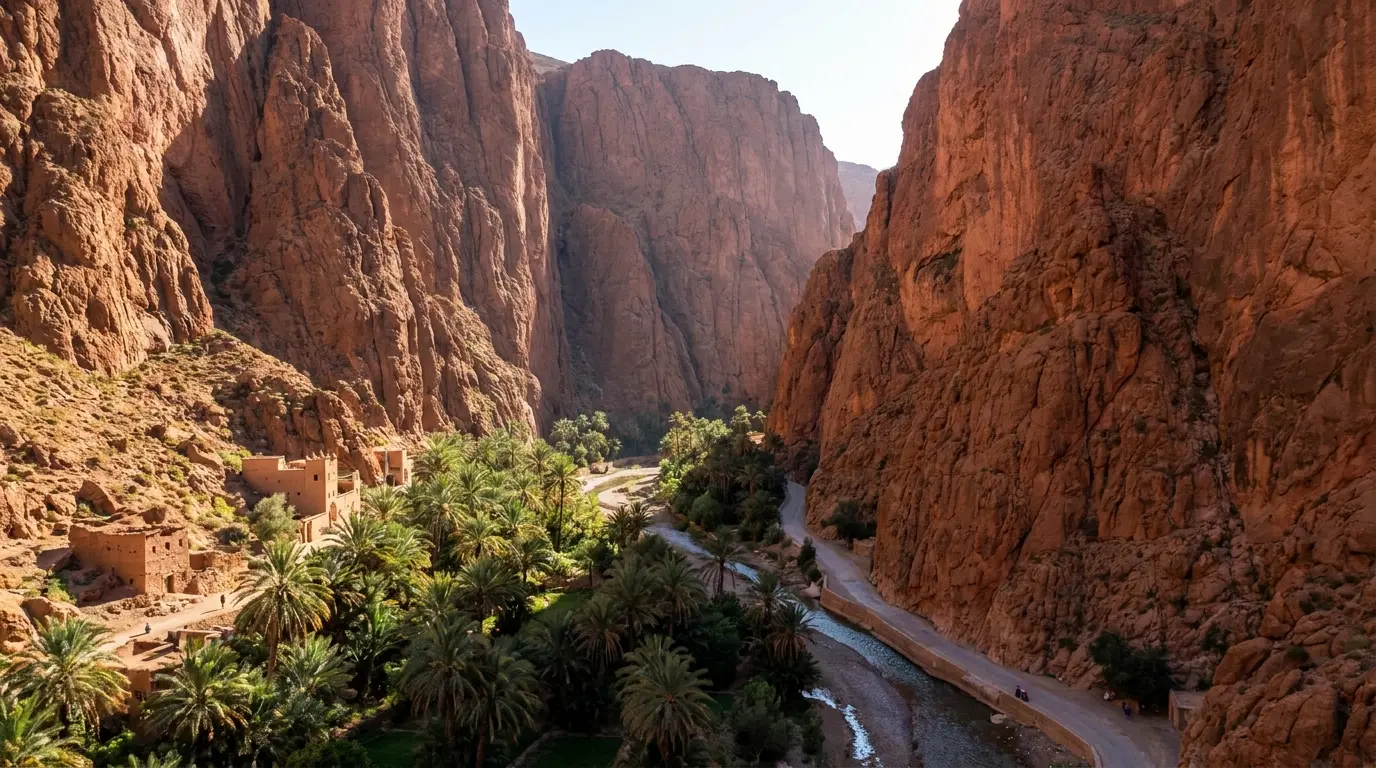
Moulay Ismail's kasbah (1688)

In 1688 the Alaouite sultan Moulay Ismail built a kasbah at the foot of the mountain, near the Ain Asserdoun spring, to control the Tadla plain and the routes to the Atlas. Today's town grew around it.

The kasbah, now called the Ras el-Ain kasbah, was restored in the 19th century by Sultan Moulay Slimane, then in 1916 by the protectorate administration.

From 3,000 people to regional capital

In 1918 the town had only about 3,000 inhabitants. Under the protectorate, major irrigation works on the Tadla plain, fed in particular by the Bin el-Ouidane dam completed in 1953, turned the region into a farming breadbasket: citrus, sugar beet, olives.

Beni Mellal became a large city and, since 2015, the capital of the Beni Mellal-Khenifra region. It is also a land of emigration, mainly to Italy and Spain.

CHAPTER III

Key dates

  1. 1000–1200

    Medieval geographers describe Day, the town that preceded Beni Mellal.

  2. 1688

    Moulay Ismail builds Kasbah Bel Kush above the springs of Ain Asserdoun.

CHAPTER IV

Landmarks

1

Ain Asserdoun

The spring and its terraced gardens, above which stands the Ras el-Ain kasbah, looking over the whole plain.

2

The Ouzoud falls

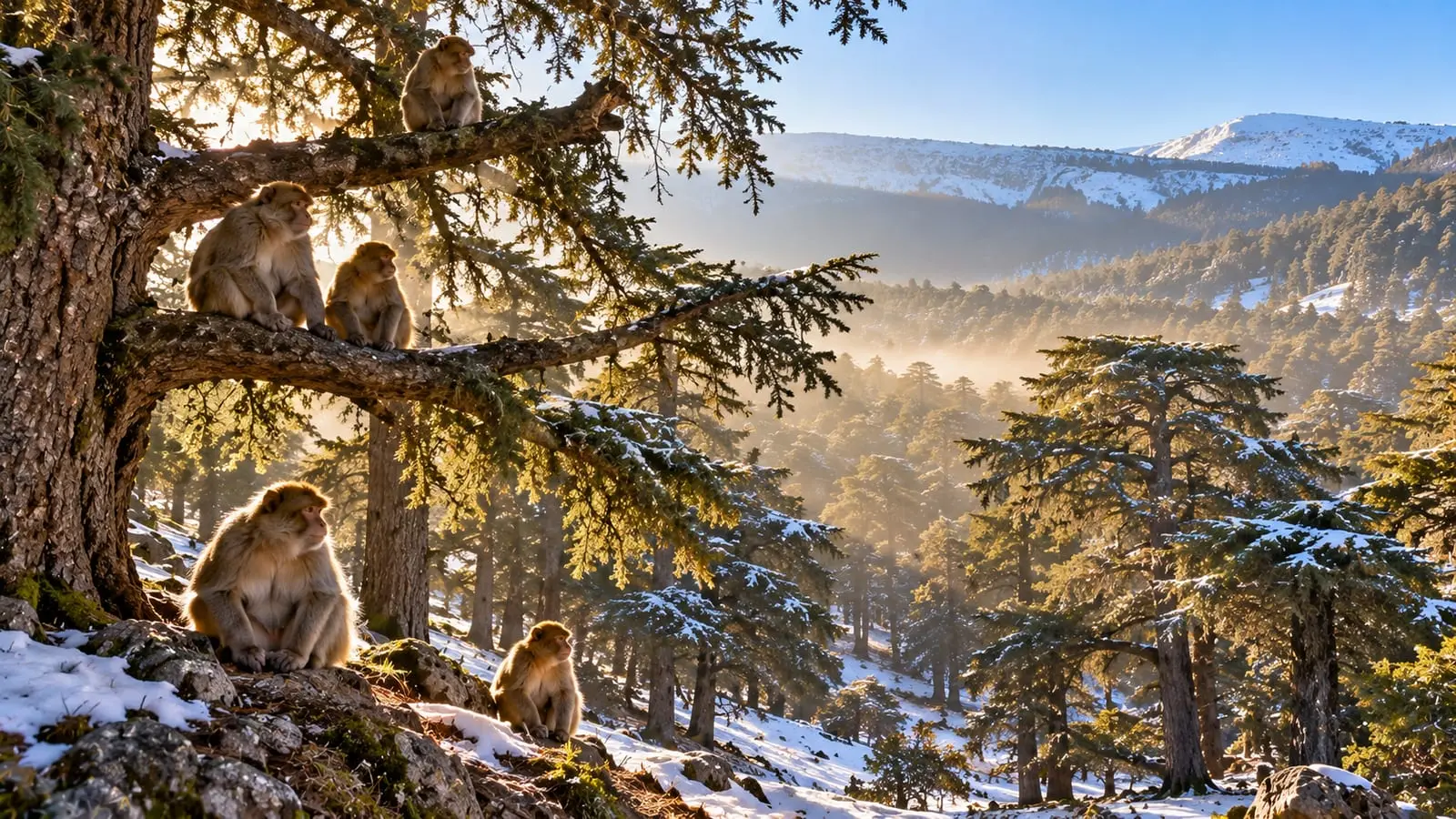
Over 100 m of falls, macaques and olive trees: the region's star outing.

3

Lake Bin el-Ouidane

A turquoise lake among the mountains, for kayaking, swimming and guesthouses.

CHAPTER V

People

  • Moulay Ismaïl1645–1727He fortified the town and built the Ras el-Ain kasbah.

CHAPTER VI

Culture and traditions

Mountain and plain

The weekly souks mix Amazigh highlanders and Arabic-speaking Tadla farmers; the region is also a big source of emigration to Italy and Spain.

The weekly markets (Mondays) attract Berber farmers from throughout the region. The Tadla plain is Morocco's olive oil heartland — cooperative presses are active from November to January. The Aït Bou Guemez Valley (1.5h drive) is one of Morocco's last traditional Berber villages.

CHAPTER VII

The people

Between plain and Atlas

Residents come from the Arab tribes of the Tadla plain and the Amazigh mountain tribes. The region is also a land of emigration, notably to Italy and Spain.

Tadla speech

Plains darija is known as frank and rural; in the mountains people speak Tamazight. Aita and sheikhat music liven up celebrations.

CHAPTER VIII

At the table

Oranges and oilFresh orange juice all over town and olive oil from the foothill cooperatives.

CHAPTER IX

Did you know?

  • The Bin el-Ouidane dam, completed in 1953, was long the highest dam in Africa.
  • The Ouzoud falls take their name from the Amazigh word for "olive", after the nearby groves and mills.
  • The Tadla plain is one of Morocco's breadbaskets: citrus, sugar beet and olives.

Frequently asked questions about Beni Mellal

How many days do you need in Beni Mellal?

Allow 1–2 days to see Beni Mellal without rushing. That is the length we use in our itineraries.

When is the best time to visit Beni Mellal?

The best months for Beni Mellal are April, May, September and October.

How much does a day in Beni Mellal cost?

Per person per day, accommodation included: about $25 on a budget, $60 mid-range and $140 for a luxury stay.

How do you get to Beni Mellal?

CTM buses from Casablanca (3h), Marrakech (3h), Fes (4h). No train. Small airport with limited service.

What is there to see in Beni Mellal?

The must-sees of Beni Mellal: Cascades d'Ouzoud, Kasbah Ras el-Ain and Source Ain Asserdoun.

What should you eat in Beni Mellal?

To taste in Beni Mellal: Khobz, Moroccan mint tea, Oranges with cinnamon and Msemen.

Where should you stay in Beni Mellal?

The best areas to stay: City center.

Is Beni Mellal safe?

Yes, Beni Mellal welcomes many travellers every year. The precautions are those of any tourist destination: watch your belongings in crowds, politely turn down unofficial guides, agree on a taxi fare before getting in.

Is Beni Mellal good for families?

Yes, Beni Mellal is easy to visit with children.

Sources

To go further and check what we write.

Other sources

Read next

THE END

Now go and see Beni Mellal.

By Yassine and Issam · Spotted a mistake? Tell us