The regions of Morocco
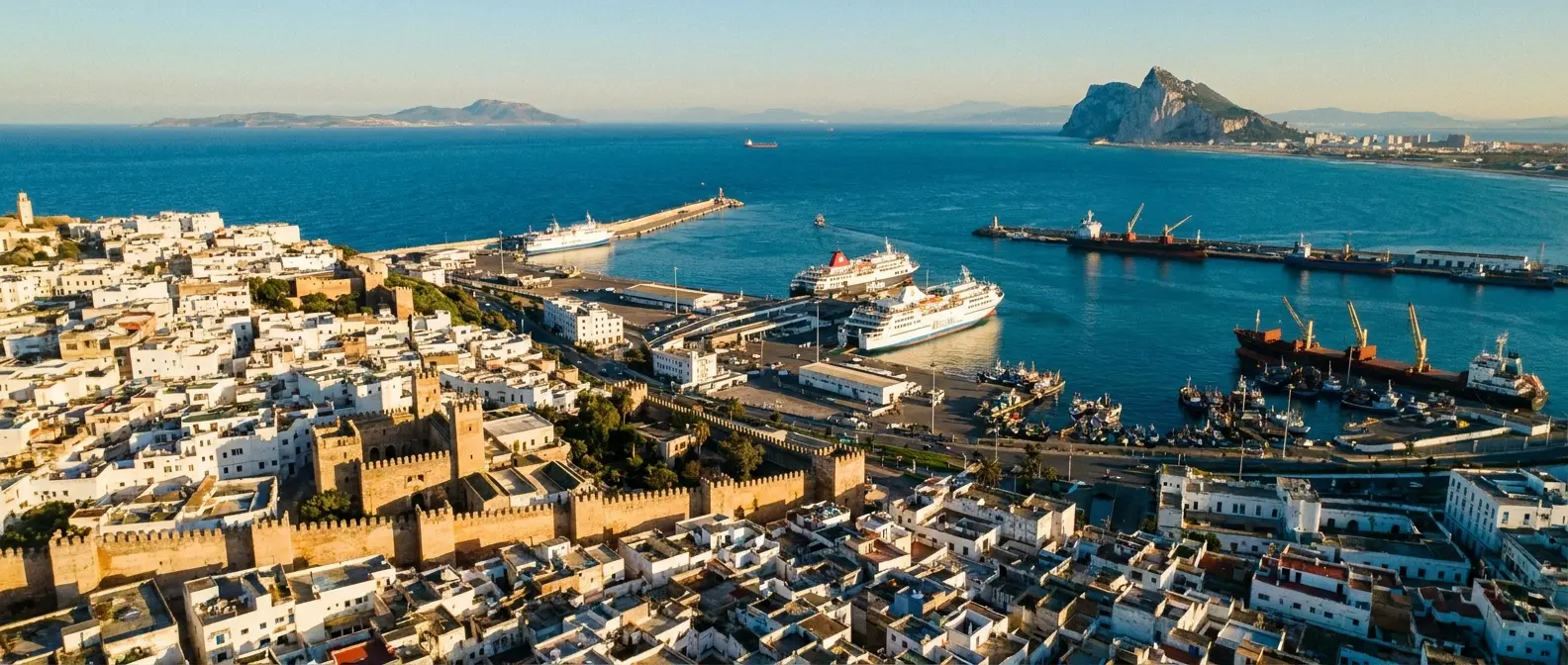
Tangier-Tetouan-Al Hoceima
Morocco's northern tip, facing Spain across the Strait of Gibraltar. Phoenicians, Romans, Portuguese, English and Spanish all held its ports, and the Andalusians who fled Spain after 1492 shaped Tetouan and Chefchaouen.
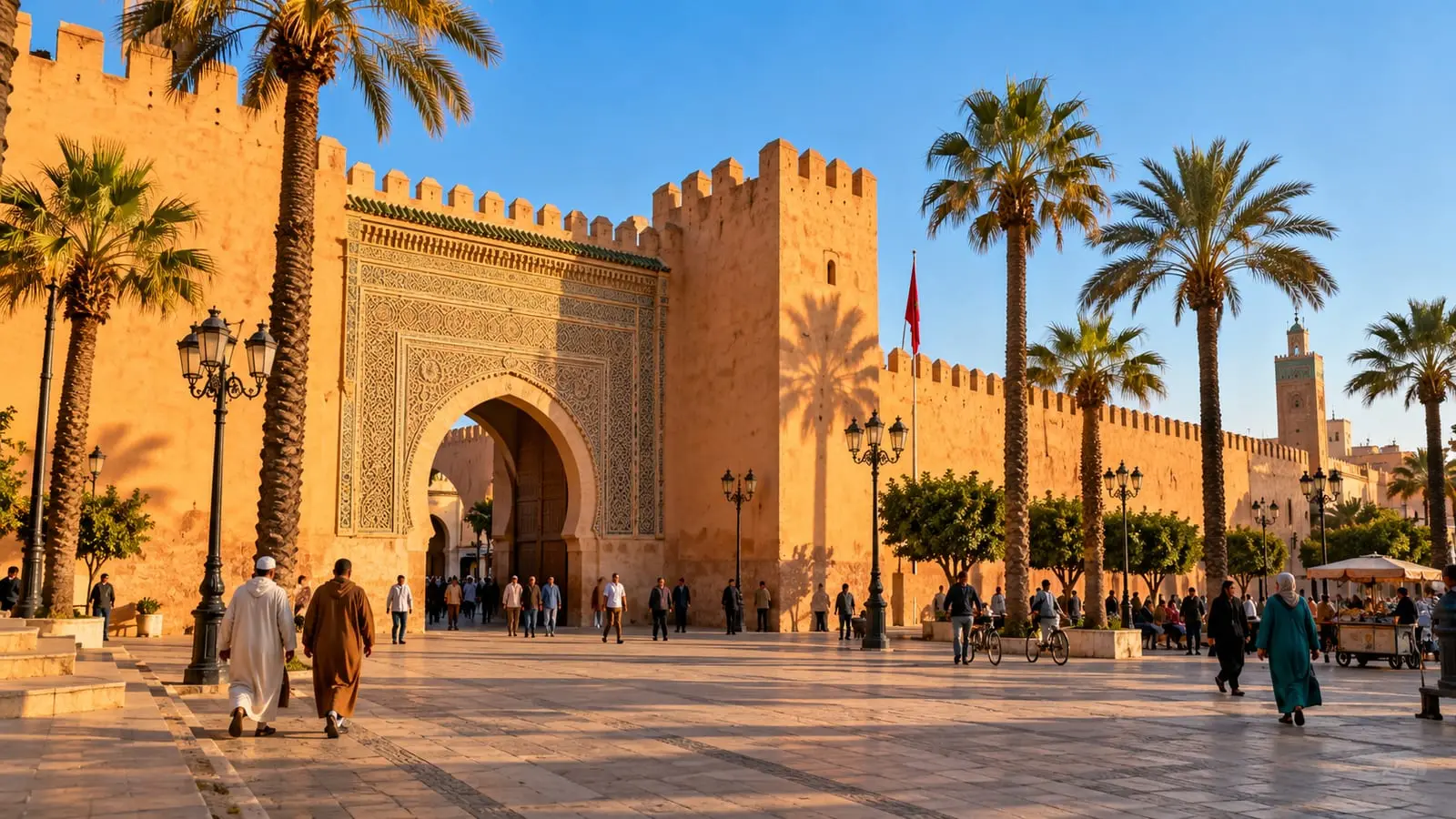
Oriental
The east of Morocco, bordering Algeria and the Mediterranean. A land of high plateaus and crossings, where Oujda grew as a border city and raï music found a second home.
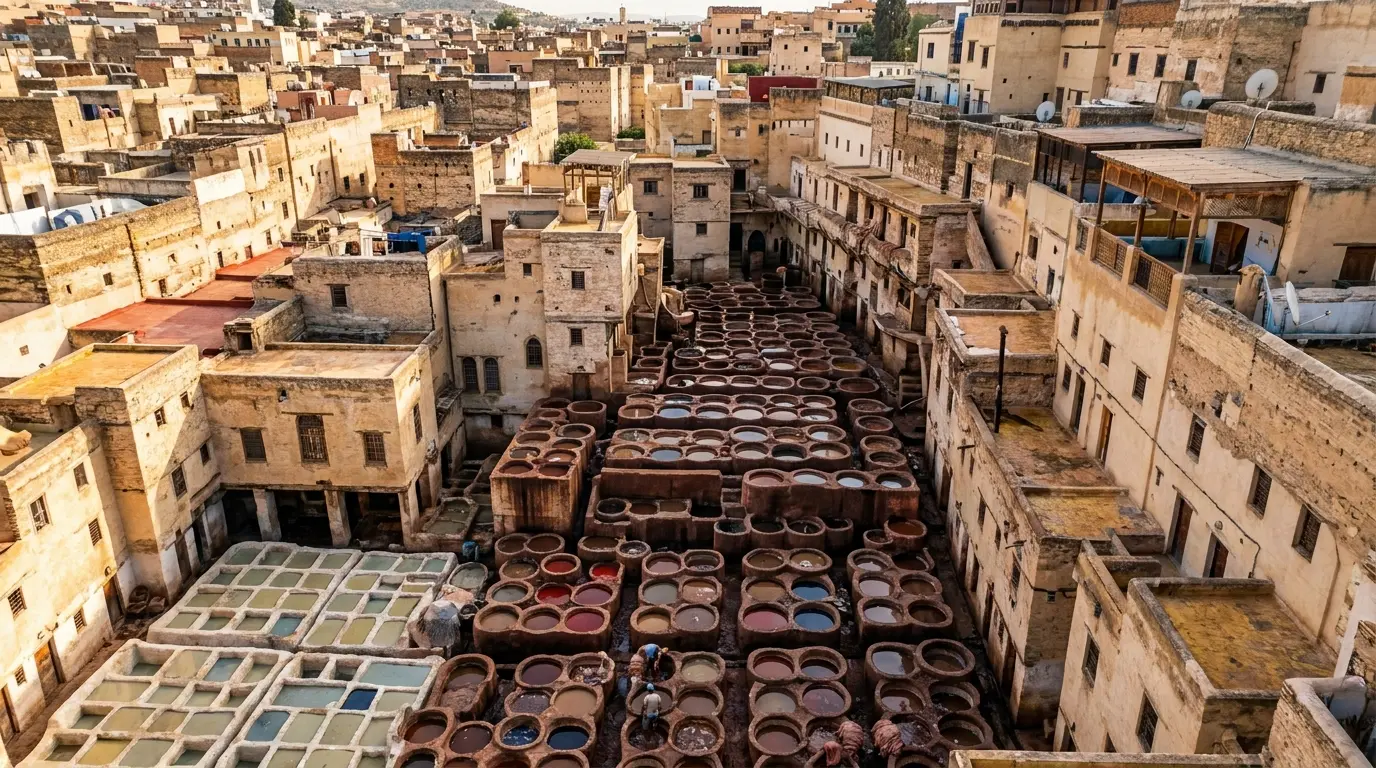
Fez-Meknes
The cradle of the Moroccan state. Idris I arrived here in 788; Fes became the country's spiritual and scholarly capital, and Meknes the imperial city of Moulay Ismail. Roman Volubilis and the cedar forests of the Middle Atlas are part of it too.
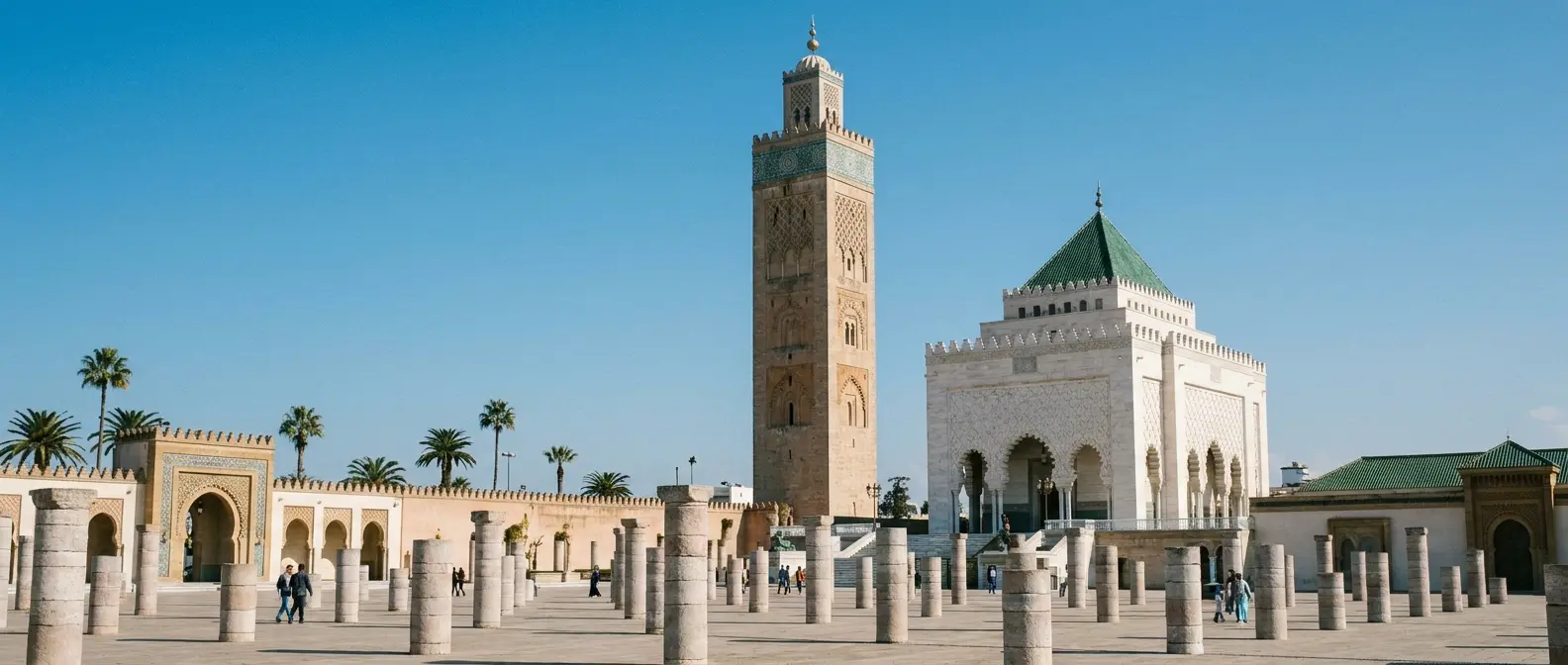
Rabat-Salé-Kenitra
The Atlantic heart of the kingdom, around the Bou Regreg and Sebou rivers. Roman Sala, the Almohad fortress of Rabat, the corsairs of Salé and today's capital all follow one another here.
Beni Mellal-Khenifra
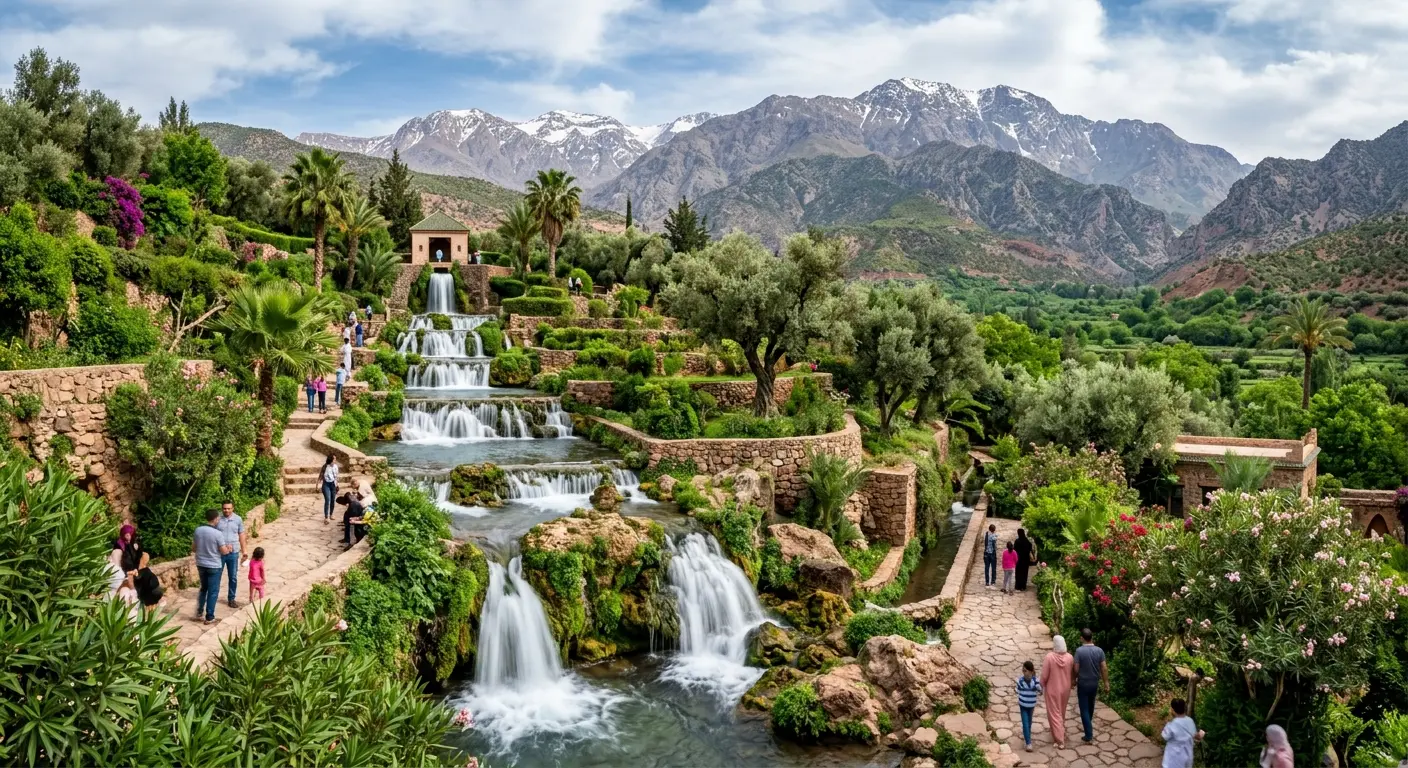
Between the Middle Atlas and the Tadla plain, a land of springs, olive groves and Amazigh villages. The Ouzoud falls and the high valleys of Aït Bouguemez are here.
Casablanca-Settat
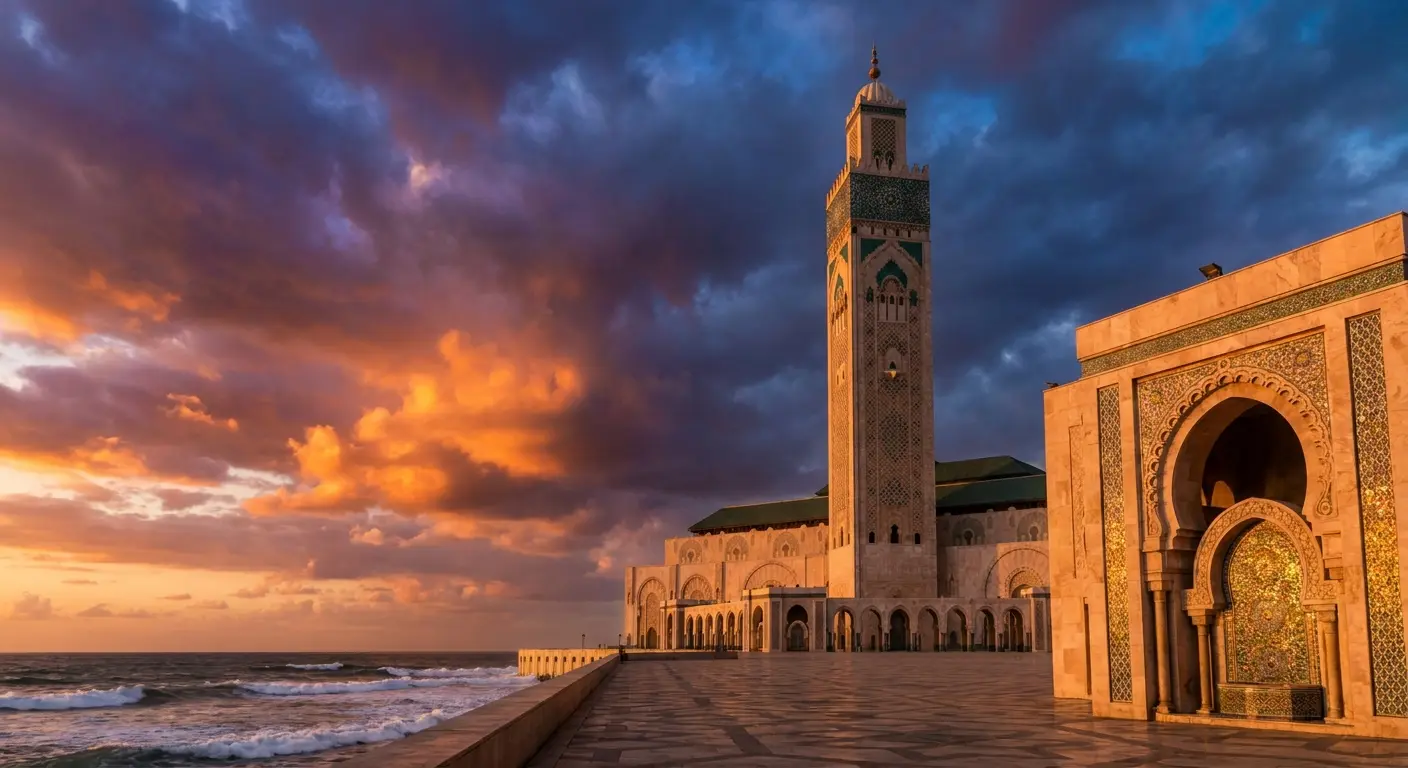
Morocco's economic powerhouse on the Atlantic. Medieval Anfa, the Portuguese fortress of Mazagan (El Jadida) and the modern port of Casablanca tell the story of a coast always turned to trade.
Marrakech-Safi
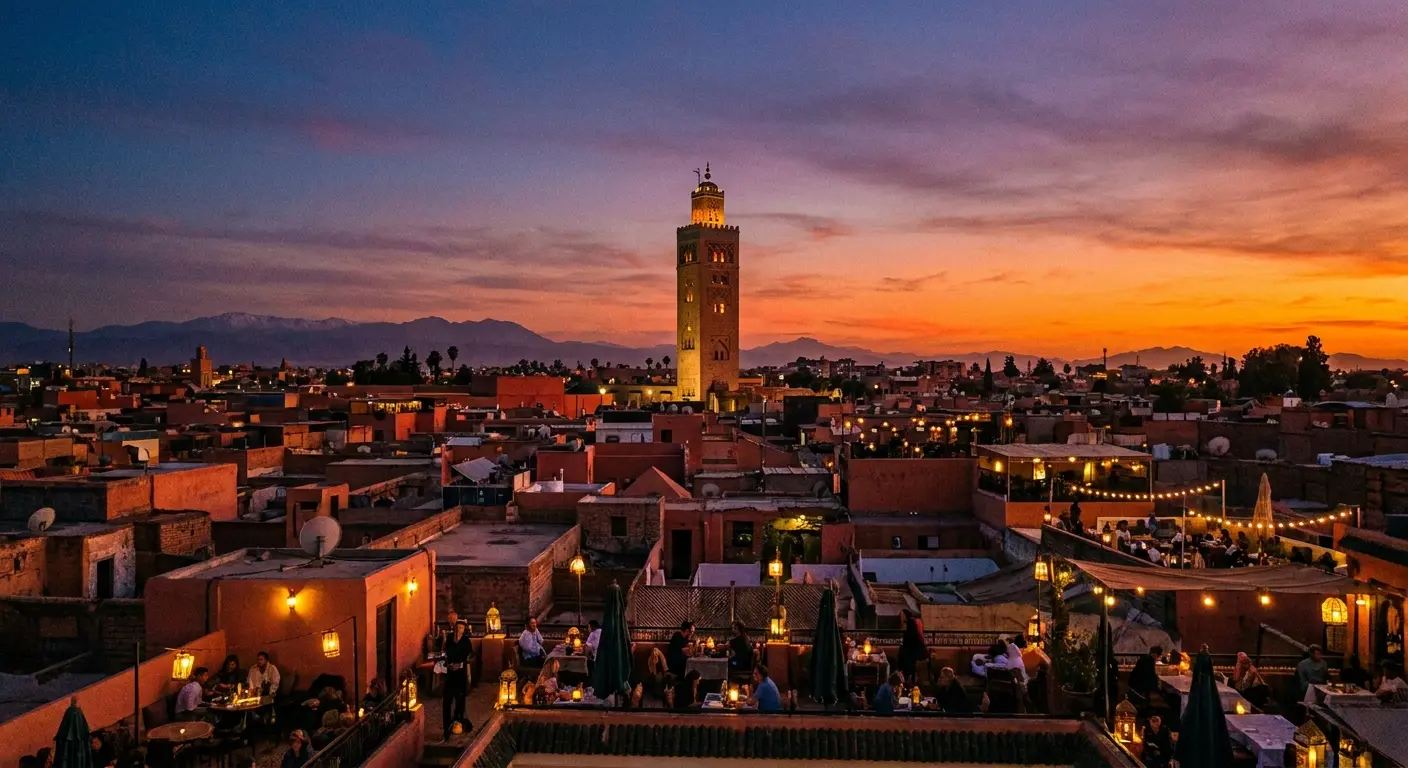
From the High Atlas to the Atlantic. Marrakech, founded by the Almoravids and capital of several dynasties, gave the country its name in many languages; Safi and Essaouira were its gateways to the sea.
Draa-Tafilalet
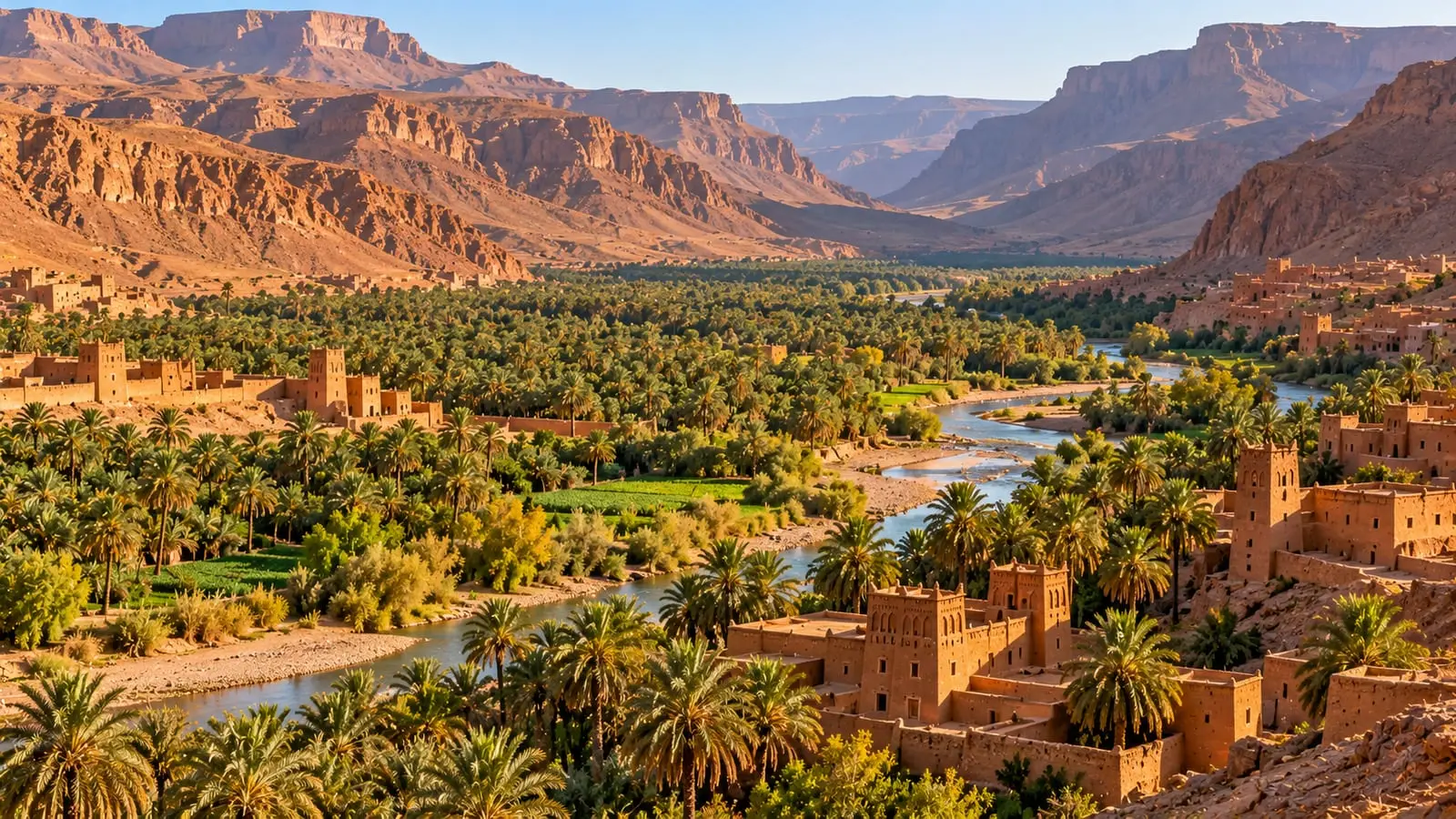
The Morocco of oases, kasbahs and dunes, south of the High Atlas. The caravans to West Africa set out from here, Sijilmassa grew rich on gold and salt, and two dynasties came from these valleys: the Saadians from the Draa and the Alaouites from the Tafilalet.
Souss-Massa
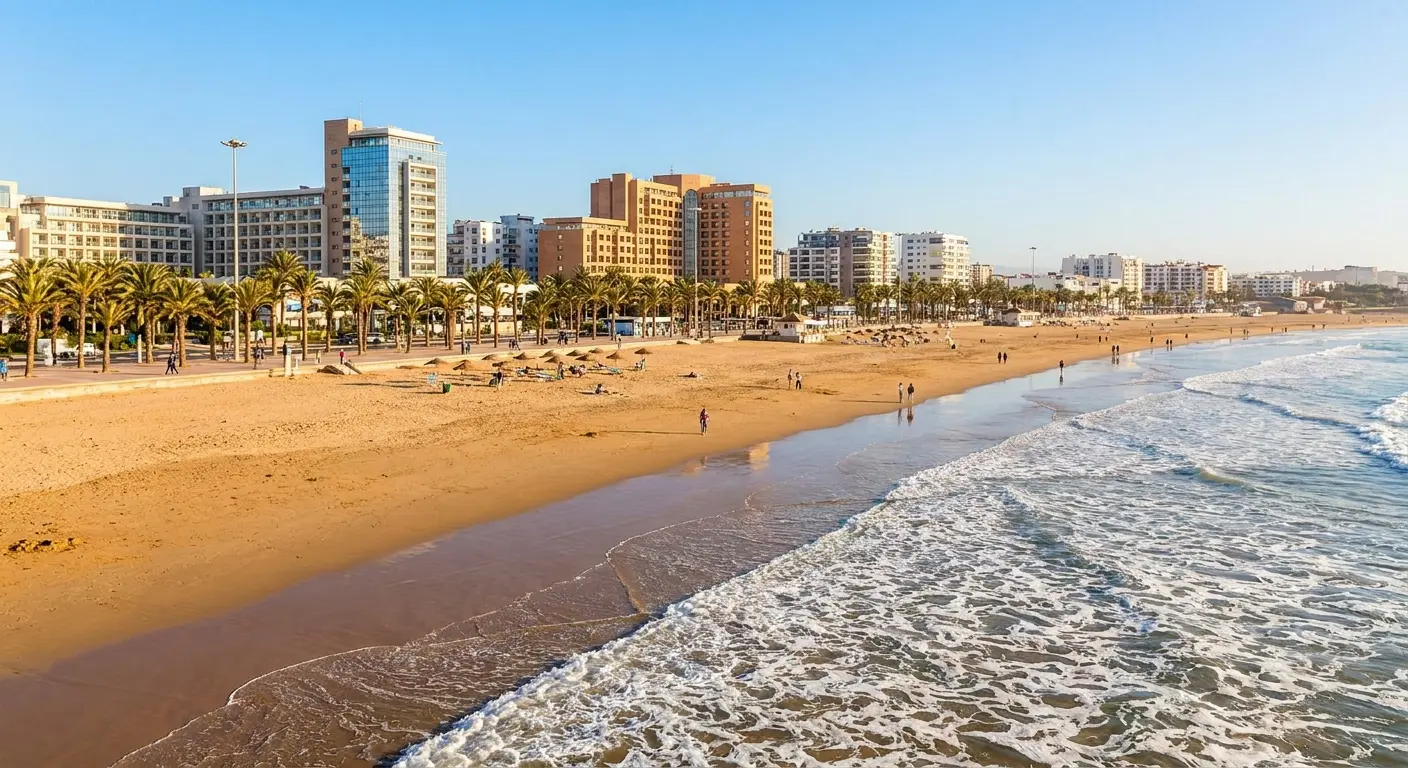
The land of argan trees, between the High Atlas, the Anti-Atlas and the Atlantic. Taroudant was a Saadian capital, Tiznit a silver town, and Agadir rose again from the 1960 earthquake.
Guelmim-Oued Noun
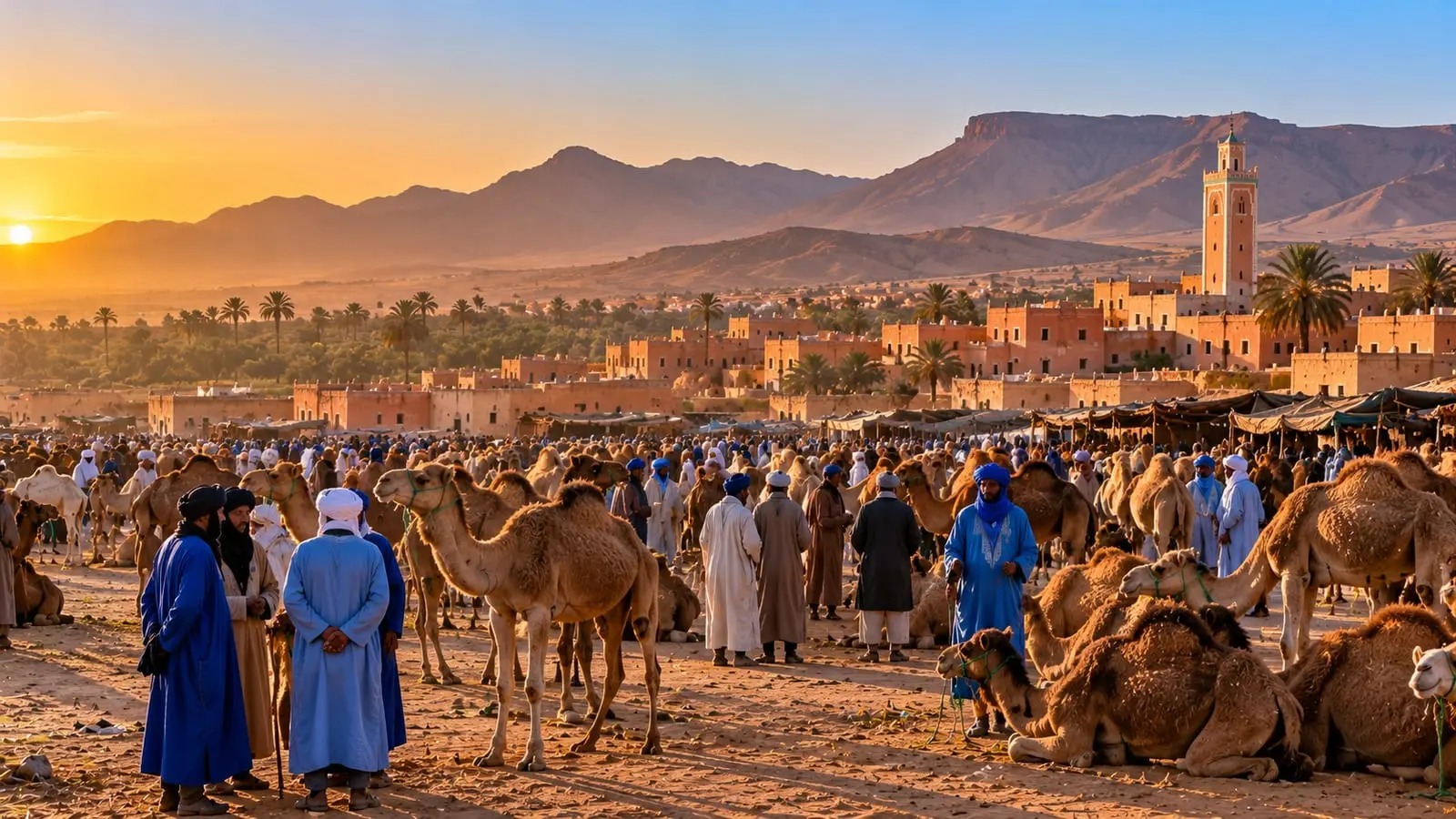
The gateway to the Sahara, where the caravan routes met the Atlantic. Guelmim's camel market and the Spanish past of Sidi Ifni tell the region's story.
Laayoune-Sakia El Hamra
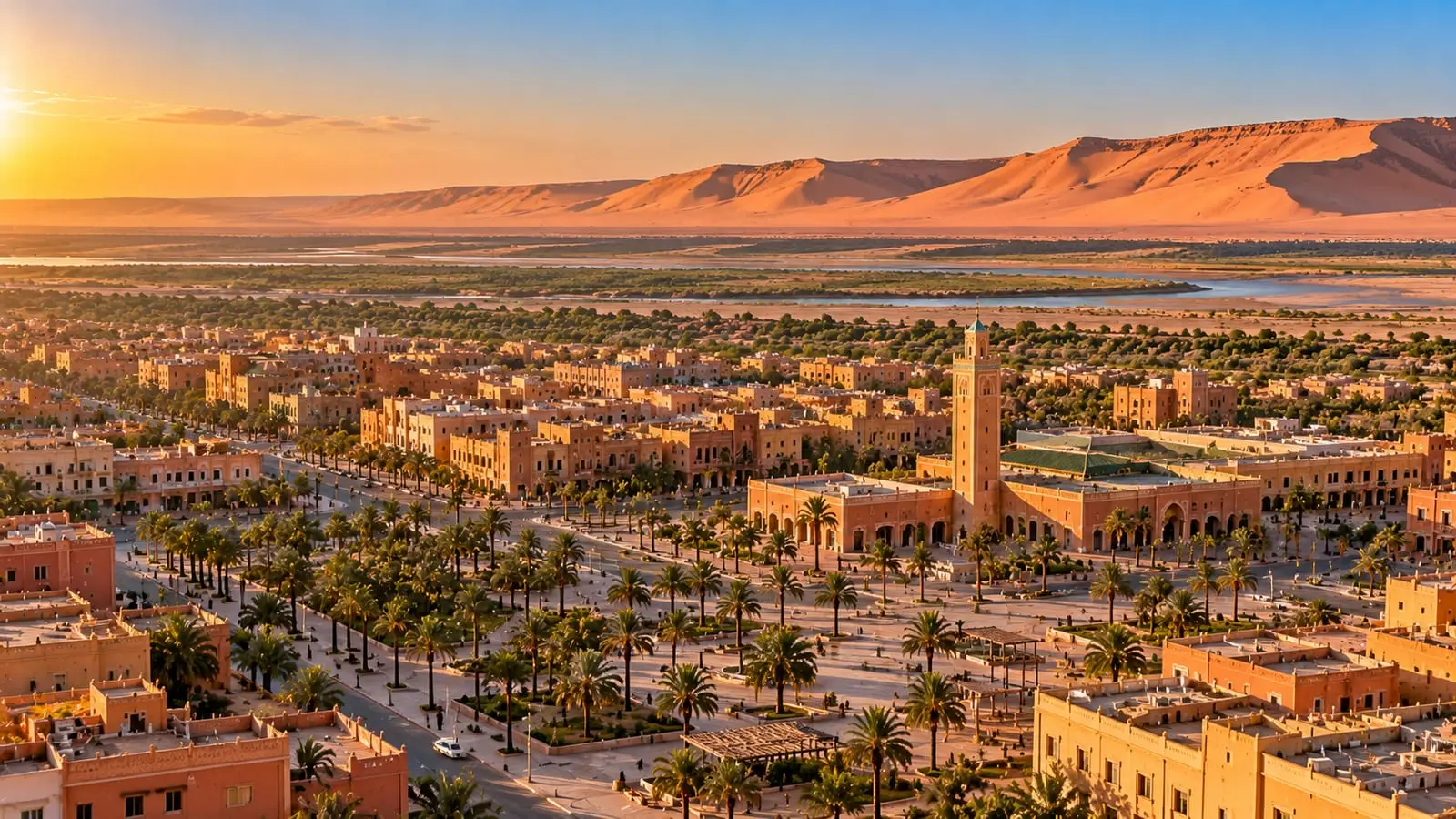
Desert, dunes and Atlantic coast around the Saguia el-Hamra valley. Laayoune, founded in the twentieth century, is today the largest city of Morocco's south.
Dakhla-Oued Ed-Dahab
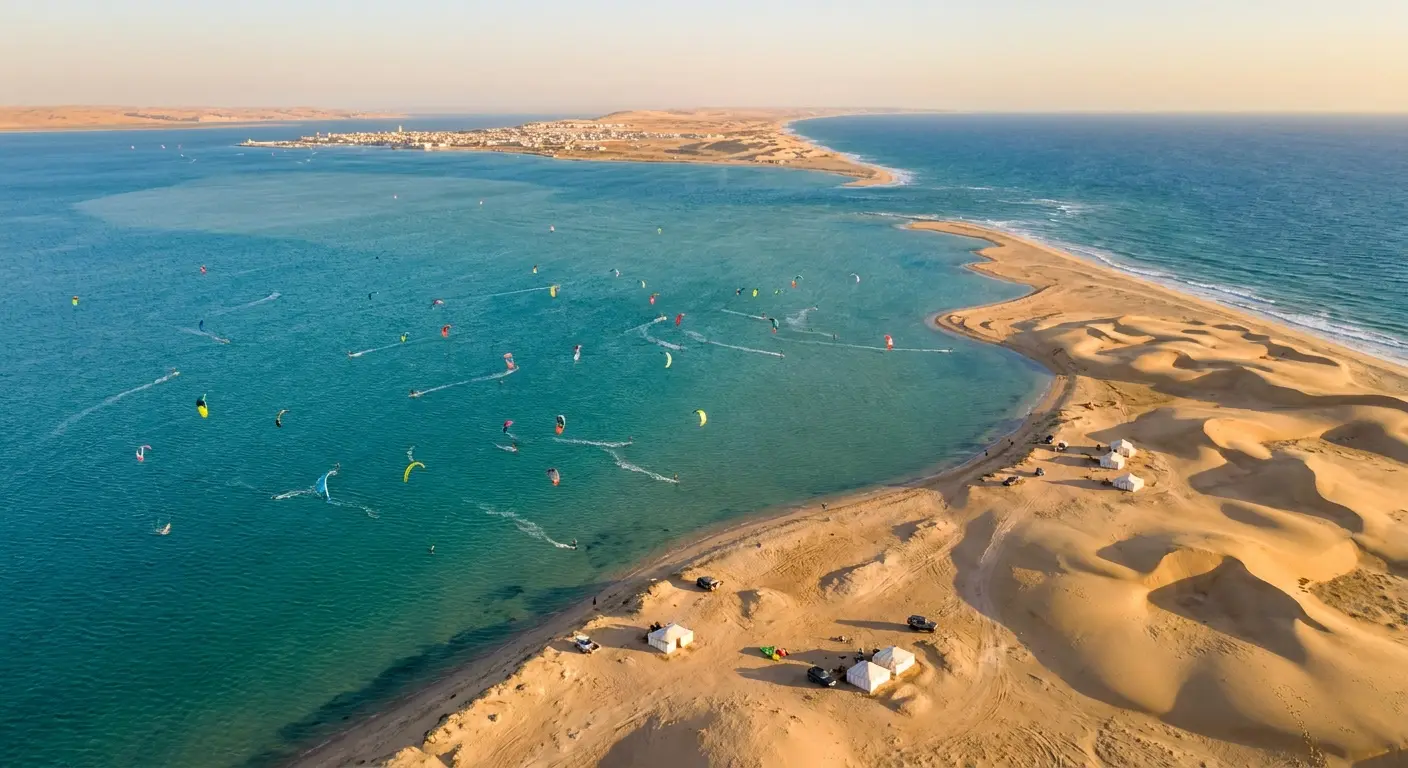
The far south, where the desert runs into a 40-km lagoon on the Atlantic. Once the Spanish Río de Oro, it is now known for its oysters, its fishing and its kitesurfing winds.