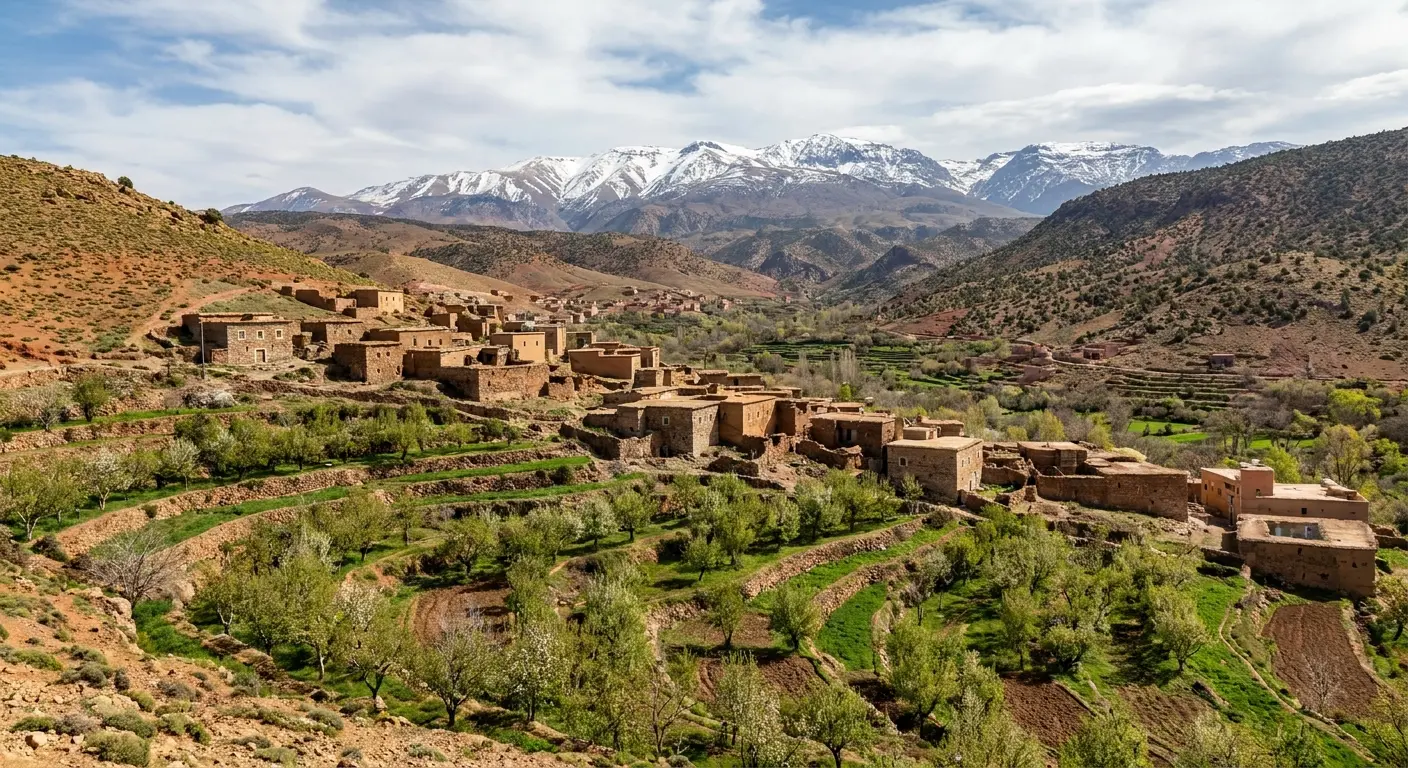
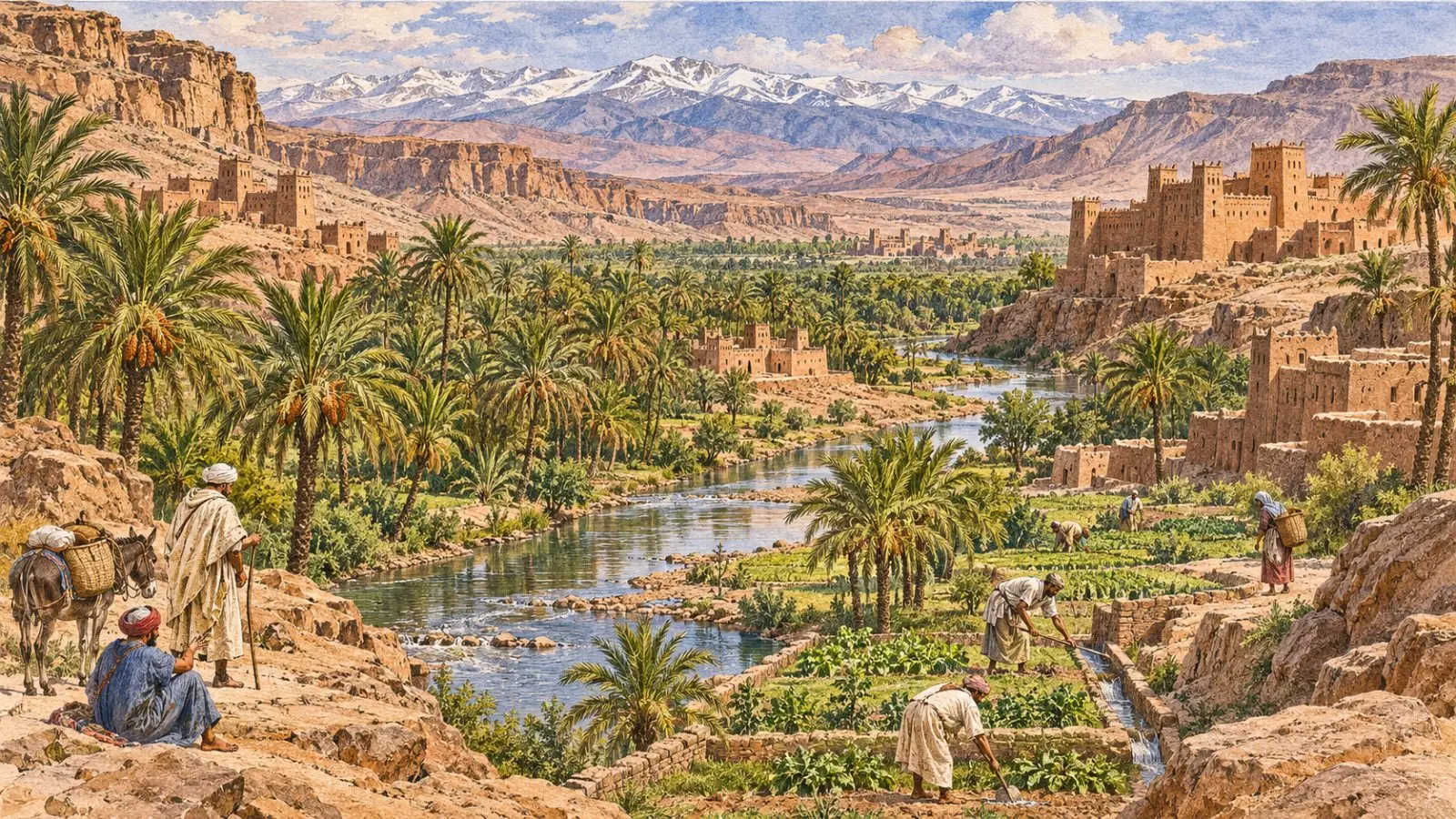
the Ziz valley and its ksour

THE BOOK OF

Errachidia — All about Errachidia

الراشيدية

History, places, people, culture and food of Errachidia, told by two Moroccans.

10 chapters3 min readBy Yassine and Issam
Things to do in Errachidia
CONTENTS · I
  1. I. At a glance
  2. II. History
  3. III. Key dates
  4. IV. Landmarks
  5. V. People
  6. VI. Culture and traditions
  7. VII. The people
  8. VIII. At the table
  9. IX. Did you know?
  10. X. Frequently asked questions

CHAPTER I

At a glance

Formerly Ksar es-Souk and renamed Errachidia in honour of Sultan Moulay Rachid, the administrative capital of the Tafilalet commands the Ziz valley, its gorges and its vast palm grove.

Arabic name
الراشيدية
Other names
Ksar es-Souk
Coordinates
31.9314, -4.4249
Best months
Mar, Apr, Oct, Nov

CHAPTER II

History

The Ziz valley and the Tafilalet

The town grew up on the Ziz river, which comes down from the High Atlas and further south waters the great Tafilalet palm grove. The medjool date variety originally comes from these palm groves.

For centuries ksour, fortified earthen villages, have lined the Ziz on the road to Sijilmassa, the great caravan city of the 8th to 14th centuries, about a hundred kilometres to the south.
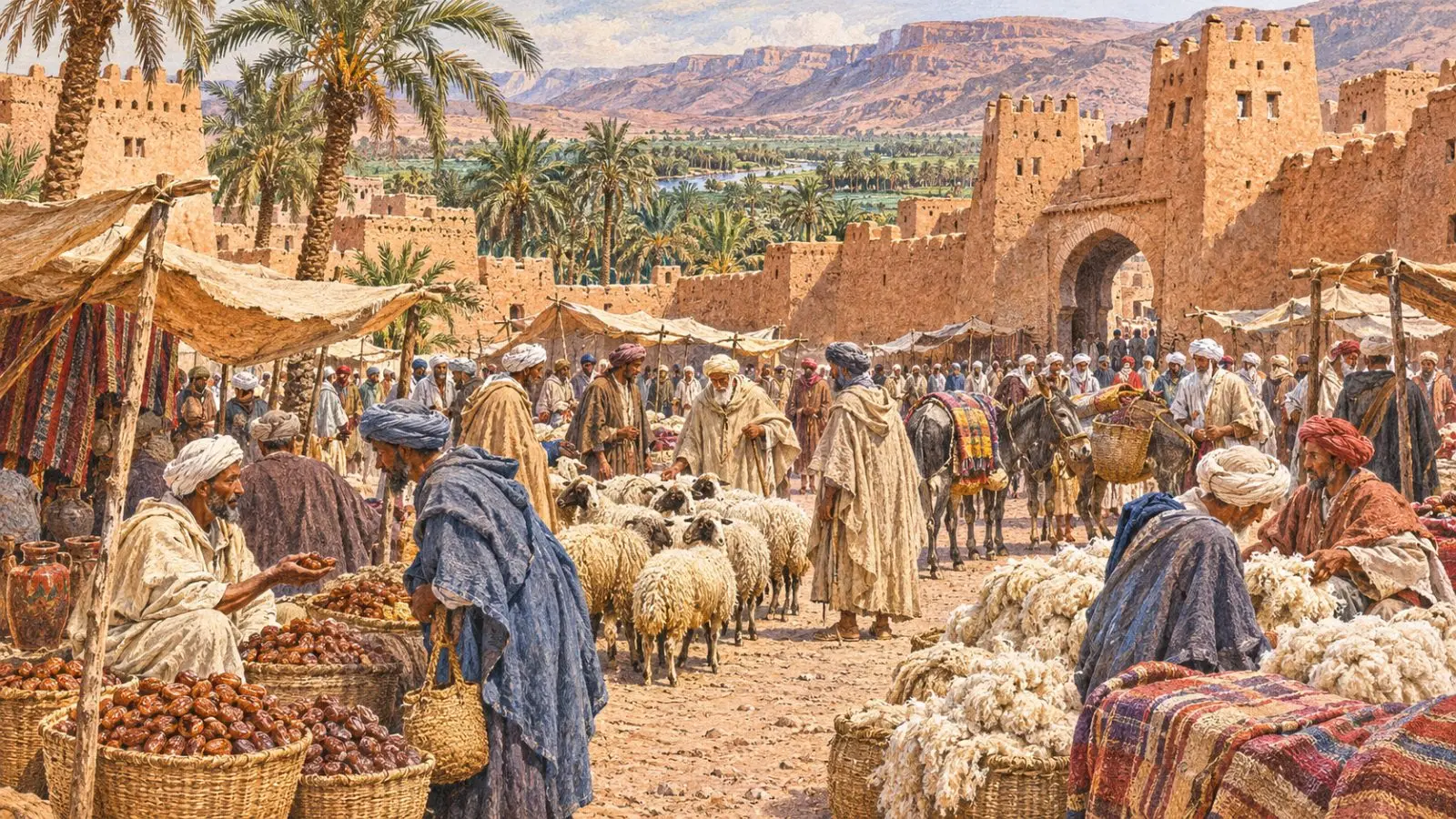
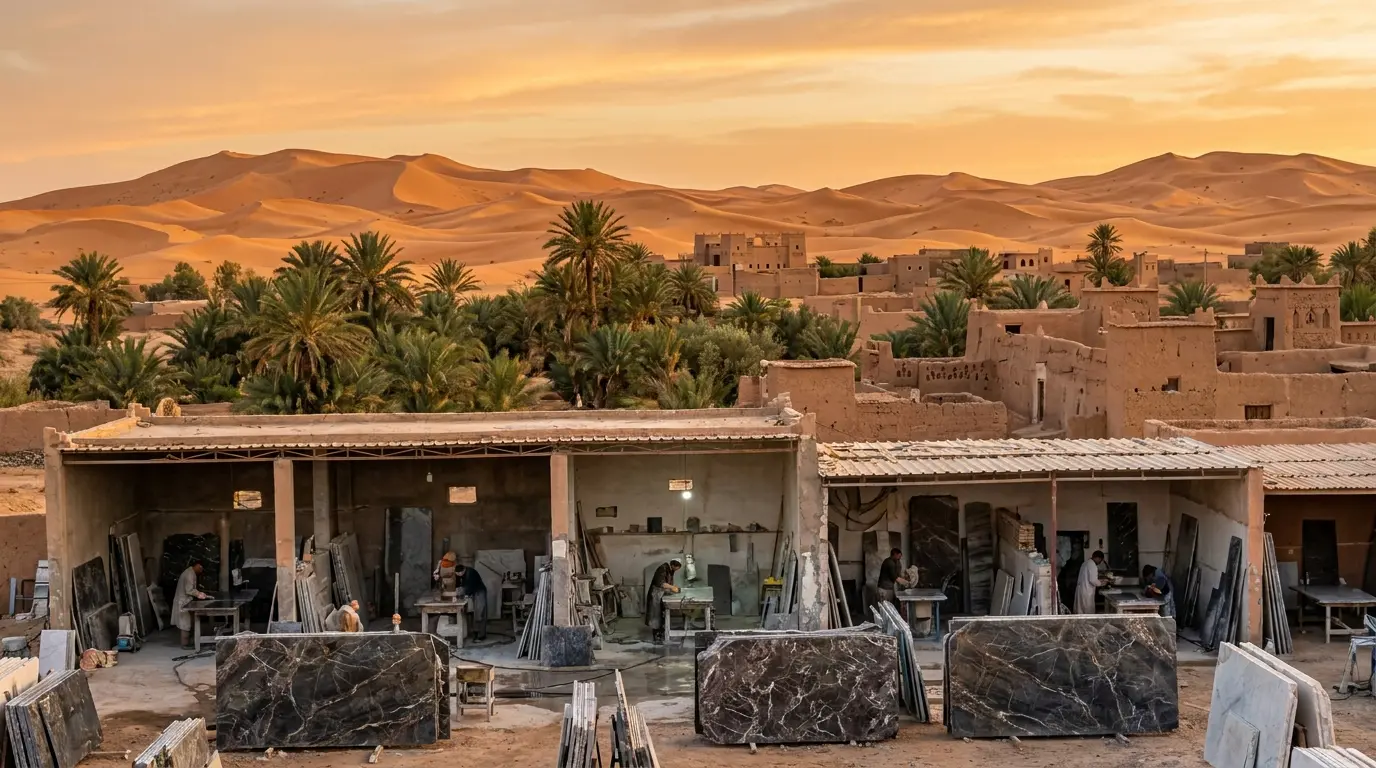
Ksar es-Souk, the market ksar

Ksar es-Souk, the market ksar

The town was first called Ksar es-Souk, the "market ksar", and Imetgharen in Tamazight. Under the French protectorate it became a military and administrative post controlling access to the Tafilalet and the Saharan borderlands; the Foreign Legion built the road through the Ziz gorges and fitted out a spring at Meski.

Errachidia (since 1975)

Around 1975 the town was renamed Errachidia in honour of Moulay Rachid; sources differ between Sultan Moulay Rachid (c. 1631-1672), considered the true founder of the Alaouite dynasty, and Prince Moulay Rachid, son of Hassan II.

The Hassan Addakhil dam to the north has regulated the Ziz floods since the 1970s and irrigates the palm groves as far as Rissani. A provincial capital, Errachidia grew from about 75,000 inhabitants in 2004 to 95,000 in 2024, and has an airport linked to Casablanca.

CHAPTER III

Key dates

  1. 1900–1930

    Ksar es-Souk grows as a market and garrison town on the Ziz.

  2. 1975

    The town is renamed Errachidia, after Moulay Rachid.

CHAPTER IV

Landmarks

1

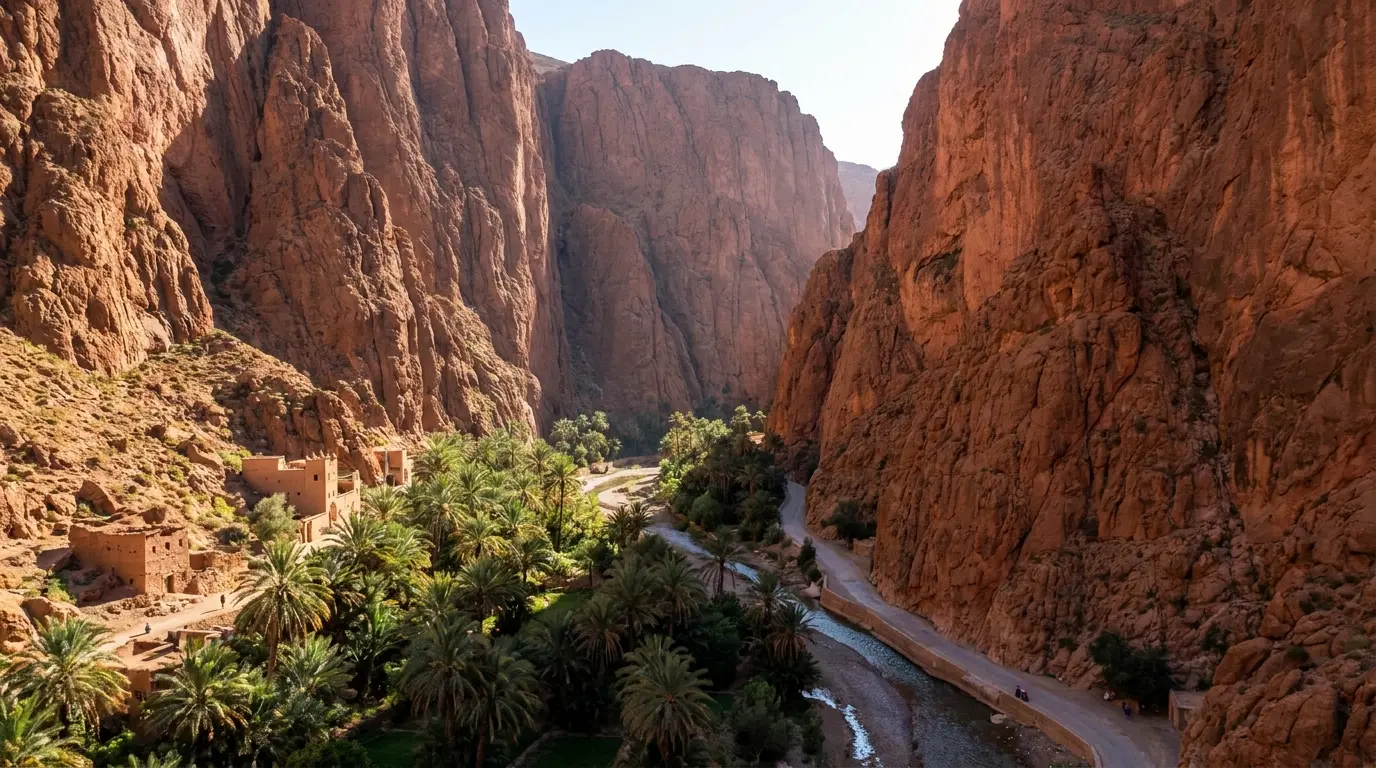
The Ziz gorges

To the north, the road passes through a tunnel dug by legionnaires, then winds through a canyon of palms.

2

The Meski blue spring

A spring and natural pool under the palms, facing the old Meski ksar.

3

The Ziz palm grove

Seen from the Erfoud road, a green ribbon tens of kilometres long between the cliffs.

CHAPTER V

People

  • Moulay Rachid1631–1672The first Alaouite sultan to rule all of Morocco, after whom the town is named.

CHAPTER VI

Culture and traditions

Ksour and palm groves

The region has hundreds of ksour, many still lived in and run by collective rules.

The Tafilalet region is known for its unique Amazigh Berber traditions distinct from the High Atlas — particularly the ahwach communal dance, performed at weddings and moussems (festivals) with call-and-response singing and percussion. Date palm cultivation is central to cultural identity; the Medjool date from the Tafilalet is one of the finest in the world. The Ziz Valley's oasis communities maintain ancient seguia (irrigation channel) systems still managed collectively.

CHAPTER VII

The people

The people of the Ziz

The town, born as a military post, brings together families from the Ziz and Tafilalet ksour, Arab, Amazigh and Haratin. Many work in administration, teaching and the army.

Oasis languages

Darija and Tamazight share the town; malhoun sung poetry and ahidous dance accompany celebrations.

CHAPTER VIII

At the table

Tafilalet breadFlatbreads baked in clay ovens go with dates, butter and honey at breakfast.

CHAPTER IX

Did you know?

  • The town was called Ksar es-Souk until around 1975; it now bears the name of Moulay Rachid.
  • The Hassan Addakhil dam to the north holds back the Ziz to water the palm groves as far as Rissani.
  • The Meski Blue Spring was fitted out by the Foreign Legion in the 1930s.

Frequently asked questions about Errachidia

How many days do you need in Errachidia?

Allow 1–2 days to see Errachidia without rushing. That is the length we use in our itineraries.

When is the best time to visit Errachidia?

The best months for Errachidia are March, April, October and November.

How much does a day in Errachidia cost?

Per person per day, accommodation included: about $30 on a budget, $70 mid-range and $150 for a luxury stay.

How do you get to Errachidia?

Moulay Ali Cherif Airport (ERH) has occasional flights from Casablanca. CTM buses from Fes (6h), Meknès (5h), Ouarzazate (4h) and Marrakech (8h). Grand taxis run to Merzouga (1.5h) and Rissani (30 min). Driving via the Ziz gorge road is highly recommended.

What is there to see in Errachidia?

The must-sees of Errachidia: Ziz Valley, Rissani Souk, Sijilmassa Ruins and Source Bleue de Meski.

What should you eat in Errachidia?

To taste in Errachidia: Khobz, Moroccan mint tea, Oranges with cinnamon and Msemen.

Where should you stay in Errachidia?

The best areas to stay: Ville Nouvelle, Old Ksar and Route de Merzouga.

Is Errachidia safe?

Yes, Errachidia welcomes many travellers every year. The precautions are those of any tourist destination: watch your belongings in crowds, politely turn down unofficial guides, agree on a taxi fare before getting in.

Is Errachidia good for families?

Yes, Errachidia is easy to visit with children.

Sources

To go further and check what we write.

Other sources

Read next

THE END

Now go and see Errachidia.

By Yassine and Issam · Spotted a mistake? Tell us