
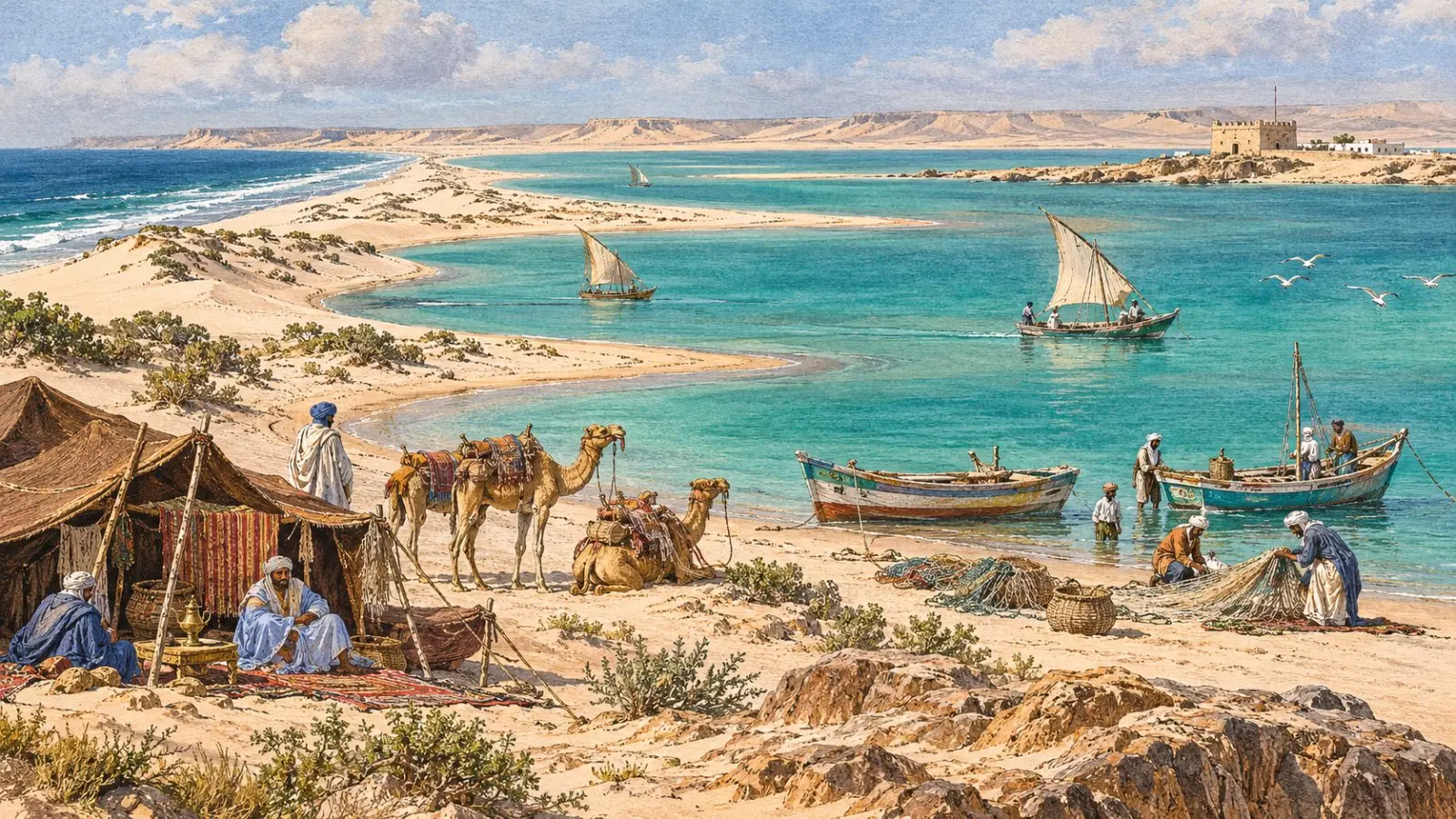
the Dakhla lagoon

THE BOOK OF

Dakhla — All about Dakhla

الداخلة

History, places, people, culture and food of Dakhla, told by two Moroccans.

10 chapters3 min readBy Yassine and Issam
Things to do in Dakhla
CONTENTS · I
  1. I. At a glance
  2. II. History
  3. III. Key dates
  4. IV. Landmarks
  5. V. People
  6. VI. Culture and traditions
  7. VII. The people
  8. VIII. At the table
  9. IX. Did you know?
  10. X. Frequently asked questions

CHAPTER I

At a glance

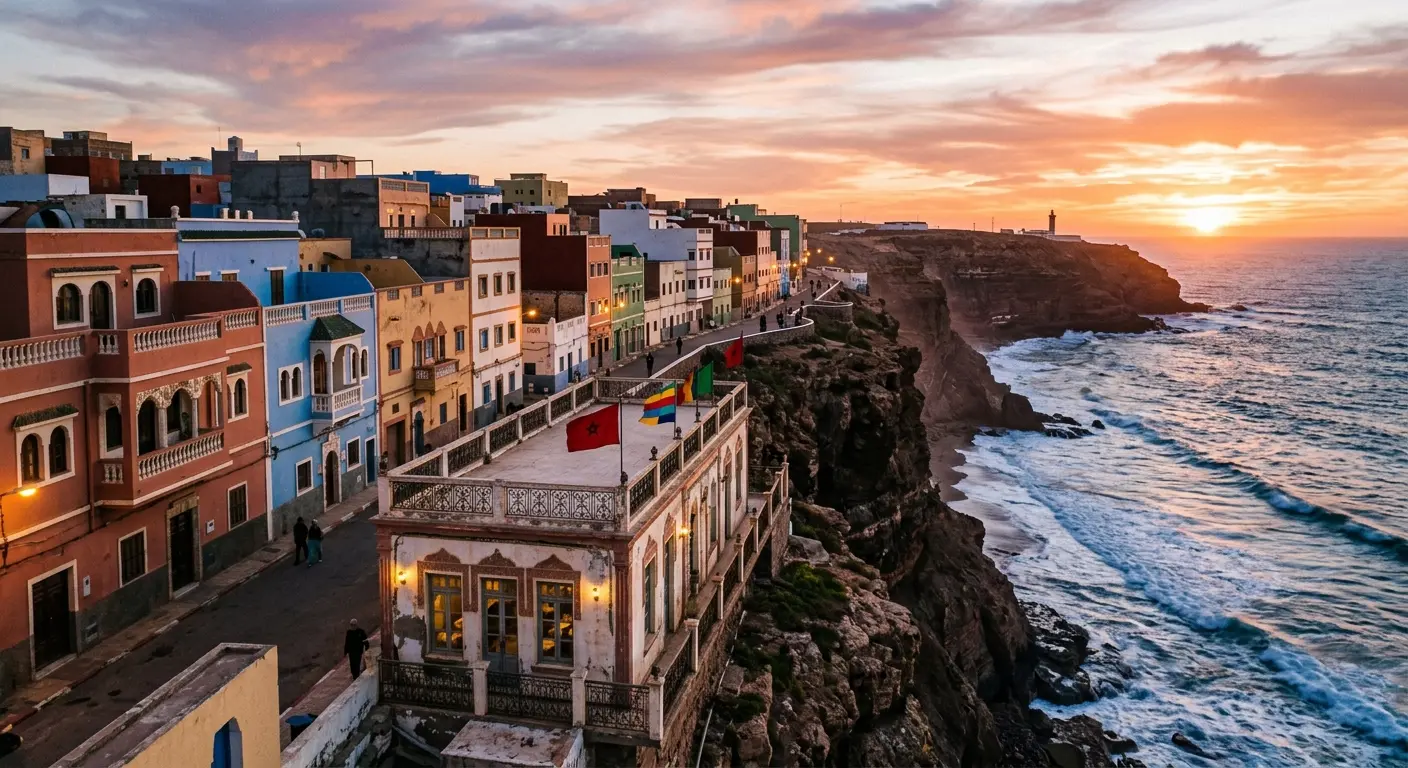
On a 40 km peninsula between the Atlantic and a turquoise lagoon, Dakhla was founded by Spain in 1884 as Villa Cisneros. Once an Aéropostale stopover, it is now a world capital of kitesurfing and oysters.

Arabic name
الداخلة
Other names
Villa Cisneros · Río de Oro
Coordinates
23.6848, -15.9570
Best months
Nov, Dec, Mar, Apr, May

CHAPTER II

History

The Oulad Delim and the Rio de Oro coast

The peninsula area has been inhabited since the 12th century by the Oulad Delim, an Arab Bedouin tribe of Yemeni origin, which in the 19th century still controlled all of the Rio de Oro and a strip of land down to Nouadhibou.

From the 16th century fishermen from the Canary Islands frequented this rich coast, hunting seals and whales and trading. These activities wiped out or endangered several species of marine mammals and birds.
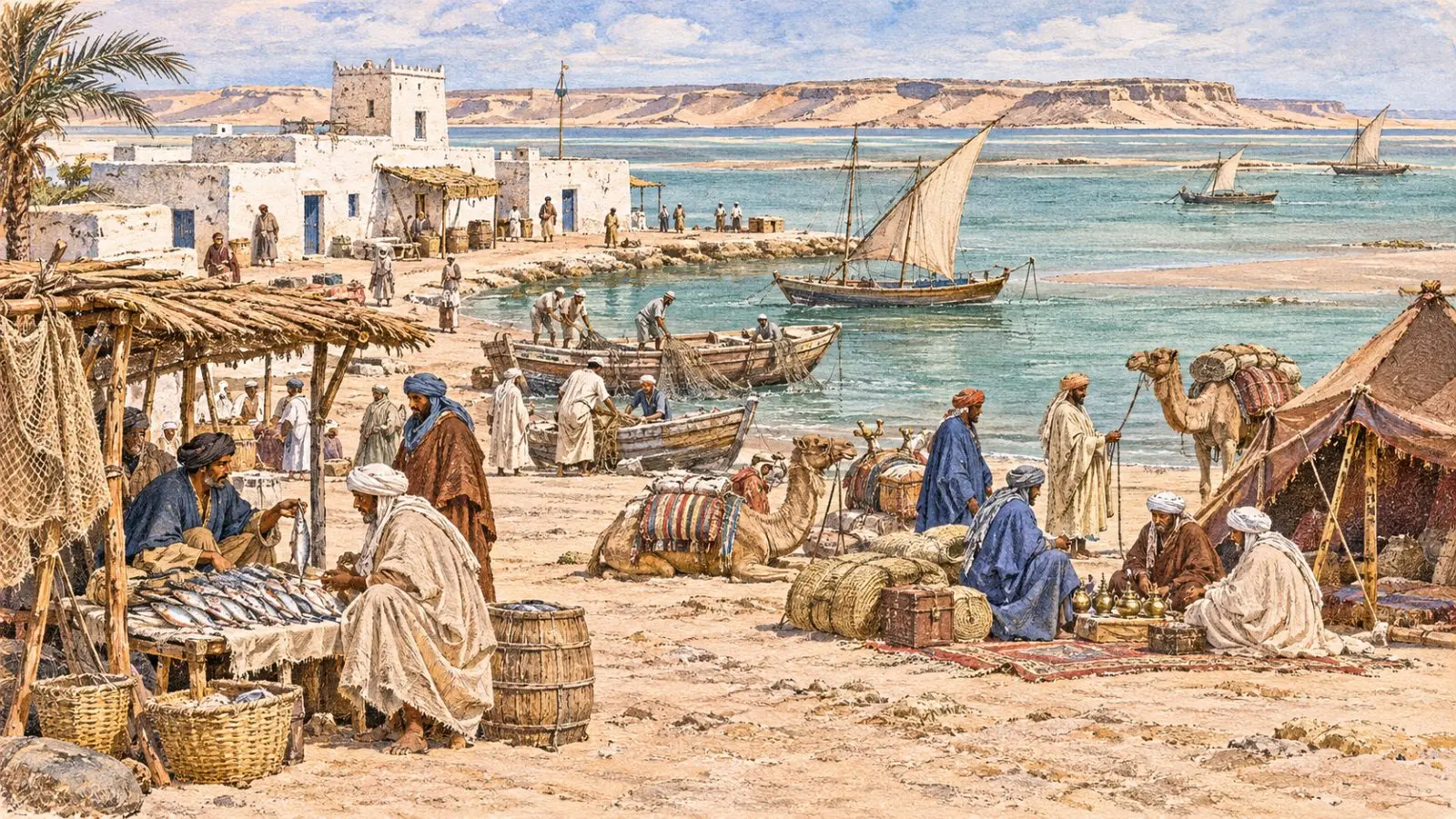
Villa Cisneros (1884-1975)

Villa Cisneros, a fishing post

In 1884 Spain founded a trading post on the peninsula, at the initiative of the Africanist Emilio Bonelli, and named it Villa Cisneros after Cardinal Cisneros. That same year the Oulad Delim attacked and looted the post; two years later Spain reached an agreement with one of their sheikhs. In December 1884 it announced at the Berlin Conference its claim to the coast between Cape Bojador and Cape Blanc.

Villa Cisneros became the capital of the Rio de Oro. In the 1920s its fort was a stop on the Toulouse-Dakar airmail line, described by Saint-Exupéry in "Southern Mail". In the 1930s the fort also served as a place of deportation for Spanish officers and opponents. The airport was built in the 1960s.

1975-1979: Spain's departure

After the Madrid Accords of November 1975, Spain left the territory: on 12 January 1976 General Gómez de Salazar was the last Spanish soldier to leave, from Villa Cisneros. The southern part, including the town, was first administered by Mauritania.

On 14 August 1979 Mauritania gave up this territory. Morocco then took control of the town, renamed Dakhla, which became the capital of the Oued Ed-Dahab region. The territory's status is the subject of a United Nations process, with a ceasefire agreed in 1991.

The lagoon town today

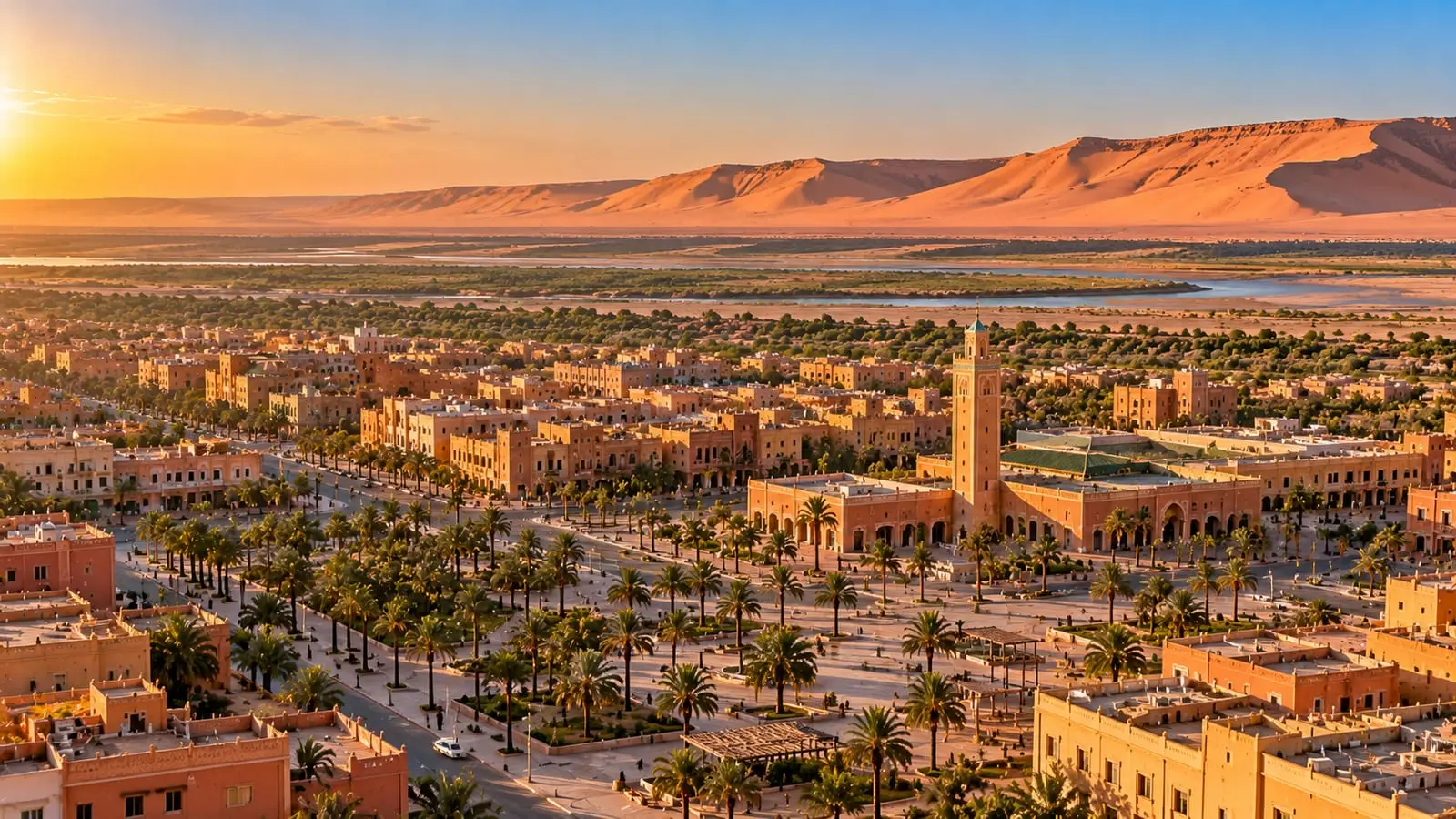
Dakhla lives from fishing, oyster farming and, since the 2000s, kitesurfing, which draws athletes from around the world to its lagoon. From 2020 several African countries, including The Gambia, Guinea and Burkina Faso, opened consulates here.

A large port, Dakhla Atlantique, is under construction as part of the national port strategy, with completion expected around 2028, and the town is a stage on the planned African Atlantic gas pipeline between Nigeria and Morocco.

CHAPTER III

Key dates

  1. 1884

    Spain founds Villa Cisneros on the peninsula.

  2. 1979

    The region of Oued Ed-Dahab joins Morocco.

CHAPTER IV

Landmarks

1

The lagoon

Flat water and steady wind almost all year: the playground of kitesurfers from around the world.

2

The white dune

A pale dune in the middle of the lagoon, reached by boat at low tide.

3

The Asma hot springs

A natural hot spring by the lagoon, popular after a windy day.

CHAPTER V

People

  • Emilio Bonelli1854–1926Spanish explorer and officer, founder of Villa Cisneros in 1884.

CHAPTER VI

Culture and traditions

Fishermen and kitesurfers

The town mixes Sahrawi families, fishermen from all over Morocco and travellers from around the world drawn by the wind.

The Sahrawi (Western Saharan) culture is distinct from northern Moroccan culture — nomadic traditions, distinctive blue robes (darraa), camel herding, and a tea ceremony involving three glasses. The fishing community supplies some of Morocco's finest seafood. Wind sports culture is young but already internationally significant.

CHAPTER VII

The people

Sahrawis, fishermen and newcomers

The town brings together Sahrawi families, fishermen from Agadir and the north, and a small community of kitesurfers who settled for the wind. Sahrawi hospitality means tea and camel's milk offered in the tent.

Hassaniya

People here speak Hassaniya, the Arabic of Sahrawis and Mauritanians, rich in oral poetry. Many also speak darija and Spanish, a legacy of the Spanish period.

CHAPTER VIII

At the table

Dakhla oystersFarmed in the lagoon, plump and briny, they are eaten on the spot for a few dirhams each.

CHAPTER IX

Did you know?

  • The town lies just north of the Tropic of Cancer, marked by a monument on the access road.
  • Aéropostale pilots, including Saint-Exupéry, stopped here on the Dakar route.
  • The lagoon is a Ramsar site, protected for its birds and seagrass beds.

Frequently asked questions about Dakhla

How many days do you need in Dakhla?

Allow 3–10 days to see Dakhla without rushing. That is the length we use in our itineraries.

When is the best time to visit Dakhla?

The best months for Dakhla are November, December, March, April and May.

How much does a day in Dakhla cost?

Per person per day, accommodation included: about $60 on a budget, $150 mid-range and $400 for a luxury stay.

How do you get to Dakhla?

Dakhla Airport (VIL) with daily flights from Casablanca (2.5h). Long distance CTM buses from Agadir (14h+). Most visitors fly.

What is there to see in Dakhla?

The must-sees of Dakhla: Dakhla Lagoon, Flamingo Point, Dunes of the peninsula and Fish market.

What should you eat in Dakhla?

To taste in Dakhla: Camel tagine, Khobz, Moroccan mint tea and Oranges with cinnamon.

Where should you stay in Dakhla?

The best areas to stay: City center and Lagoon camps.

Is Dakhla safe?

Yes, Dakhla welcomes many travellers every year. The precautions are those of any tourist destination: watch your belongings in crowds, politely turn down unofficial guides, agree on a taxi fare before getting in.

Is Dakhla good for families?

Dakhla is more demanding; with young children, plan short days and breaks.

Sources

To go further and check what we write.

Other sources

Read next

THE END

Now go and see Dakhla.

By Yassine and Issam · Spotted a mistake? Tell us