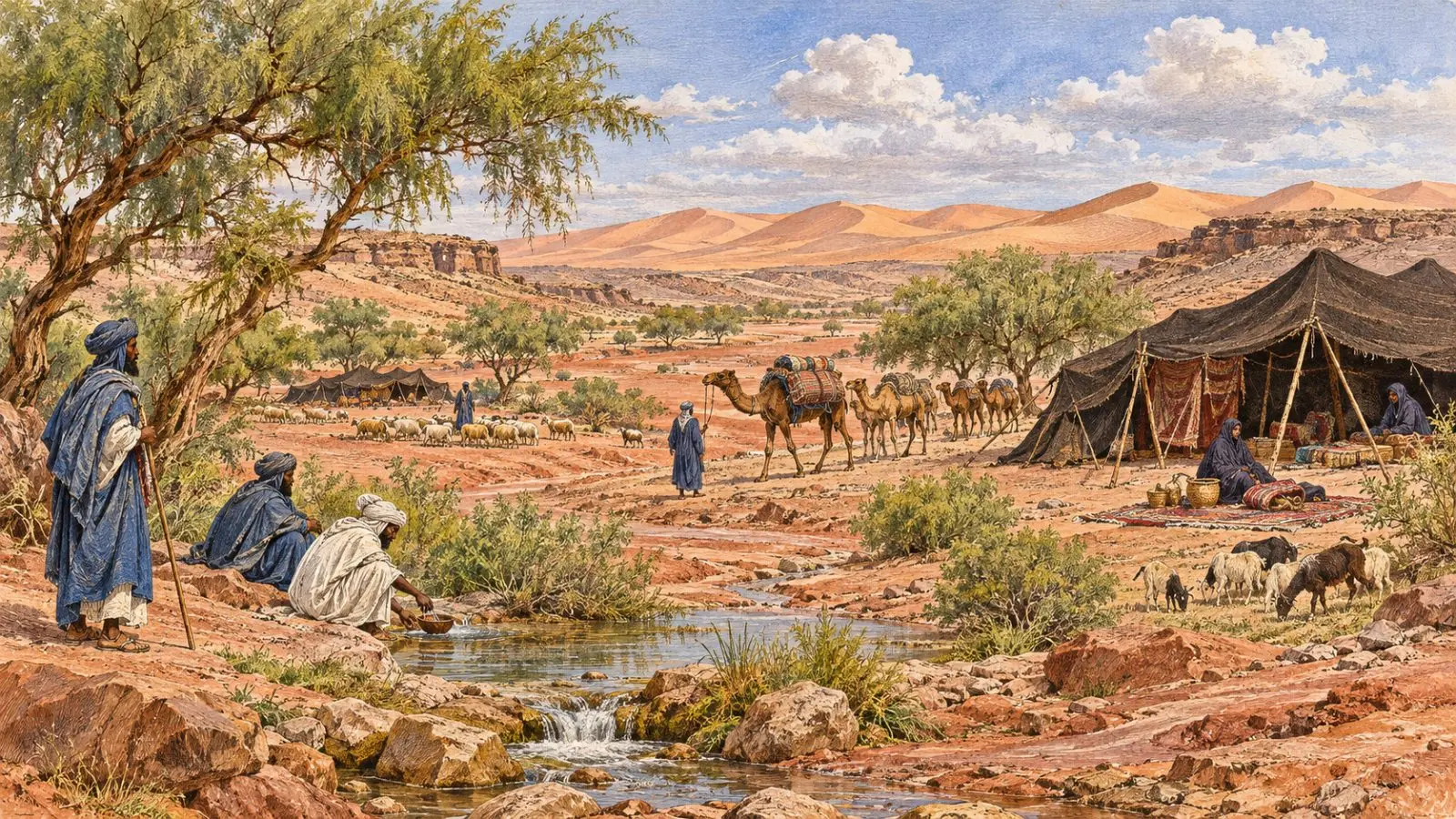
the Saguia el-Hamra and its springs

THE BOOK OF

Laayoune — All about Laayoune

العيون

History, places, people, culture and food of Laayoune, told by two Moroccans.

10 chapters3 min readBy Yassine and Issam
Things to do in Laayoune
CONTENTS · I
  1. I. At a glance
  2. II. History
  3. III. Key dates
  4. IV. Landmarks
  5. V. People
  6. VI. Culture and traditions
  7. VII. The people
  8. VIII. At the table
  9. IX. Did you know?
  10. X. Frequently asked questions

CHAPTER I

At a glance

Born from a Spanish post in 1938 near the springs of the Saguia el-Hamra, Laayoune — “the springs” — has become the largest city of the Moroccan Sahara, between dunes, ocean and Hassani culture.

Arabic name
العيون
Other names
El Aaiún
Coordinates
27.1536, -13.2033
Best months
Nov, Dec, Jan, Feb, Mar

CHAPTER II

History

"The springs" of the Saguia el-Hamra

The name, Laayoune in Arabic and El Aaiún in Spanish, is said to come from the Hassaniya "layoun", "the springs", referring to the water points that supply the town. Before it, the Saguia el-Hamra valley was grazing land for Sahrawi nomadic tribes.
A Spanish town (1934-1975)

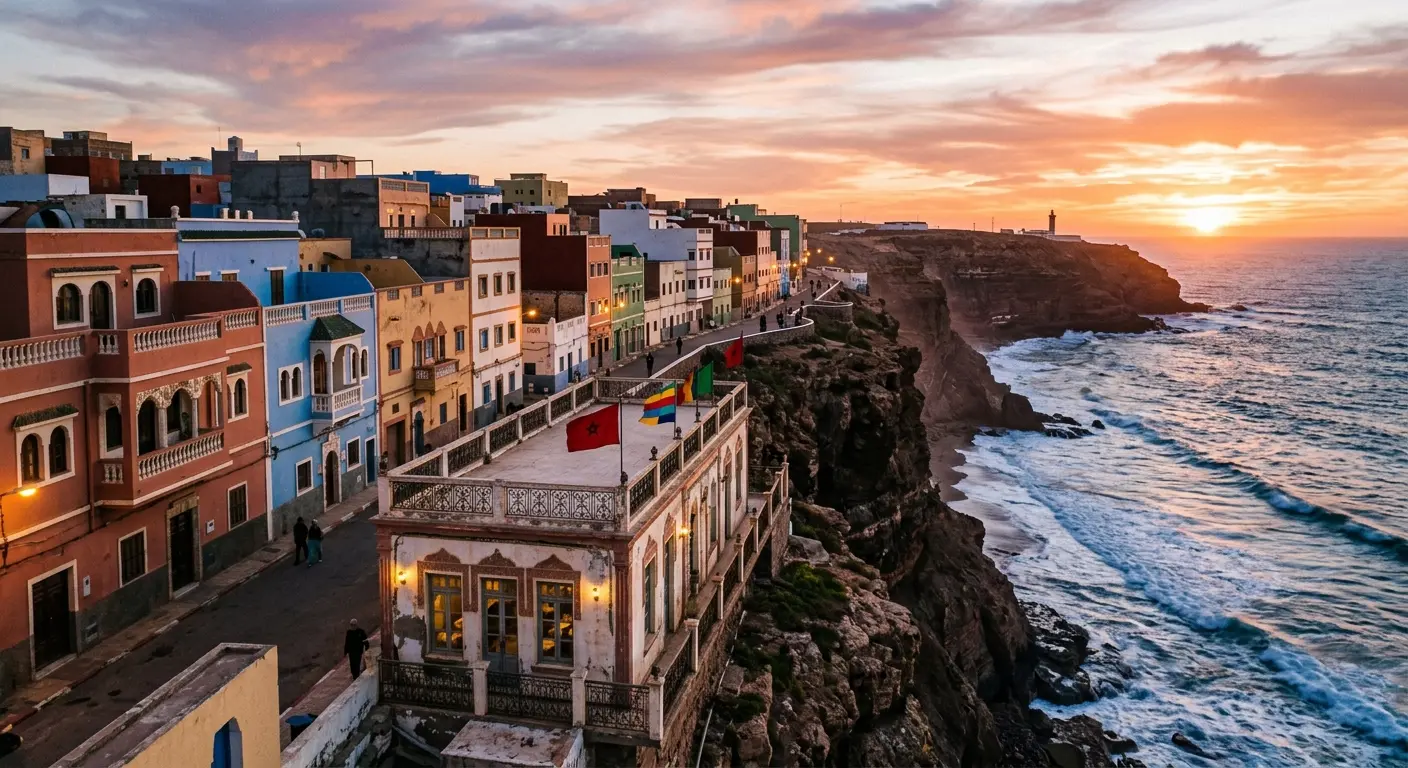
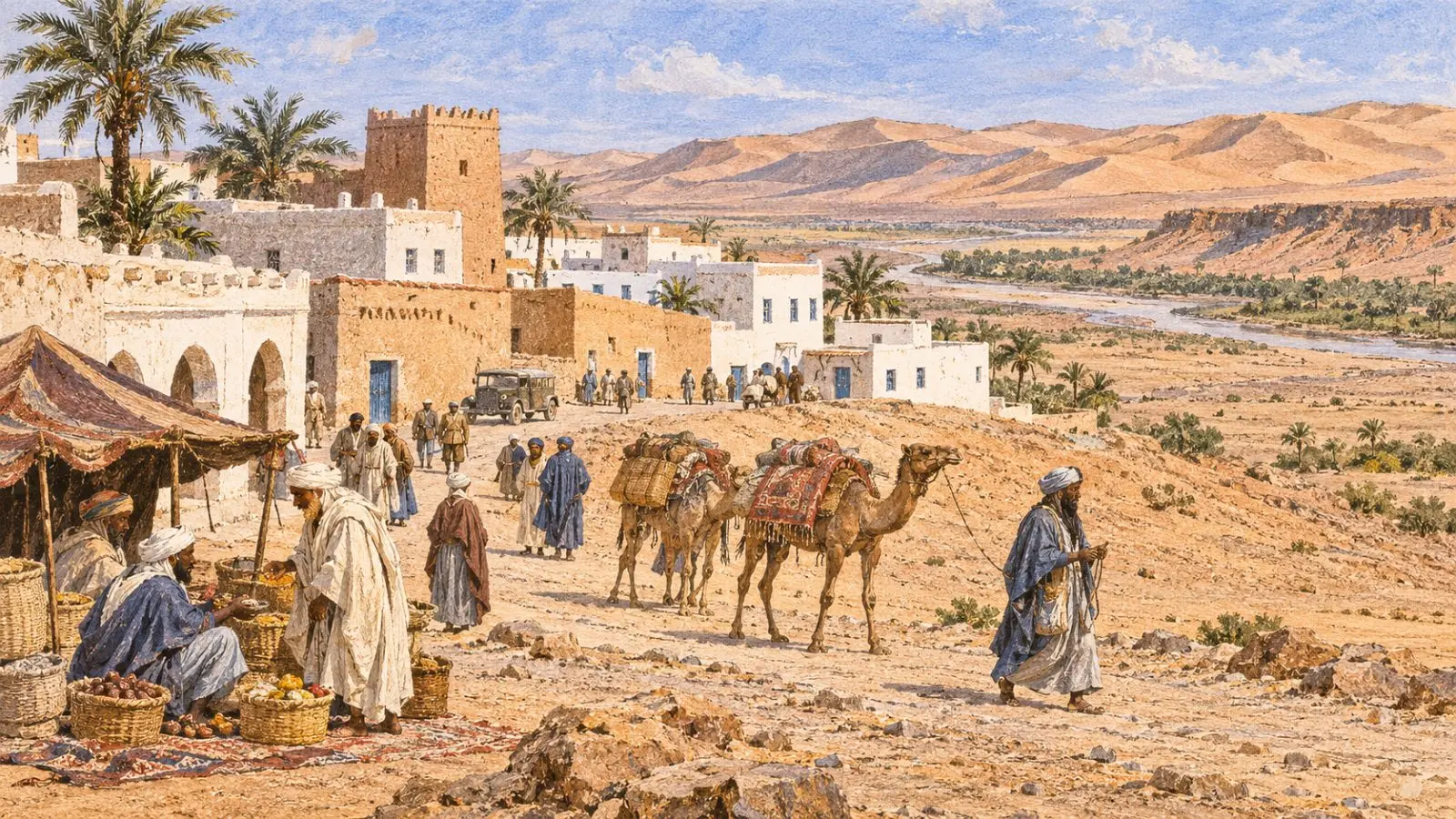
Laayoune, a small Spanish town

In 1934 the Spanish lieutenant-colonel Antonio de Oro set up a police barracks on the track between Cape Juby and Villa Cisneros (Dakhla). Finding water underground, he officially founded the town in 1938 on the banks of the Saguia el-Hamra.

It became the administrative and political centre of Spanish Sahara. The discovery and then exploitation of vast phosphate deposits at Bou Craa sped up its growth. On 17 June 1970 a demonstration led by Mohammed Bassiri was put down by Spanish forces: 2 to 11 dead, depending on the source.

The Green March and after 1975

In November 1975 King Hassan II launched the Green March: 350,000 unarmed Moroccan civilian volunteers, carrying a Koran and a flag, marched towards Spanish Sahara. After the Madrid Accords of 14 November 1975 Spain left the territory, and Laayoune came under Moroccan administration.

The territory's status is the subject of a United Nations process: the UN Mission for the Referendum in Western Sahara (MINURSO) has had its headquarters in Laayoune since 1991. Since 2015 the town has been the capital of the Laayoune-Sakia El Hamra region.

A fast-growing town

Since 1975 Laayoune has grown much faster than the Moroccan average. Many Moroccans from the north have settled here, and many Sahrawi families have gradually given up nomadic life. The town has a seawater desalination plant.

In October-November 2010 the Gdeim Izik protest camp, set up near the town by thousands of residents demanding jobs and housing, was dismantled on 8 November; the clashes left dead among the security forces and civilians, with tolls that differ between sources.

CHAPTER III

Key dates

  1. 1938

    The Spanish found El Aaiún near the Saguia el-Hamra.

  2. 1975

    The Green March.

CHAPTER IV

Landmarks

1

Mechouar square

A large square with stone tents, the heart of the town's celebrations.

2

Foum el-Oued

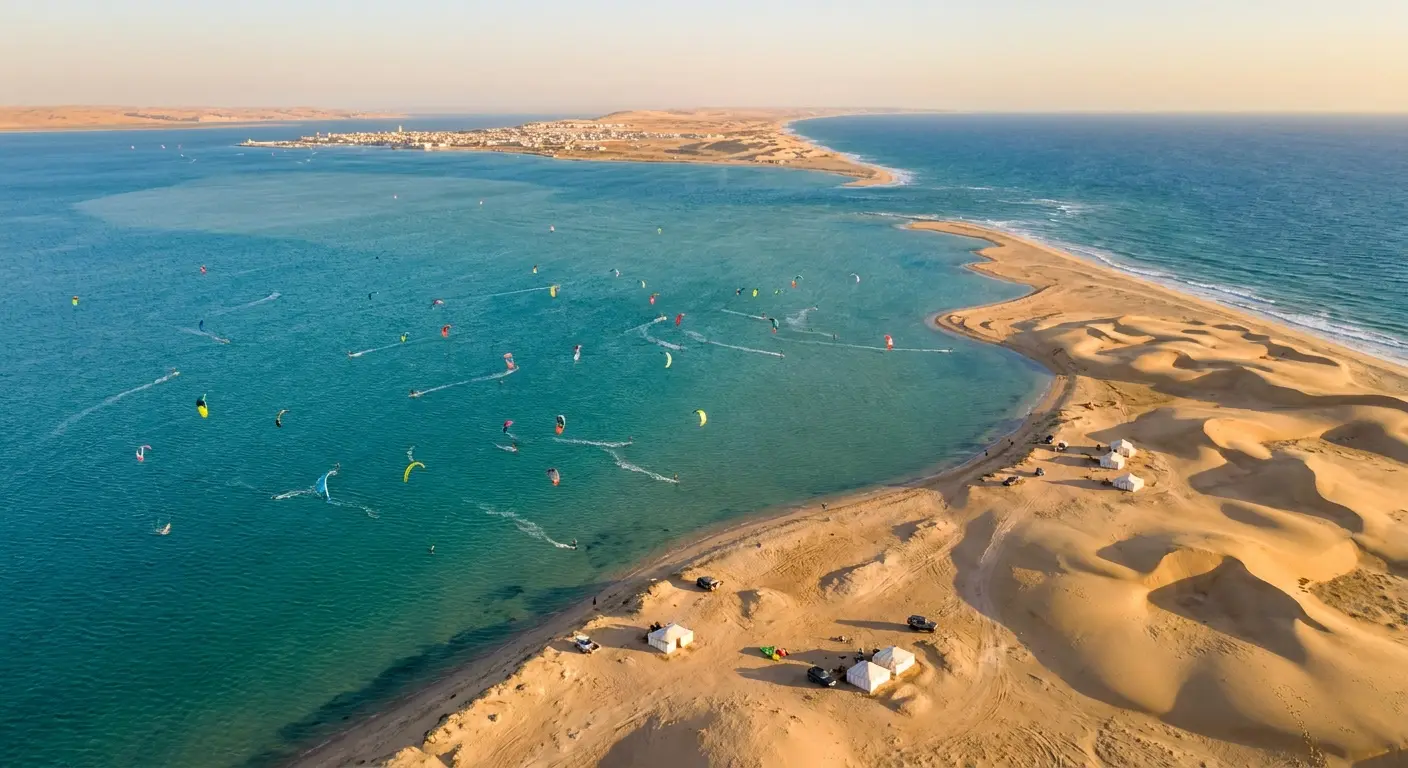
The beach about twenty kilometres away, where dunes run down to the Atlantic.

3

Tarfaya and Cape Juby

To the north, the old Aéropostale stopover where Saint-Exupéry was station chief in 1927–28, and the Khnifiss lagoon.

CHAPTER V

People

  • Antoine de Saint-Exupéry1900–1944The author of The Little Prince lived at nearby Cape Juby, an experience that fed Wind, Sand and Stars.

CHAPTER VI

Culture and traditions

Hassani culture

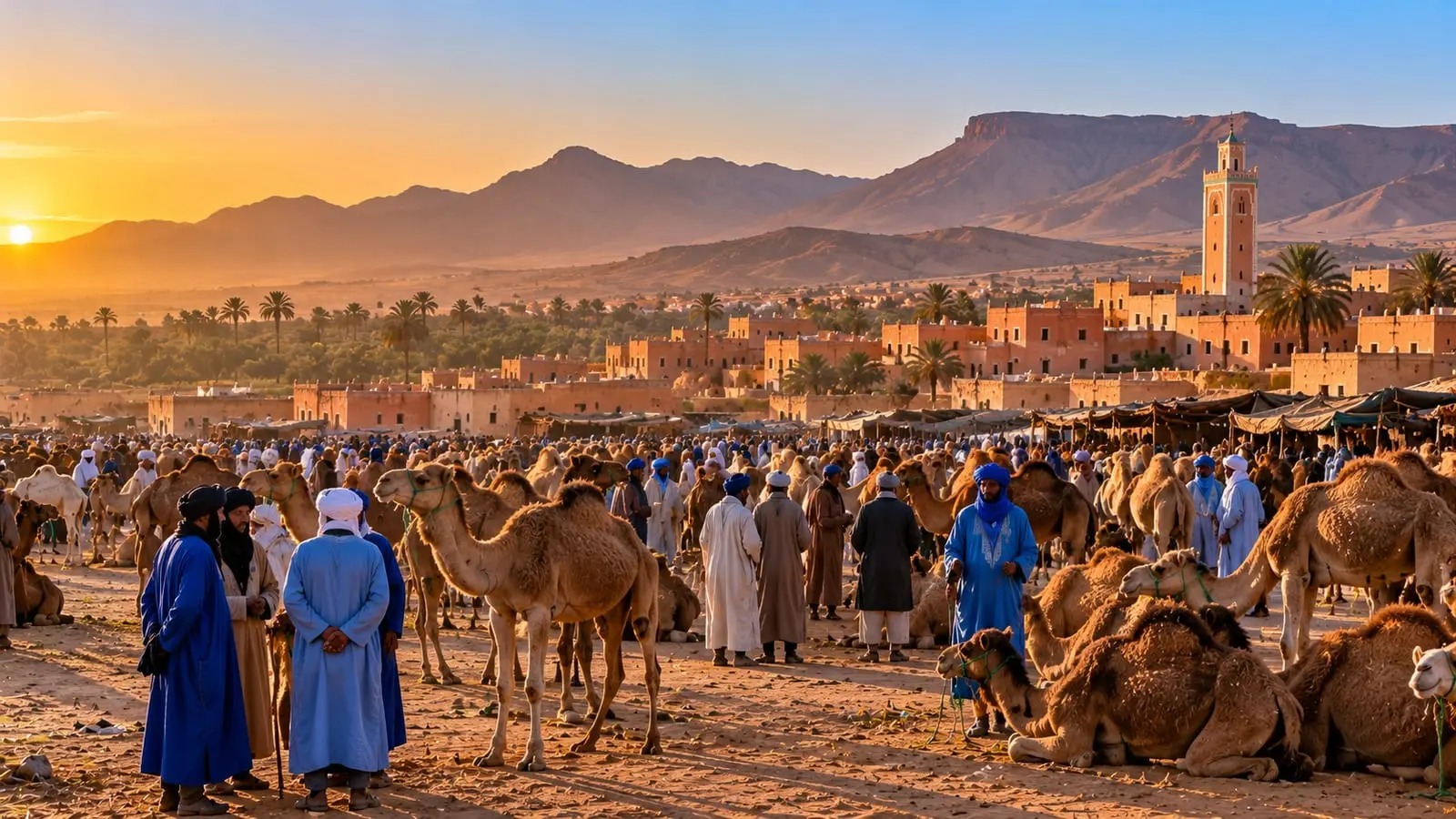
Poetry, tidinit lute music, women's colourful melhfa and men's blue daraa: Hassani culture is protected by the 2011 Constitution.

Sahraoui culture centres on hospitality, oral poetry (the Hassan dialect's rich poetic tradition), camel husbandry and the tent (khaïma) as the fundamental social space. Tea ceremony here is different from northern Morocco — three small glasses of very sweet tea, prepared on the ground, with a social ritual lasting 30–45 minutes. The Guedra dance and Sahraoui music (using the tidinit lute and t'bal drum) are performed at celebrations. Traditional blue and black melhfa robes (for women) and white daraa (for men) remain everyday dress.

CHAPTER VII

The people

Sahrawis and northern Moroccans

The city brings together Sahrawi families, from nomadic tribes such as the Reguibat, and Moroccans from the north who came to work in administration, fishing and phosphates. The khaima tent remains the place for big family celebrations.

Hassaniya and poetry

Hassaniya is the Sahrawi language, with a very lively oral poetry (the "gaf"). The melhfa, women's colourful veil, is worn every day.

CHAPTER VIII

At the table

Sahrawi teaThree glasses, slowly prepared with lots of foam: “the first bitter like life, the second sweet like love, the third gentle like death”.

CHAPTER IX

Did you know?

  • "Laayoune" means "the springs" in Arabic.
  • The town was founded by the Spanish in 1938 near the Saguia el-Hamra river.
  • The Bou Craa phosphate conveyor is so long it can be seen from space.

Frequently asked questions about Laayoune

How many days do you need in Laayoune?

Allow 1–3 days to see Laayoune without rushing. That is the length we use in our itineraries.

When is the best time to visit Laayoune?

The best months for Laayoune are November, December, January, February and March.

How much does a day in Laayoune cost?

Per person per day, accommodation included: about $35 on a budget, $80 mid-range and $180 for a luxury stay.

How do you get to Laayoune?

Hassan I Airport (EUN) receives flights from Casablanca (1.5h daily). CTM buses from Agadir (10h) and Dakhla (6h). The N1 coastal highway is the main road connection — dramatic but very long from the north.

What is there to see in Laayoune?

The must-sees of Laayoune: Foum El Oued Dunes, Laâyoune Plage, Mosquée Hassan II and Place du Mechouar.

What should you eat in Laayoune?

To taste in Laayoune: Khobz, Moroccan mint tea, Oranges with cinnamon and Msemen.

Where should you stay in Laayoune?

The best areas to stay: Ville Nouvelle, Cité Dakhla and Laâyoune Plage.

Is Laayoune safe?

Yes, Laayoune welcomes many travellers every year. The precautions are those of any tourist destination: watch your belongings in crowds, politely turn down unofficial guides, agree on a taxi fare before getting in.

Is Laayoune good for families?

Yes, Laayoune is easy to visit with children.

Sources

To go further and check what we write.

Other sources

Read next

THE END

Now go and see Laayoune.

By Yassine and Issam · Spotted a mistake? Tell us