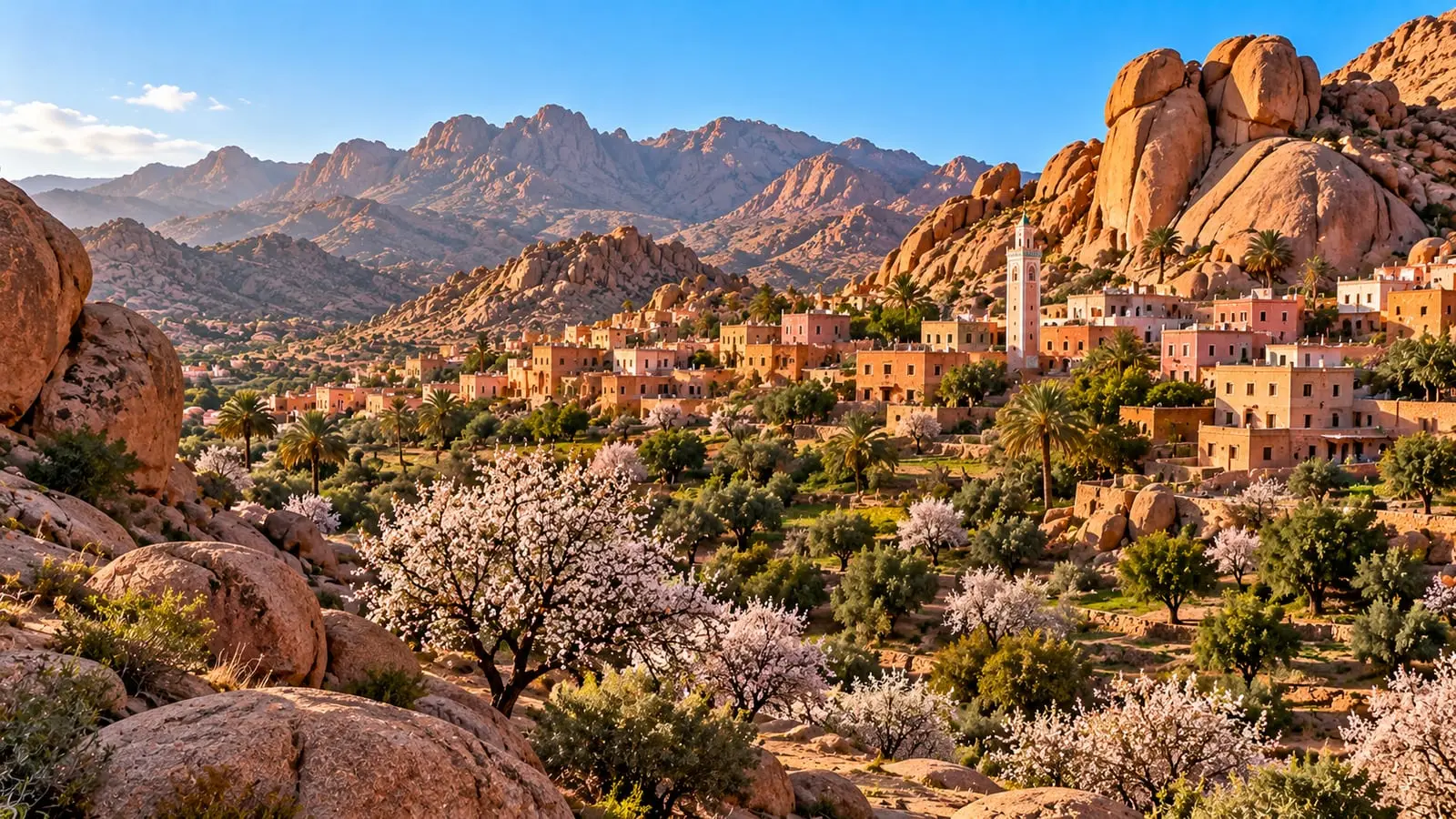
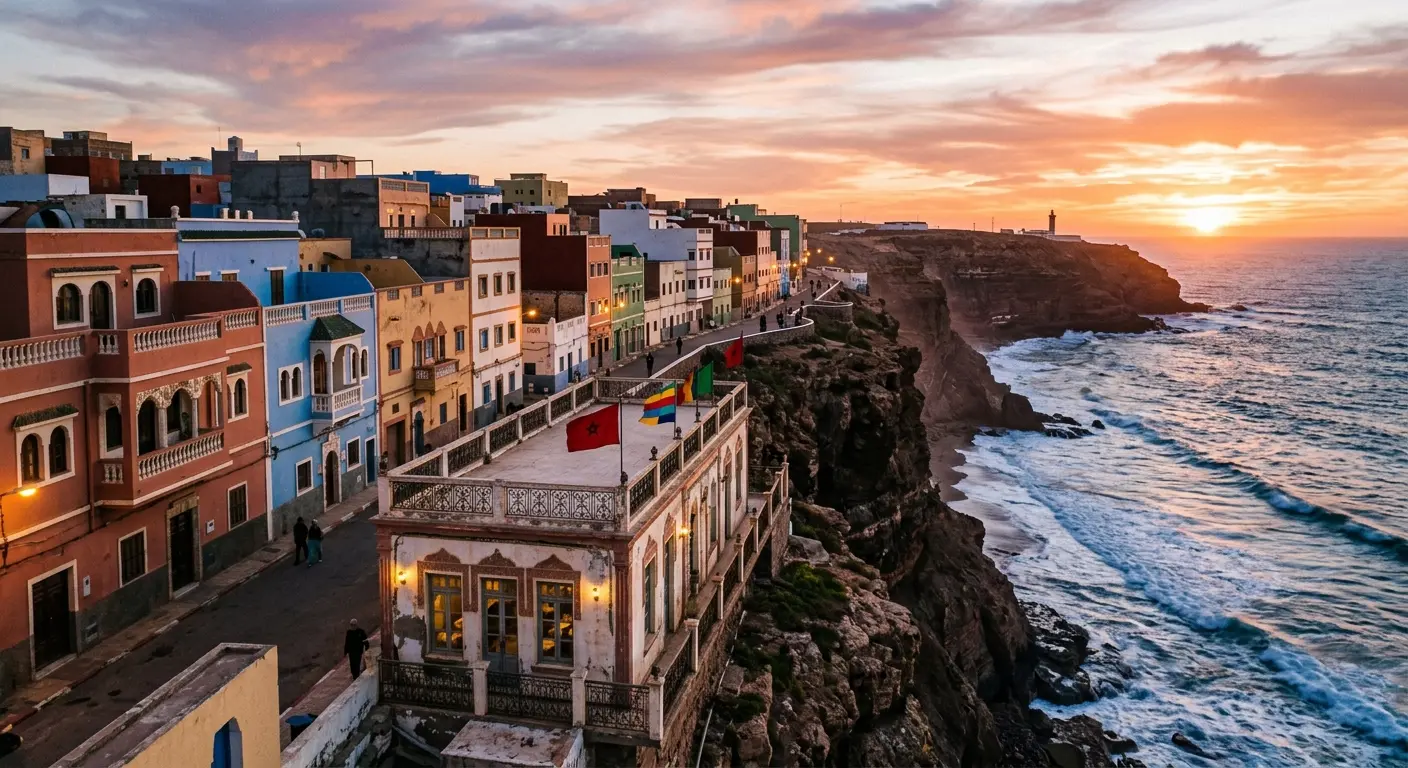
the ramparts of Tiznit

THE BOOK OF

Tiznit — All about Tiznit

تيزنيت

History, places, people, culture and food of Tiznit, told by two Moroccans.

10 chapters3 min readBy Yassine and Issam
Things to do in Tiznit
CONTENTS · I
  1. I. At a glance
  2. II. History
  3. III. Key dates
  4. IV. Landmarks
  5. V. People
  6. VI. Culture and traditions
  7. VII. The people
  8. VIII. At the table
  9. IX. Did you know?
  10. X. Frequently asked questions

CHAPTER I

At a glance

Founded in 1882 by Sultan Moulay Hassan I, who ringed it with five kilometres of ochre walls, Tiznit is the capital of Berber silver. It was also here that El Hiba proclaimed himself sultan in 1912 to resist France.

Arabic name
تيزنيت
Coordinates
29.6974, -9.7316
Best months
Oct, Nov, Mar, Apr

CHAPTER II

History

Lalla Zninia's spring

Before the town there was the spring, Ain Akdim, the "blue spring". According to tradition it was discovered by a holy woman, Lalla Zninia, who is said to have given the town its name. The medina is divided into four quarters organised around this water, which irrigated many gardens.

The spring has lost much of its flow since another source, the Reggada spring, was tapped in the neighbouring Ouled Jerrar tribe.
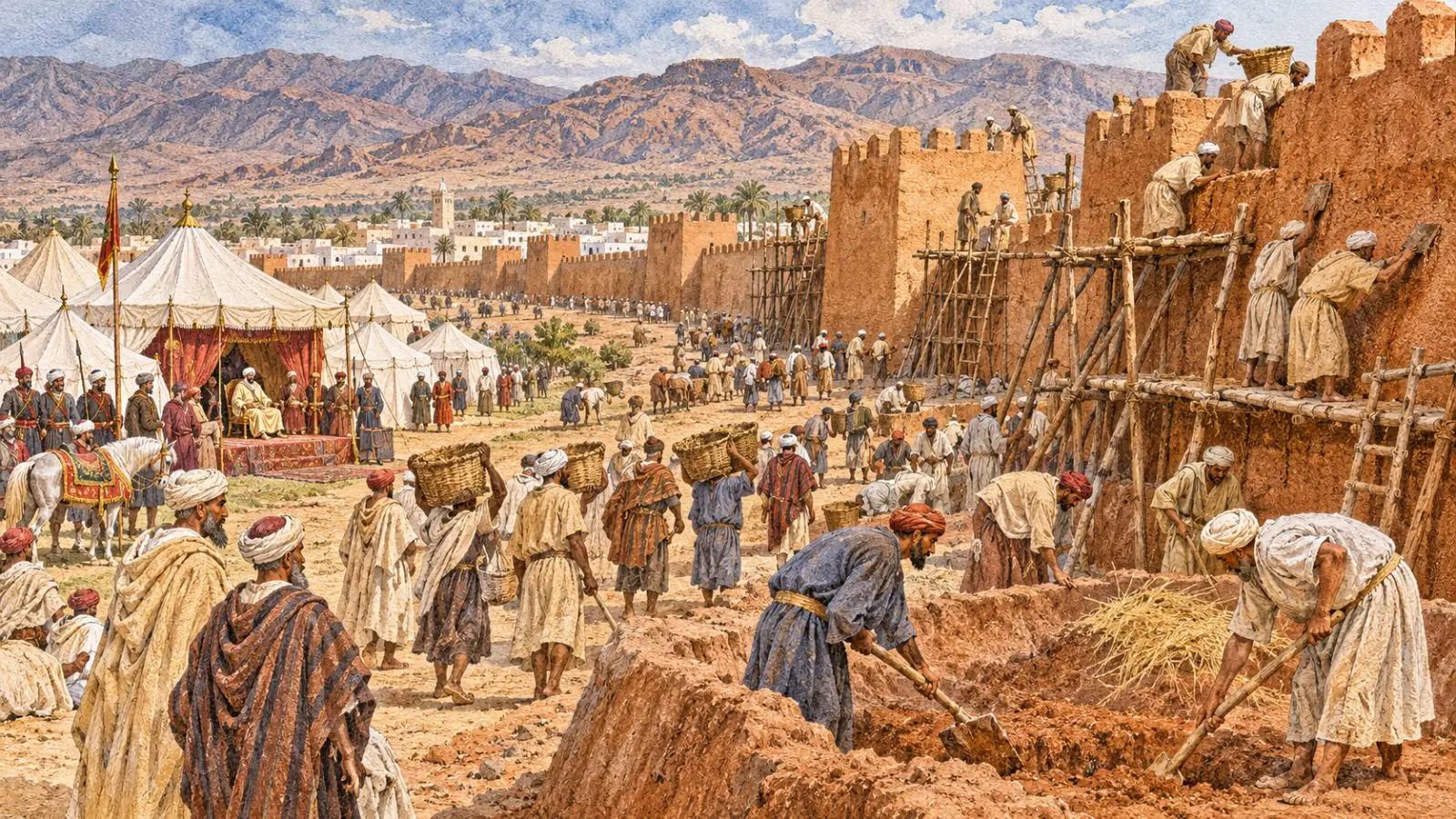
Moulay Hassan I's town (1882-1886)

the town of Moulay Hassan I

The town was founded in 1882 by the Alaouite sultan Moulay Hassan I, who in 1883 surrounded it with a long wall that still encloses the old medina. He wanted to assert the makhzen's authority in the south, against the Souss tribes and against Spain, which had been trying to settle at Ifni since the Hispano-Moroccan war of 1860.

His 1886 expedition strengthened his power in the region further. The sultan's palace still stands on Mechouar Square.

El Hiba, the "blue sultan" (1912)

In 1912, after the protectorate was signed, it was in Tiznit that Ahmed al-Hiba was proclaimed sultan; he was the son of the great Saharan holy man Ma al-Aynayn, whose tomb is in the town. His followers from the Sahara entered Marrakech before being defeated by the French army at Sidi Bou Othman in September 1912.

The first French officer to enter the town was Captain Léopold Justinard, nicknamed the "Chleuh captain", who held it from 1916 to 1921, later joined by the caid Tayeb el-Goundafi.

The silver capital

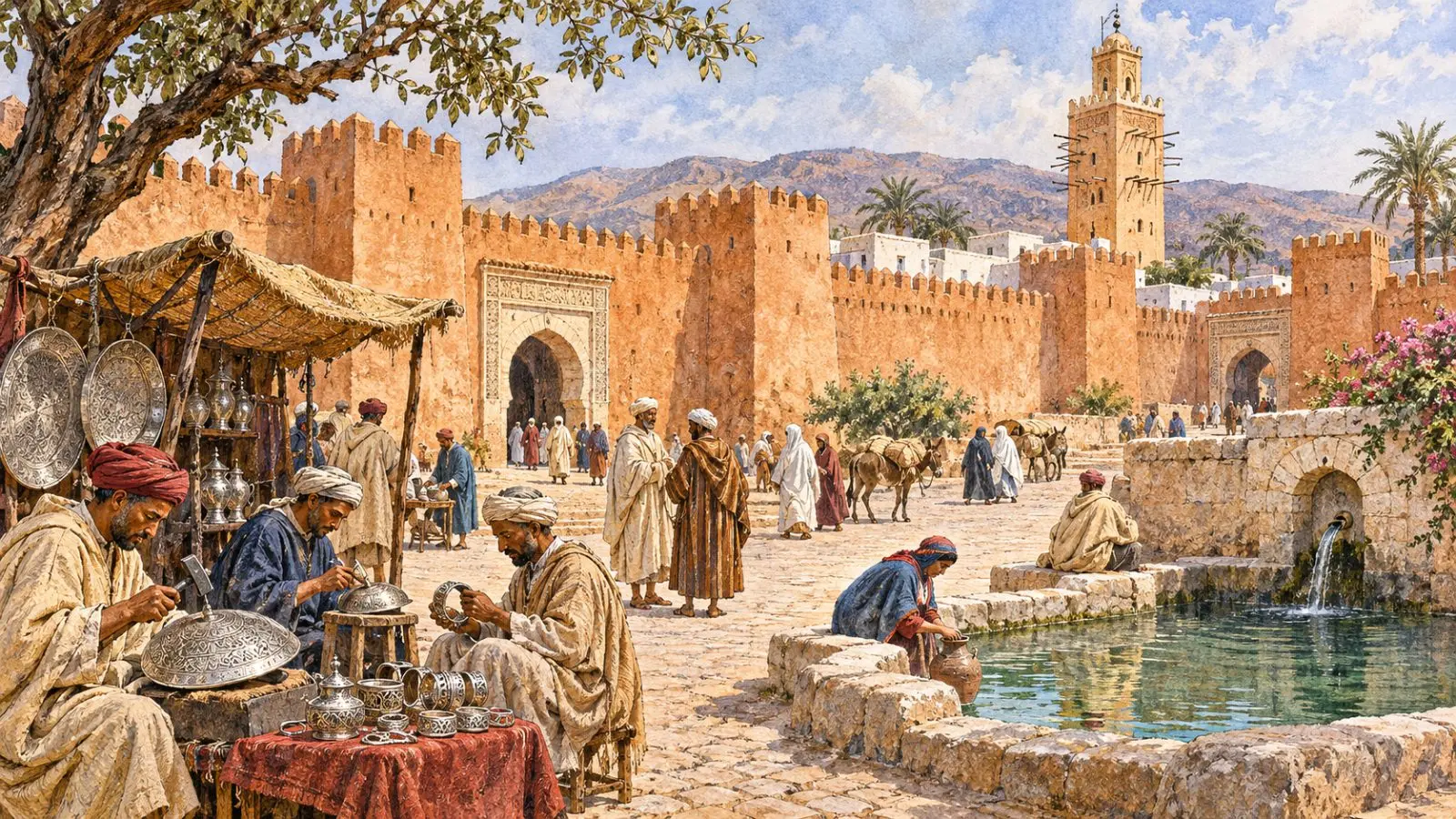
Tiznit owes its reputation to its silversmiths. The silver fibula, the tazerzit, which Amazigh women wear to fasten their drapes, is the most worked object, along with bracelets, necklaces and daggers. Long in the hands of Jewish craftsmen, this skill is now passed on in the souk's Amazigh workshops.

The town is also the gateway to the Anti-Atlas and the Aglou coast, and the capital of a province of the Souss-Massa region.

CHAPTER III

Key dates

  1. 1882

    Sultan Moulay Hassan I builds the walls of Tiznit.

  2. 1912

    Ahmed al-Hiba proclaims himself sultan in Tiznit against the French.

CHAPTER IV

Landmarks

1

The jewellers' souk

Dozens of silver shops; price depends on weight and craftsmanship.

2

The blue spring

According to legend, the holy woman Lalla Zninia made this spring flow, and the town grew around it.

3

The walls and Great Mosque

The minaret bristling with wooden stakes, typical of the Saharan south, towers over the medina.

CHAPTER V

People

  • Moulay Hassan Ier1836–1894Alaouite sultan who founded the town in 1882.
  • Ahmed El Hiba1876–1919Proclaimed sultan in Tiznit in 1912, a figure of the southern resistance.

CHAPTER VI

Culture and traditions

Amazigh silver

Jewellery served as dowry and protection; the large triangular fibula, the tazerzit, is Tiznit's emblem.

Silver jewelry — particularly heavy Berber pieces with geometric patterns, enameling, and semi-precious stones — is the city's defining craft. The weekly Thursday market draws Berber women from surrounding villages to sell and buy. Traditional Amazigh tattooing patterns (now more commonly painted with henna) are preserved in the jewelry designs.

CHAPTER VII

The people

The people of Tiznit

Tiznit is a town of jewellers and Anti-Atlas traders. For centuries, silversmithing was in the hands of Jewish craftsmen; their skills are now carried on in the souk's Amazigh workshops.

An Amazigh-speaking town

Tashelhit dominates; the jewellery itself carries Amazigh symbols, like women's triangular fibula (tazerzit).

CHAPTER IX

Did you know?

  • The town was founded in 1882 by Sultan Moulay Hassan I to assert his authority over the south.
  • In 1912 Ahmed al-Hiba, the "blue sultan", was proclaimed here to resist the French.
  • Amazigh silver jewellery is sold by weight: you pay for the metal, then the work.

Frequently asked questions about Tiznit

How many days do you need in Tiznit?

Allow 1–2 days to see Tiznit without rushing. That is the length we use in our itineraries.

When is the best time to visit Tiznit?

The best months for Tiznit are October, November, March and April.

How much does a day in Tiznit cost?

Per person per day, accommodation included: about $25 on a budget, $60 mid-range and $150 for a luxury stay.

How do you get to Tiznit?

CTM buses from Agadir (2h) and Marrakech (5h). Grand taxis link to surrounding towns. No train or airport.

What is there to see in Tiznit?

The must-sees of Tiznit: Silversmiths' souk, Agadir Ouflla, Source Bleue and Thursday souk.

What should you eat in Tiznit?

To taste in Tiznit: Amlou, Khobz, Moroccan mint tea and Oranges with cinnamon.

Where should you stay in Tiznit?

The best areas to stay: Medina.

Is Tiznit safe?

Yes, Tiznit welcomes many travellers every year. The precautions are those of any tourist destination: watch your belongings in crowds, politely turn down unofficial guides, agree on a taxi fare before getting in.

Is Tiznit good for families?

Yes, Tiznit is easy to visit with children.

Sources

To go further and check what we write.

Other sources

Read next

THE END

Now go and see Tiznit.

By Yassine and Issam · Spotted a mistake? Tell us