
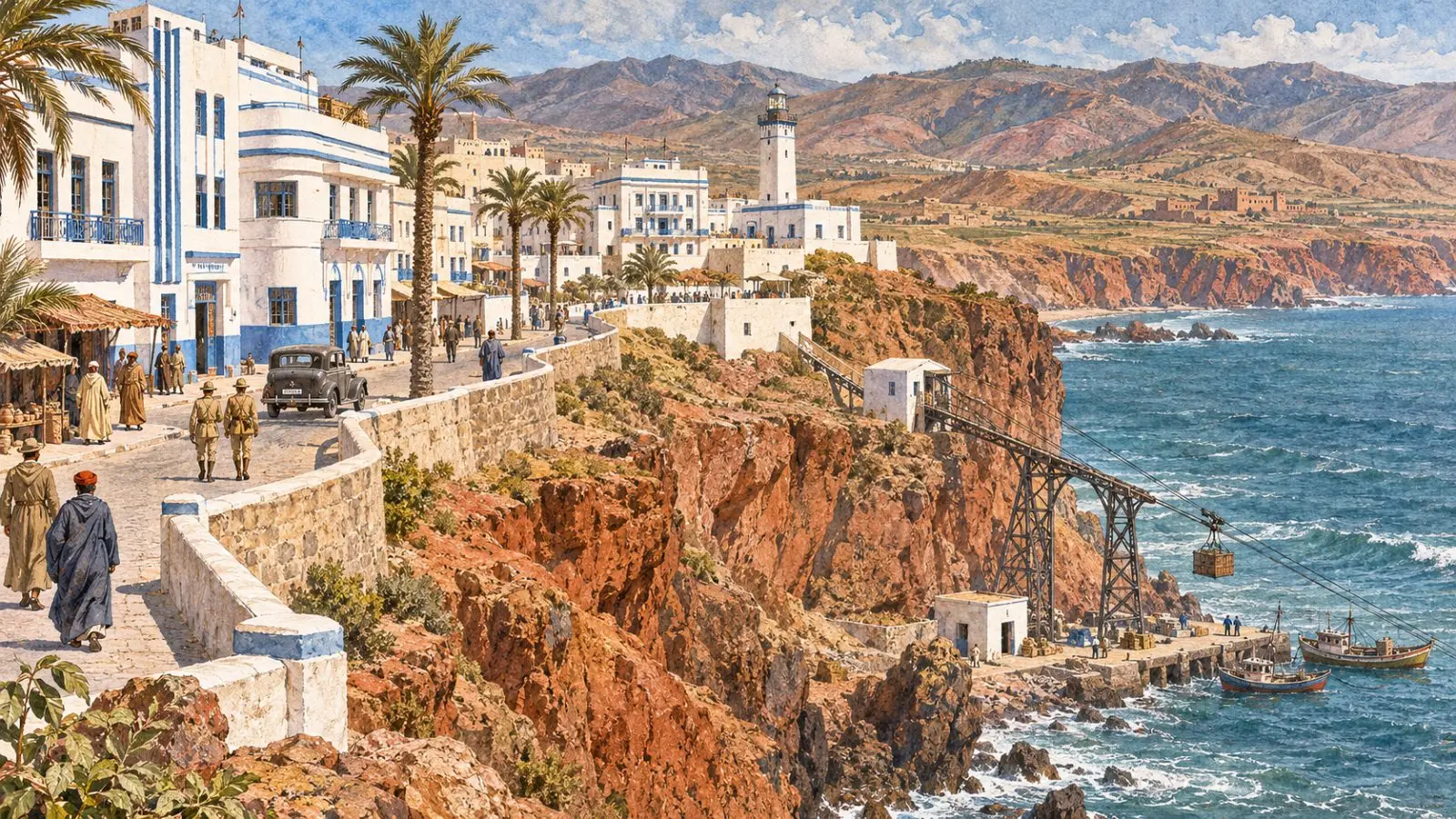
Sidi Ifni, a Spanish Art Deco town

THE BOOK OF

Sidi Ifni — All about Sidi Ifni

سيدي إفني

History, places, people, culture and food of Sidi Ifni, told by two Moroccans.

9 chapters3 min readBy Yassine and Issam
Things to do in Sidi Ifni
CONTENTS · I
  1. I. At a glance
  2. II. History
  3. III. Key dates
  4. IV. Landmarks
  5. V. Culture and traditions
  6. VI. The people
  7. VII. At the table
  8. VIII. Did you know?
  9. IX. Frequently asked questions

CHAPTER I

At a glance

A Spanish enclave until 1969, Sidi Ifni keeps its blue-and-white Art Deco buildings facing the Atlantic. A quiet town of fishermen and surfers, it is close to the Legzira arches.

Arabic name
سيدي إفني
Other names
Santa Cruz de la Mar Pequeña · Ifni
Coordinates
29.3797, -10.1726
Best months
Apr, May, Sept, Oct

CHAPTER II

History

Land of the Ait Baamrane

Sidi Ifni is the historic capital of the Ait Baamrane, an Amazigh confederation with a warrior reputation, settled in the region probably since Almoravid times, after Masmuda and then Guezoula tribes. Herders and traders, they acted as intermediaries in trans-Saharan trade with Europe and northern Morocco.

In 1476 Castilians founded a fortified trading post on this coast, Santa Cruz de Mar Pequeña, taken by the Saadians in 1524. Its exact location, somewhere between Agadir and Tarfaya, remains unknown; Spain would later place it at Ifni.
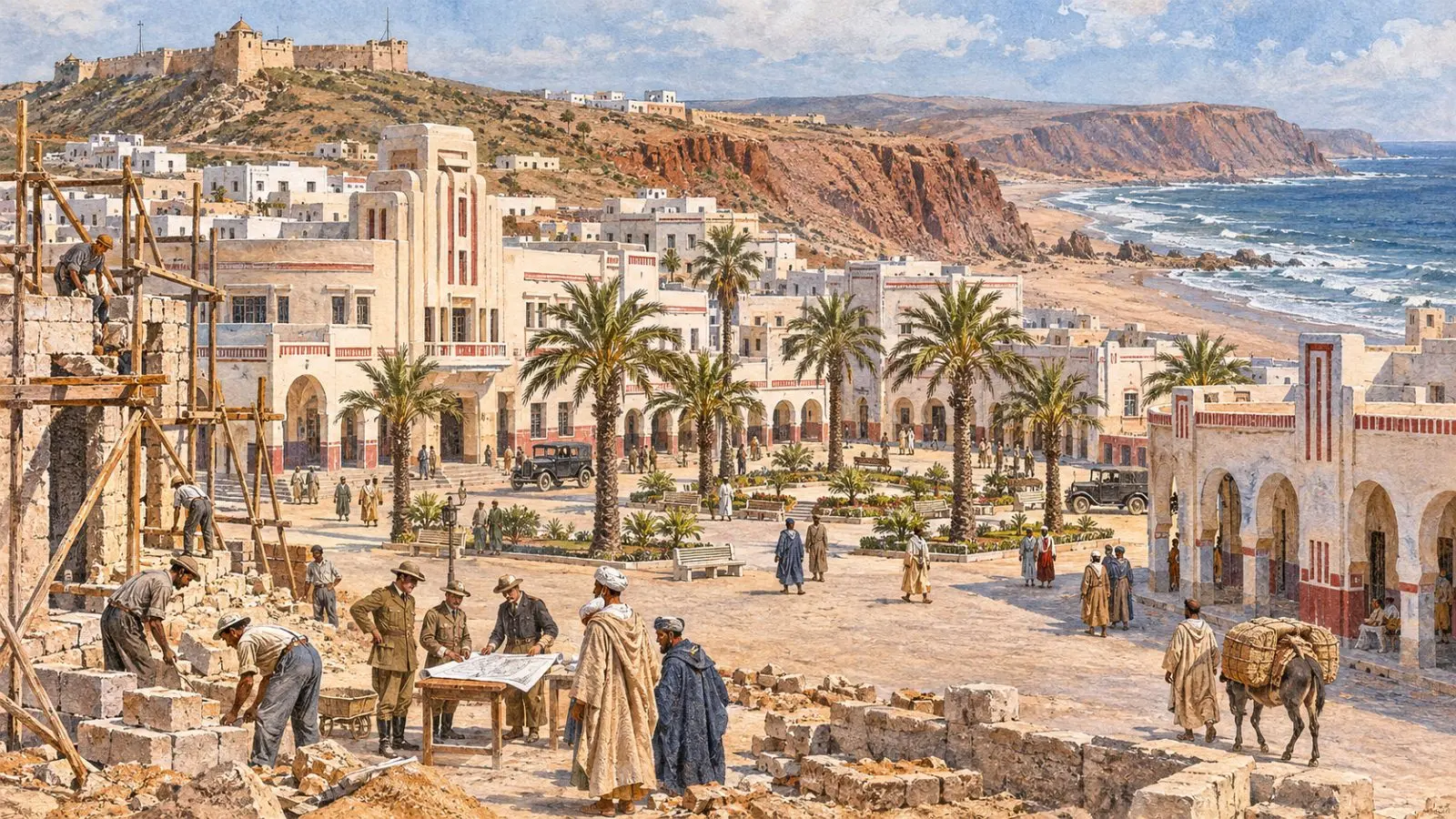
From 1860 to the Spanish town of 1934

the Spanish town under construction

After the Hispano-Moroccan war, the 1860 treaty granted Spain "enough territory for a fishing settlement" in the Ifni area. Spain only truly occupied it in 1934, making it a military base and a political centre of Spanish West Africa.

The town was built on a regular plan around an oval square, with consulate, governor's palace, church and town hall in an Art Deco style. It gained an airport, a port linked by cable car, cinemas and a casino. Up to 15,000 Spanish soldiers were stationed here.

The Ifni War (1957-1958)

After independence in 1956, Morocco claimed the territory. In late 1957 the Liberation Army attacked the Spanish garrisons: the Ifni War, never formally declared. The Ait Baamrane played a central role. Spain fell back to a belt a few kilometres around the town, and the rest of the territory returned to Morocco.

On 1 April 1958 the Angra de Cintra agreements ceded Cape Juby, around Tarfaya, to Morocco. Sidi Ifni itself stayed Spanish and became a province of Spain.

Return to Morocco (1969)

Under international pressure and after long negotiations, the Treaty of Fes of 4 January 1969 ended Spanish sovereignty: Sidi Ifni returned to Morocco in 1969, thirteen years after independence. Almost all the Spanish left; the last of them, María Gómez, died there in 2001.

The town keeps its Art Deco heritage, its airstrip and the remains of the sea cable car. Since 6 March 2010 it has been the capital of its own province, separate from Tiznit.

CHAPTER III

Key dates

  1. 1934

    Spain occupies Ifni and builds an Art Deco town.

  2. 1969

    Spain returns Sidi Ifni to Morocco.

CHAPTER IV

Landmarks

1

Hassan II square

The former Plaza de España, with the old consulate, the old church and their Art Deco façades.

2

The Legzira arches

About ten kilometres away, red arches carved by the sea; one collapsed in 2016, the other still stands. Go at low tide.

3

The port and beach

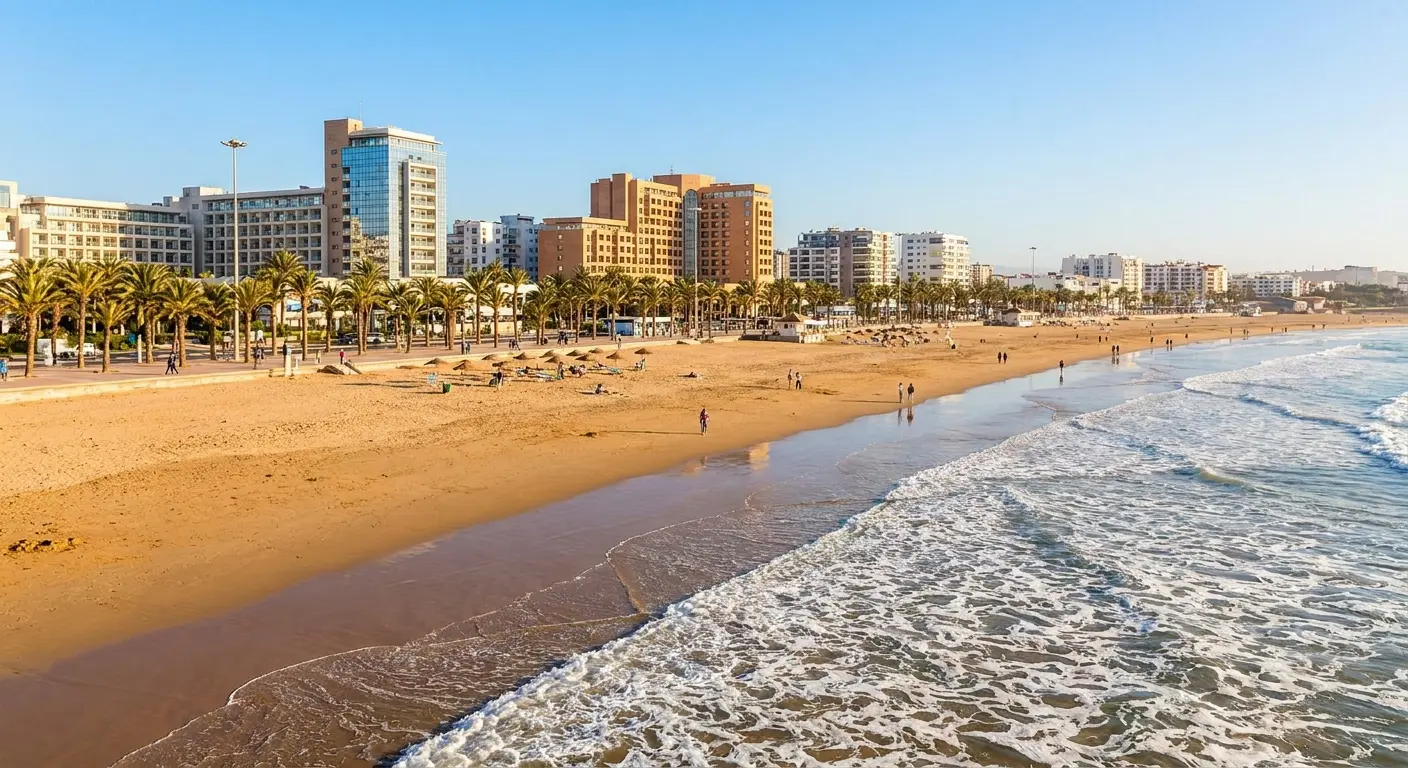
A long surf beach and the old Spanish cable system that loaded ships from the cliff.

CHAPTER V

Culture and traditions

The Ait Baamrane

The region's Amazigh tribe, known for its resistance, celebrates the anniversary of Ifni's return every year.

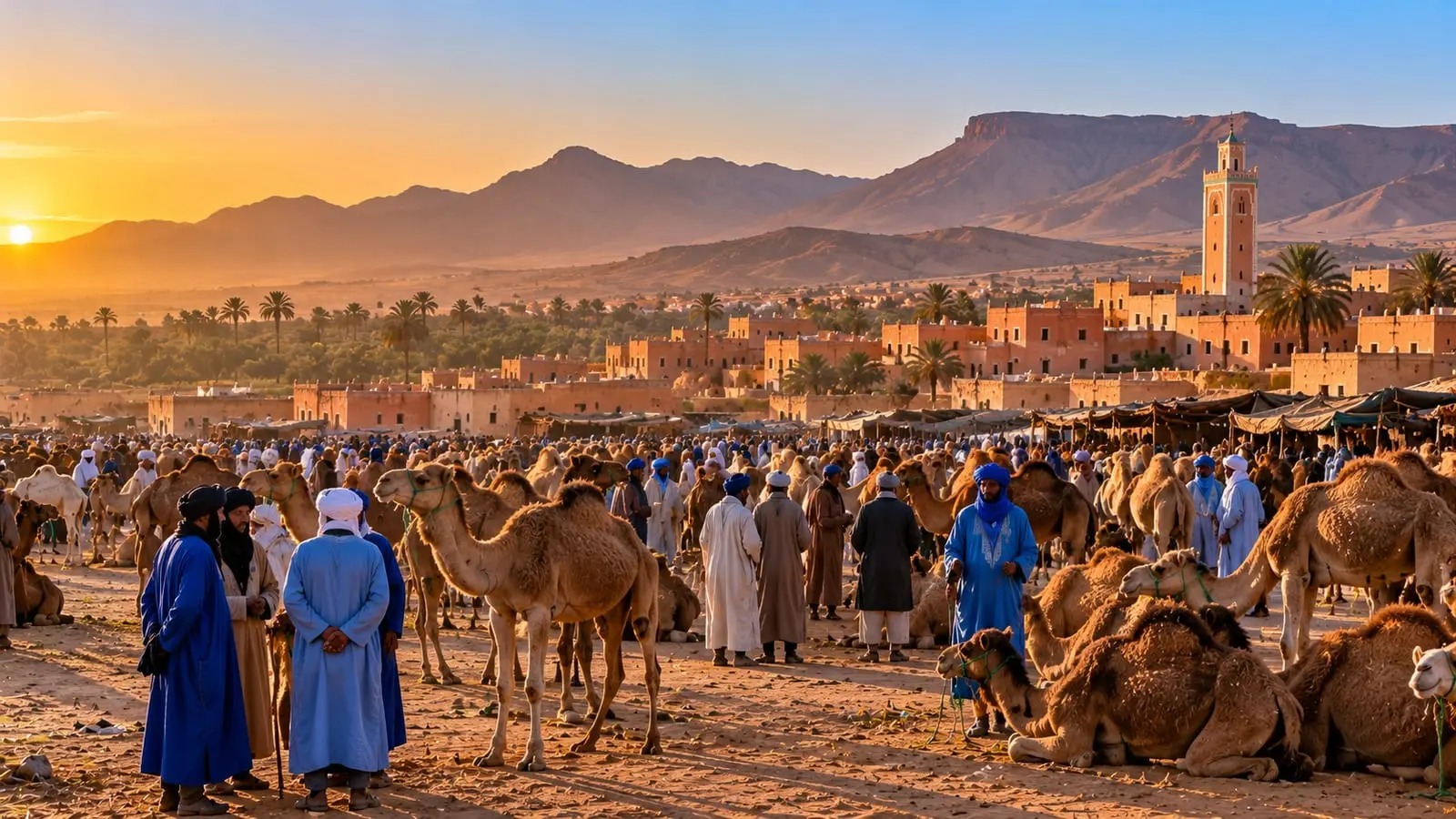
The city hosts one of Morocco's best surf breaks — the 'Sidi Ifni left' beach break. The surrounding Guelmim region is the traditional territory of the Reguibat nomads, known as 'the people of the clouds'. The camel market at Guelmim (90km) is one of Morocco's most authentic.

CHAPTER VI

The people

The Ait Baamrane

The town is the heart of the Ait Baamrane Amazigh confederation, known for its resistance: it fought the Spanish in 1957-1958. Today Sidi Ifni also draws European retirees and surfers who love its calm.

Three languages

Tashelhit is the mother tongue, darija the town language, and older people still speak Spanish.

CHAPTER VII

At the table

Fish and prickly pearGrilled fish at the port and, in summer, Ait Baamrane prickly pears, famous across the country.

CHAPTER VIII

Did you know?

  • Sidi Ifni only returned to Morocco in 1969, thirteen years after independence.
  • The Spanish identified it with the old Santa Cruz de Mar Pequeña, a 15th-century Castilian trading post.
  • Sea fog is so frequent that it waters cacti and argan trees on the hills.

Frequently asked questions about Sidi Ifni

How many days do you need in Sidi Ifni?

Allow 1–2 days to see Sidi Ifni without rushing. That is the length we use in our itineraries.

When is the best time to visit Sidi Ifni?

The best months for Sidi Ifni are April, May, September and October.

How much does a day in Sidi Ifni cost?

Per person per day, accommodation included: about $25 on a budget, $60 mid-range and $130 for a luxury stay.

How do you get to Sidi Ifni?

Grand taxis from Tiznit (1h) and Guelmim (1.5h). No direct bus from major cities. Driving is recommended.

What is there to see in Sidi Ifni?

The must-sees of Sidi Ifni: Spanish Art Deco buildings, Atlantic cliffs, Surf beach and Sea landing strip.

What should you eat in Sidi Ifni?

To taste in Sidi Ifni: Khobz, Moroccan mint tea, Oranges with cinnamon and Msemen.

Where should you stay in Sidi Ifni?

The best areas to stay: Art Deco center and Beach area.

Is Sidi Ifni safe?

Yes, Sidi Ifni welcomes many travellers every year. The precautions are those of any tourist destination: watch your belongings in crowds, politely turn down unofficial guides, agree on a taxi fare before getting in.

Is Sidi Ifni good for families?

Yes, Sidi Ifni is easy to visit with children.

Sources

To go further and check what we write.

Other sources

Read next

THE END

Now go and see Sidi Ifni.

By Yassine and Issam · Spotted a mistake? Tell us