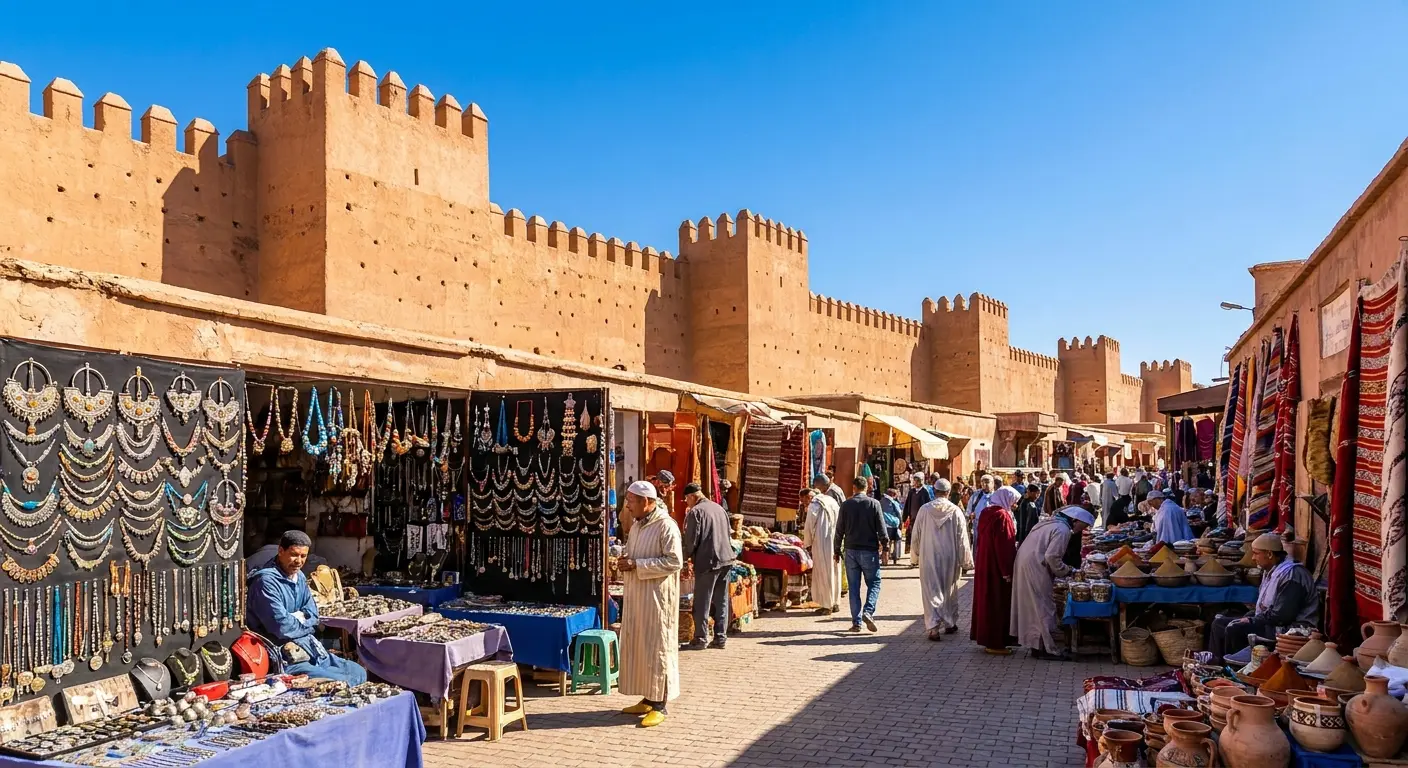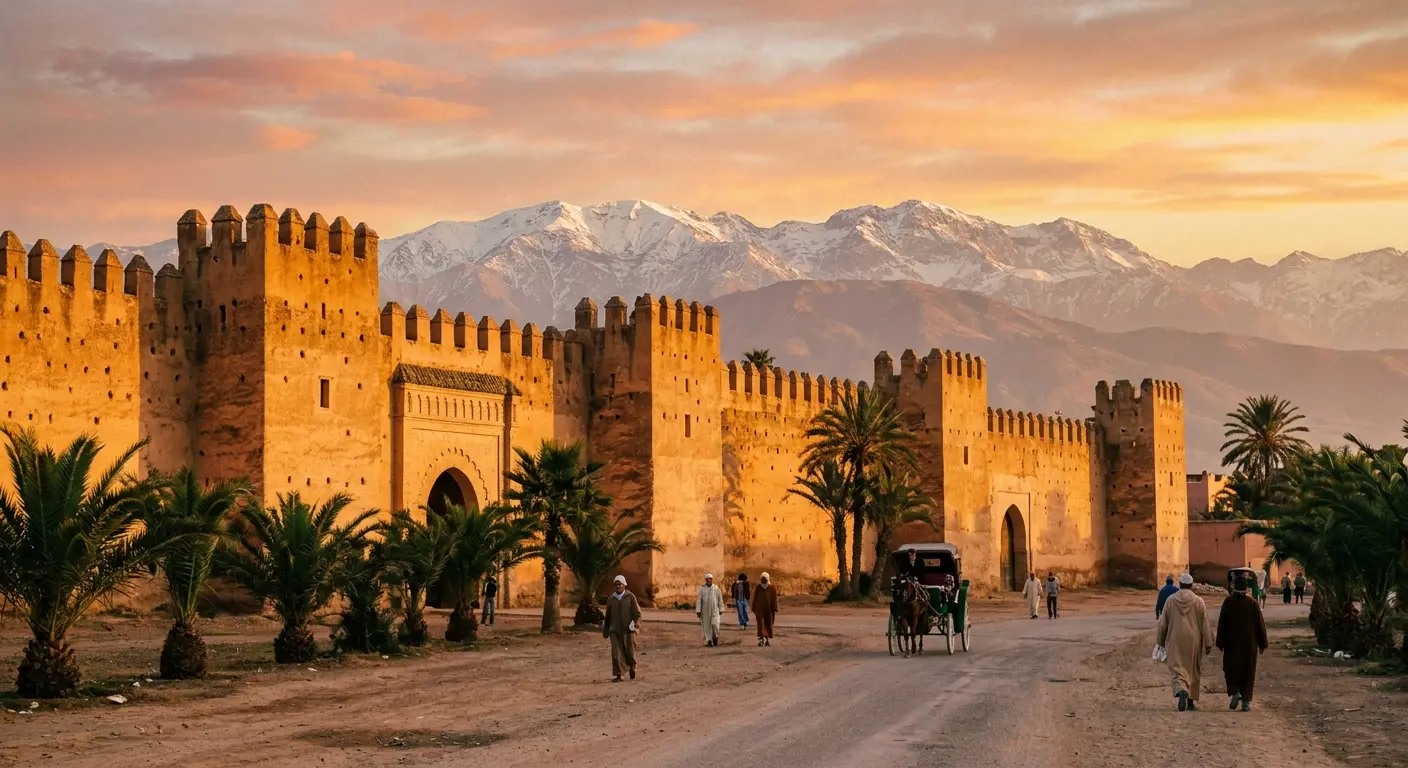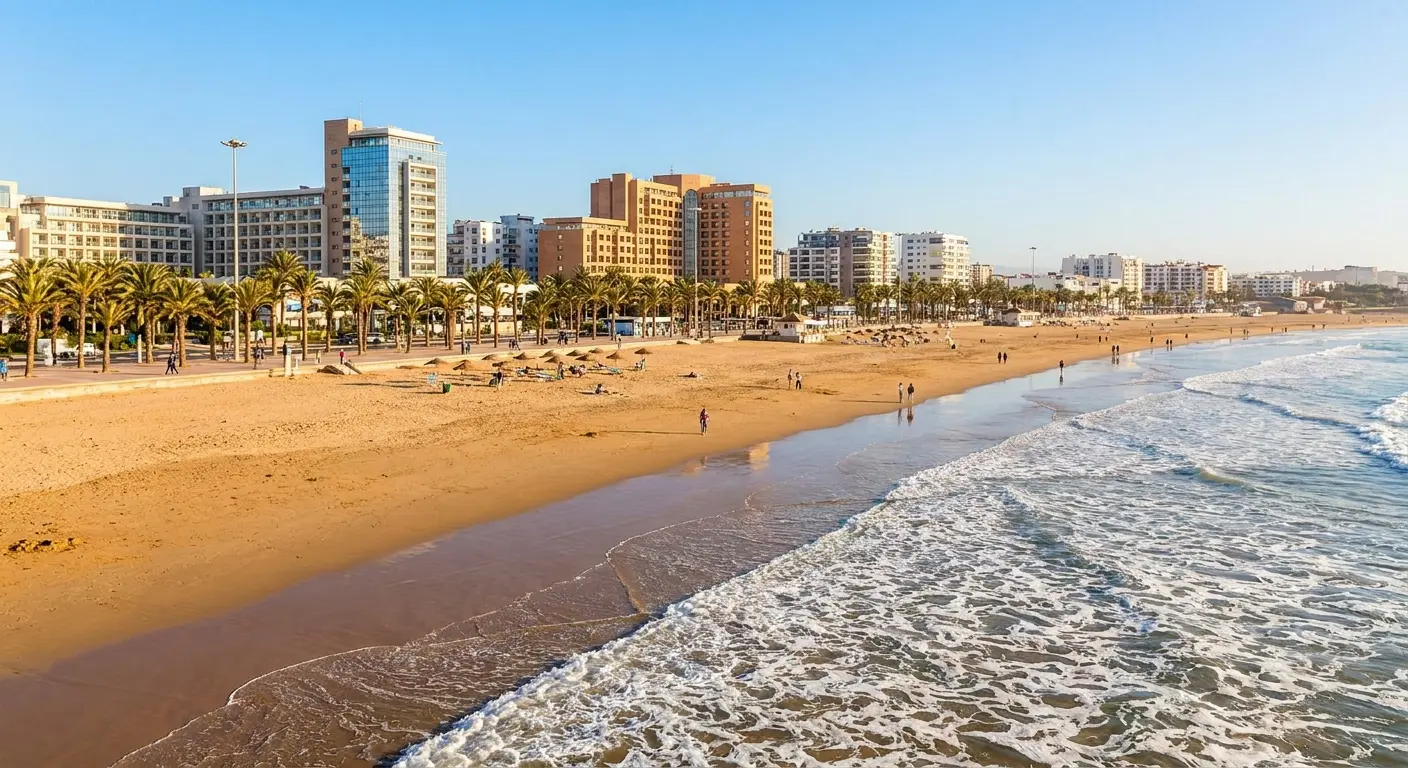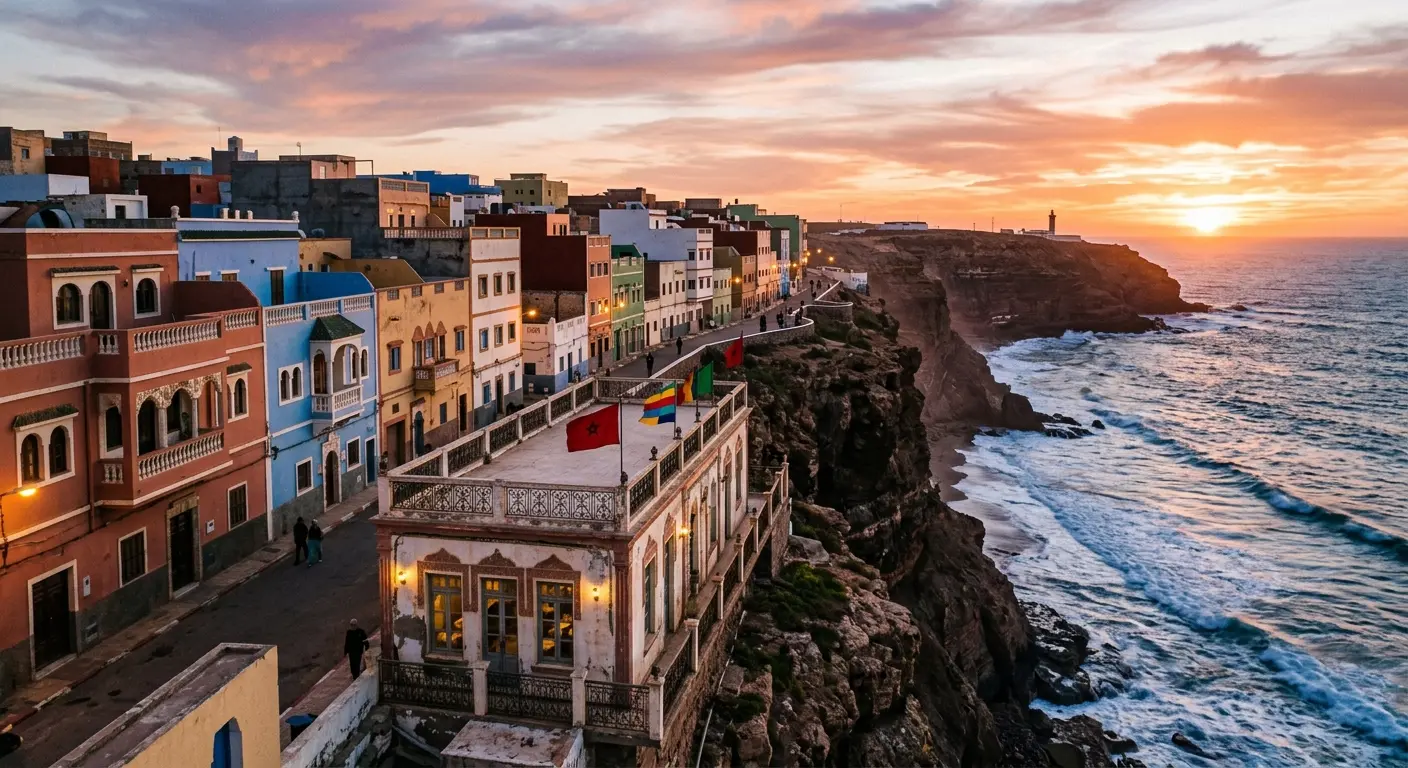

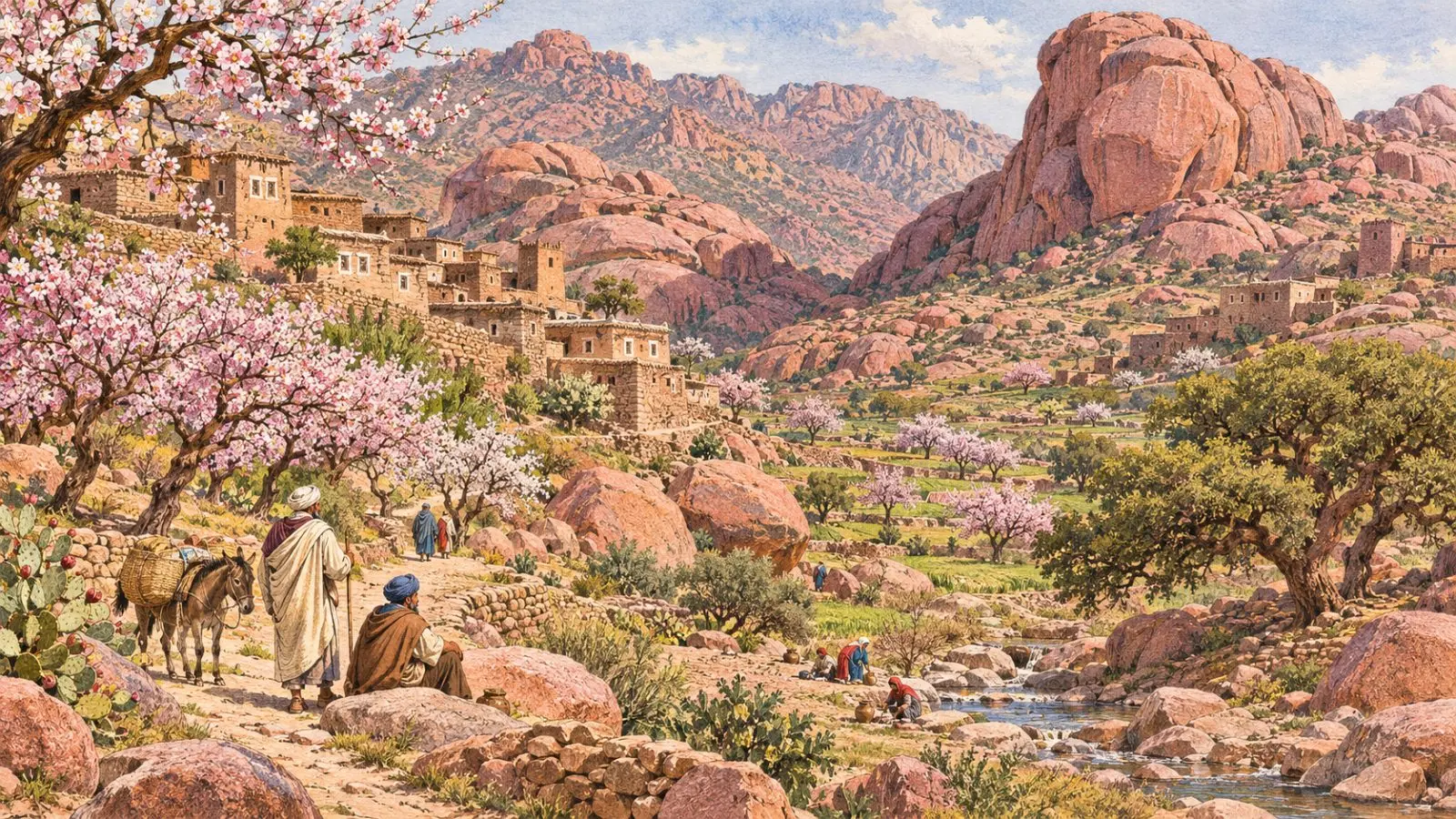
the Ammeln valley and its granite rocks

THE BOOK OF

Tafraout — All about Tafraout

تافراوت

History, places, people, culture and food of Tafraout, told by two Moroccans.

10 chapters3 min readBy Yassine and Issam
Things to do in Tafraout
CONTENTS · I
  1. I. At a glance
  2. II. History
  3. III. Key dates
  4. IV. Landmarks
  5. V. People
  6. VI. Culture and traditions
  7. VII. The people
  8. VIII. At the table
  9. IX. Did you know?
  10. X. Frequently asked questions

CHAPTER I

At a glance

In the heart of the Anti-Atlas, among pink granite mountains, Tafraoute and the Ameln valley are almond country. The villages clinging to the slopes saw their men leave to become grocers all over Morocco.

Arabic name
تافراوت
Other names
Tafraout
Coordinates
29.7189, -8.9764
Best months
Feb, Mar, Apr, Oct, Nov

CHAPTER II

History

The Anti-Atlas engravings

Southern Morocco is one of the oldest areas of stable human settlement. The rock engravings of the Anti-Atlas, several thousand years old, depict animals now gone from the region: antelopes, elephants, panthers, hyenas. They bear witness to a time when the land was greener, with plentiful water and forests of oak, argan and jujube.

The same motifs are found from the Anti-Atlas to the Tassili in Algeria.
The Jazula and the silver of Tamdoult

The region is home to the Amazigh tribes of Jazula (Guezoula), in the Anti-Atlas mountains. In the 9th century the Idrisids founded the town of Tamdoult in the Jebel Bani to work silver mines; the geographers al-Bakri and al-Yaqubi mention it. Tafraout acted as a trading intermediary between the Sahara and the Souss plain.

The Jazula tribes often remained semi-independent: the Almoravids subdued them, the Almohads struggled to, and they later backed the Saadians. Each village was run by a djemaa, a council of about a dozen men, and the tribal chief, the amghar, was elected on market day.

The last resistance (1912-1934)

After the 1912 protectorate treaty, the people of the rural Souss resisted the French army for more than twenty years. In 1934 fighters from the Tafraout tribes fought a last battle near the Ait Abdallah. The French then set up a military post at Tafraout, and the djemaa was left to handle only everyday matters.

"Tafraout produces men" (1956-1960)

At independence, the former resistance fighter Hadj Ahmed Ougdourt, of the Issy tribe, became caid of Tafraout. From 1956 to 1960 he mobilised residents to build a school in every tribe and roads between villages and to plant olive trees; he founded the region's first cooperative, a library and a carpet workshop.

In 1959 King Mohammed V visited Tafraout and asked the notables why their land grew so little wheat. They are said to have replied: "Tafraout produces men above all."

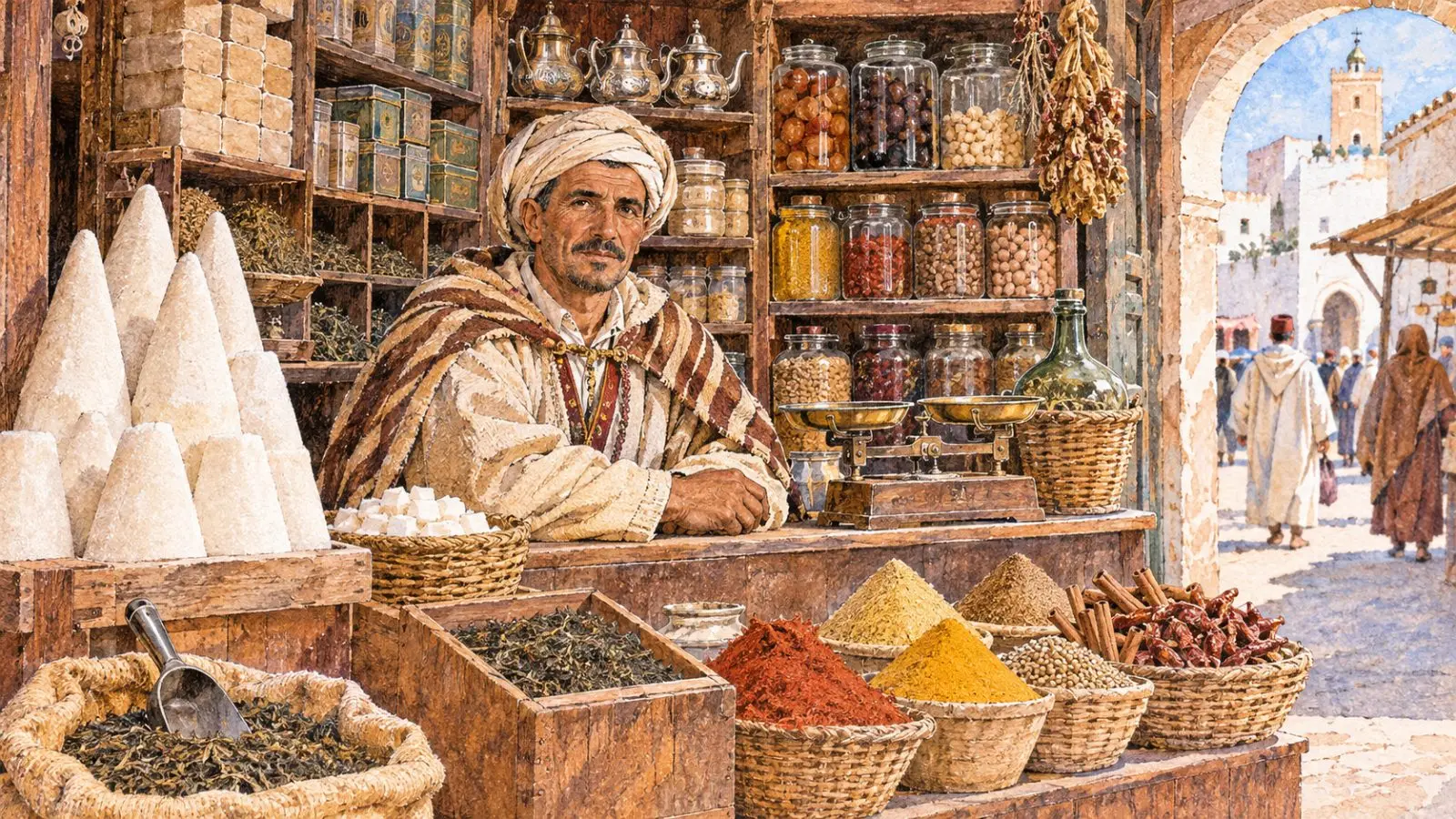
The grocers of the Ammeln

the grocers of the Ammeln

With too little land, the region's men went to work far away, mainly as grocers and traders in Casablanca, Tangier or Europe. Their success built the Soussis' reputation throughout Morocco.

The money earned comes back to the Ammeln valley, where big houses are built below the pink granite rocks and families return for celebrations and the almond festival.

CHAPTER III

Key dates

  1. 1984

    Belgian artist Jean Vérame paints the blue rocks near the town.

CHAPTER IV

Landmarks

1

The Ameln valley

A road of villages, oases and trails at the foot of Jbel Lekst.

2

Napoleon's Hat

A famously shaped granite rock at Agard Oudad, just south of town.

3

The Ait Mansour gorges

A palm grove hidden in a canyon, on the road to Tanalt.

CHAPTER V

People

  • Jean Vérame1939Belgian artist who painted Tafraoute's blue rocks.

CHAPTER VI

Culture and traditions

The almond blossom festival

In February the valley turns white and pink with blossom, and Tafraoute celebrates with music and ahwach.

The Almond Festival (Fête de l'Amandier) in February is Tafraout's defining cultural moment — the valley turns white with blossom, and the town fills with music, fantasia and local produce markets. Tafraout is the centre of Anti-Atlas Berber jewellery production — heavy silver fibulas, coral and amber necklaces, and distinctive triangular pendants are made by local artisans using techniques unchanged for centuries. The Aït Bahammou's commercial diaspora tradition means most families have members running businesses in Casablanca, Marrakech or Europe, giving the town unusual prosperity for its remote location.

CHAPTER VII

The people

The Ammeln

The valley is the land of the Ammeln, Soussis famous across Morocco as grocers and traders. Many made their fortune in Casablanca or France and come back to build big houses in the village.

Anti-Atlas Tashelhit

Tashelhit is everyone's language; ahwach, a collective song and dance, livens village celebrations, especially in summer.

CHAPTER VIII

At the table

Tagoula and amlouBarley porridge with argan oil and amlou made with local almonds: the cooking of the Souss mountains.

CHAPTER IX

Did you know?

  • The painted rocks are the work of Belgian artist Jean Vérame, in 1984.
  • The valley's pink granite turns fiery at sunset.
  • The valley's almond trees blossom as early as February.

Frequently asked questions about Tafraout

How many days do you need in Tafraout?

Allow 2–4 days to see Tafraout without rushing. That is the length we use in our itineraries.

When is the best time to visit Tafraout?

The best months for Tafraout are February, March, April, October and November.

How much does a day in Tafraout cost?

Per person per day, accommodation included: about $30 on a budget, $70 mid-range and $150 for a luxury stay.

How do you get to Tafraout?

CTM bus from Agadir (3h) and Tiznit (2h) — one bus daily in each direction. Grand taxis from Tiznit. No train or airport — driving from Agadir (160km via Tiznit) or Taroudant (120km) is most practical. The roads are excellent.

What is there to see in Tafraout?

The must-sees of Tafraout: Painted Rocks (Les Rochers Peints), Ammeln Valley, Neolithic Rock Engravings and Agadir Oudad.

What should you eat in Tafraout?

To taste in Tafraout: Khobz, Moroccan mint tea, Oranges with cinnamon and Msemen.

Where should you stay in Tafraout?

The best areas to stay: Town Centre, Ammeln Valley Villages and Painted Rocks Area.

Is Tafraout safe?

Yes, Tafraout welcomes many travellers every year. The precautions are those of any tourist destination: watch your belongings in crowds, politely turn down unofficial guides, agree on a taxi fare before getting in.

Is Tafraout good for families?

Yes, Tafraout is easy to visit with children.

Sources

To go further and check what we write.

Other sources

Read next

THE END

Now go and see Tafraout.

By Yassine and Issam · Spotted a mistake? Tell us