An ancient capital of the Souss
Taroudant's founding date is debated. Some researchers place it before Islam, perhaps when Punic trade reached the Souss coast; others identify it with Vala, a town of ancient Mauretania. Most historians agree it was founded by the emirs of the Hachtouka and Jazoula tribes.
Lying at the centre of the Souss plain, at the crossroads of routes linking the north of the Atlas to the Sahara, it has always been a political and trading hub for the Souss tribes.
From the Bajjali kingdom to rebel princes
In the 11th century Taroudant was the capital of a small Shiite kingdom, that of the Bajjali, nominally subject to the Fatimid caliphs. The Almoravids annexed it in 1056. Almost independent under the Almohads, it became the capital of the Ben Yedder princes, who ruled the Souss from 1252 to 1334.
The Marinids destroyed the town in 1306, but it was soon reborn. A Jewish community, probably established in the 11th century, made up as much as a tenth of the population and lived mainly from the caravan trade; the Kabbalist Moses ben Maimon Albas came from here.
Cradle of the Saadians (16th century)
In the mid-15th century the Banu Zaydan family, the future Saadians, settled near Taroudant at Tidsi, which served as the base of their first leader, Mohammed al-Qa'im, until 1513. Taroudant reached its peak in the 16th century under Mohammed ash-Sheikh, who used it as a base for attacks on the Portuguese at Agadir.
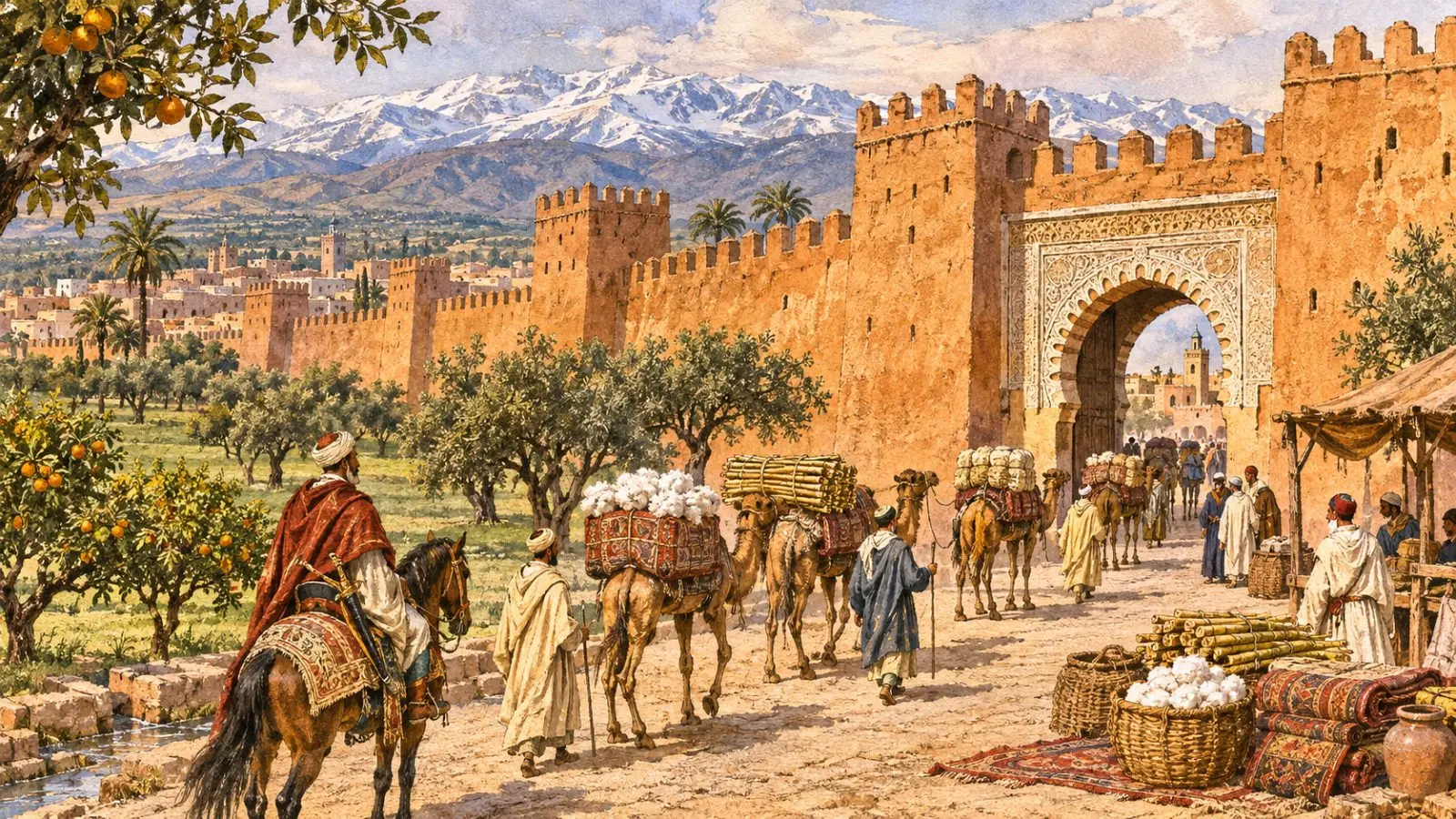
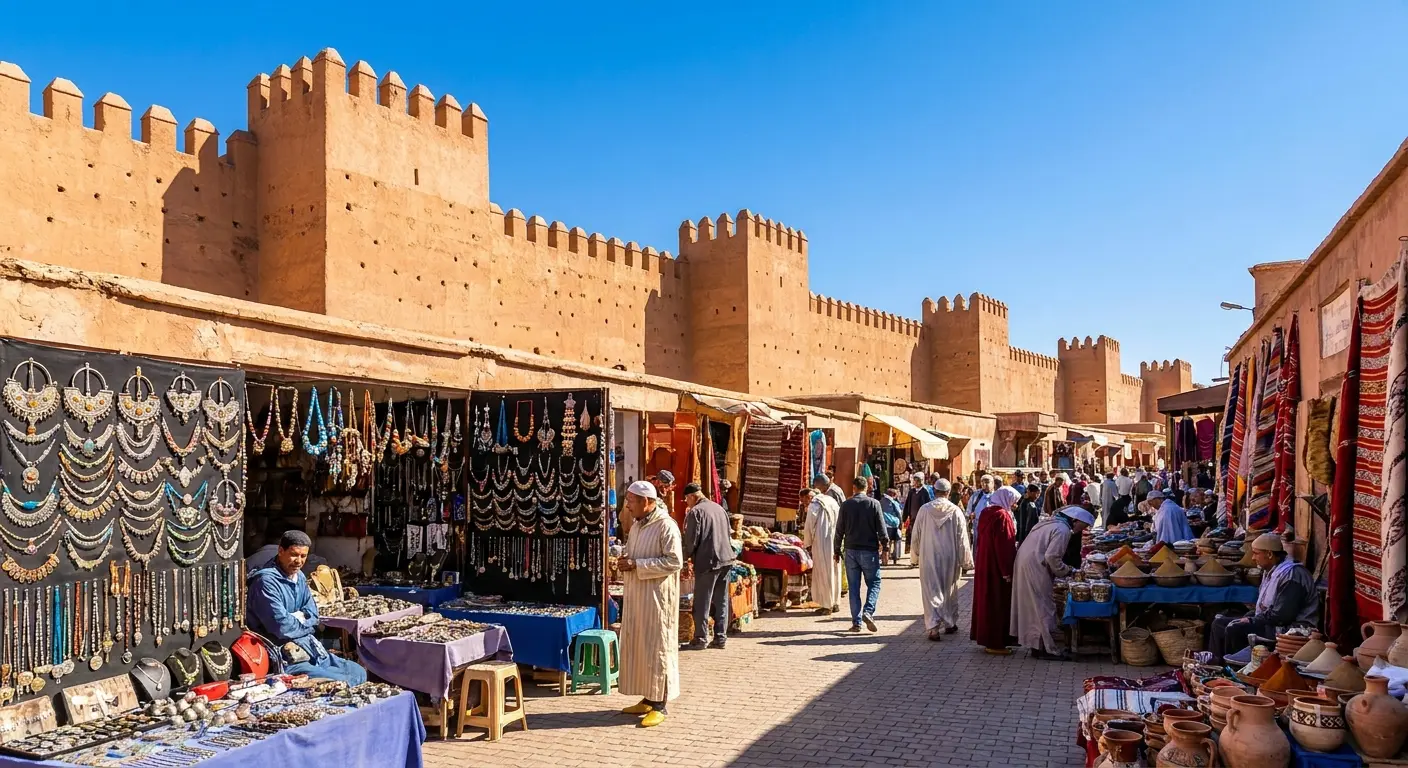
The town became a major caravan centre, known for its sugar, cotton and rice. The present line of its mud ramparts, about seven kilometres long, dates from this Saadian period.
Tazerwalt, Moulay Ismail and the sack of 1687
In the 17th century the local chief Sidi Yahya helped the Saadian sultan Moulay Zaydan from Taroudant against the rebel Abu Mahalli, who had taken Marrakech. As the Saadians declined, the town came under the principality of Tazerwalt, whose chief had imprisoned Moulay Ali Cherif, ancestor of the Alaouites, at Iligh.
In 1687 the town backed the pretender Ahmed ben Mehrez, nephew of Moulay Ismail. In reprisal the sultan had much of the population massacred. The closing of Agadir's port in 1760 then brought a long decline, and the town withdrew behind its walls.
Al-Hiba and the protectorate (1912-1917)
In the late 19th century Moulay Hassan I strengthened his authority over the town; in 1903 the caid Tayeb el-Goundafi restored order there. In 1912 Ahmed al-Hiba, son of the Saharan holy man Ma al-Aynayn, made Taroudant the centre of his resistance to the French protectorate, until 1913.
France only truly controlled the town in 1917. Haida ou Mouis of the Oulad Berhil was appointed its pasha until he was killed fighting the Anti-Atlas tribes in 1917; his son succeeded him.