OOnce the Berber town of Anfa, razed by the Portuguese and rebuilt by a sultan in the 18th century as Dar al-Beida, the “White House” grew in a single century into the largest city in the Maghreb: a laboratory of Art Deco, a cradle of the resistance and Morocco's economic capital.
The site was inhabited by Berbers from the 7th century BC and served as a port for the Phoenicians, then the Romans. In the 16th century Leo Africanus described ancient Anfa as a great town of the Tamesna, linked to the Barghawata kingdom, which he considered the most prosperous on the Atlantic coast thanks to its fertile land.
The Barghawata kingdom stayed independent until conquered by the Almoravids in 1068. After its fall, Arab tribes of Hilal and Sulaym descent settled in the region and mixed with the Berbers. Under the Marinids, in the 14th century, Anfa became an important port.
Casa Branca and Dar el-Beida (1468-1790)
Dar el-Beida rebuilt by Mohammed ben Abdallah
In the 15th century Anfa became independent again and served as a corsair haven. In reprisal the Portuguese bombarded and ruined it in 1468. The small town that grew back bore a Portuguese name: Casa Branca, "white house".
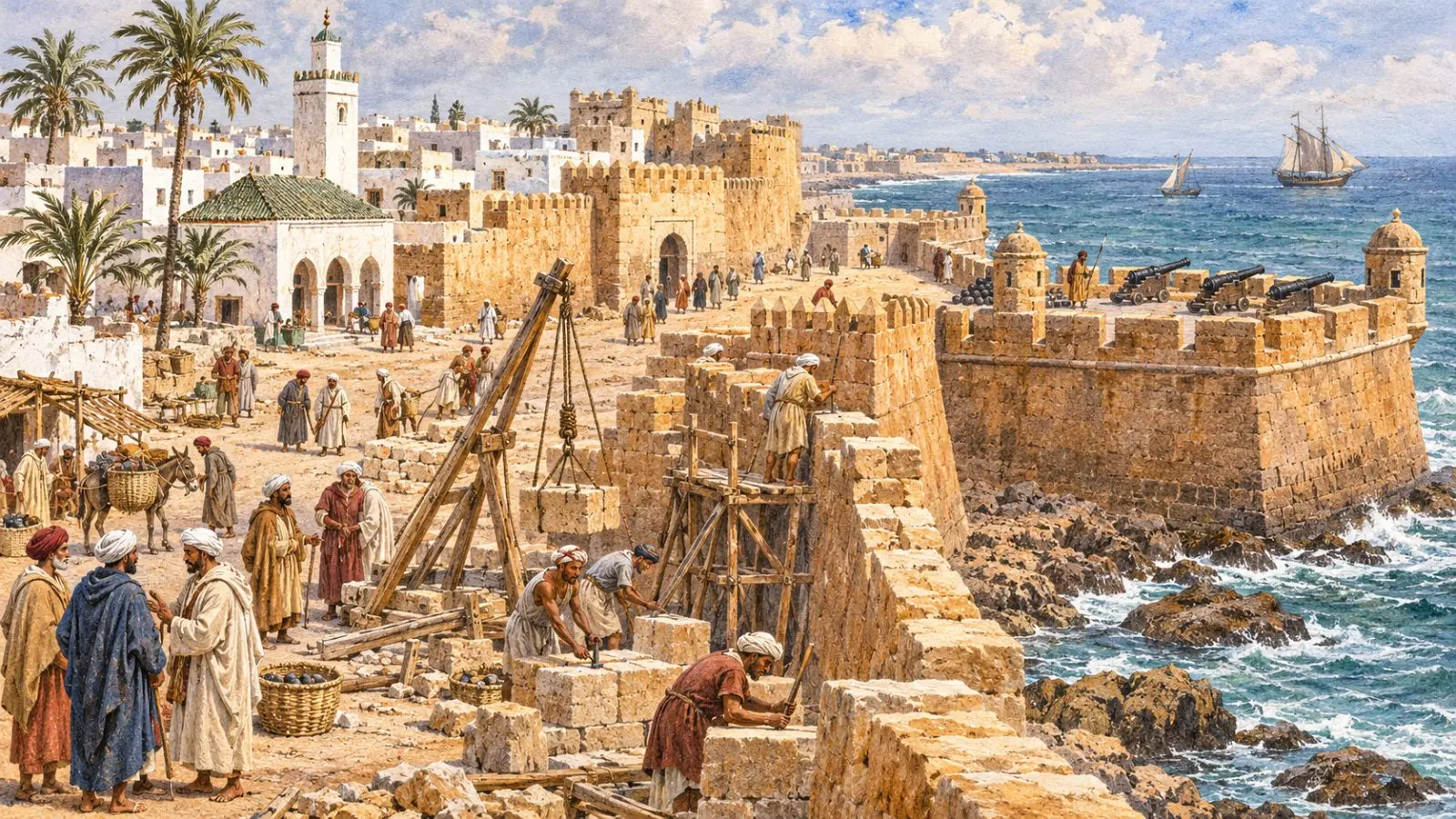
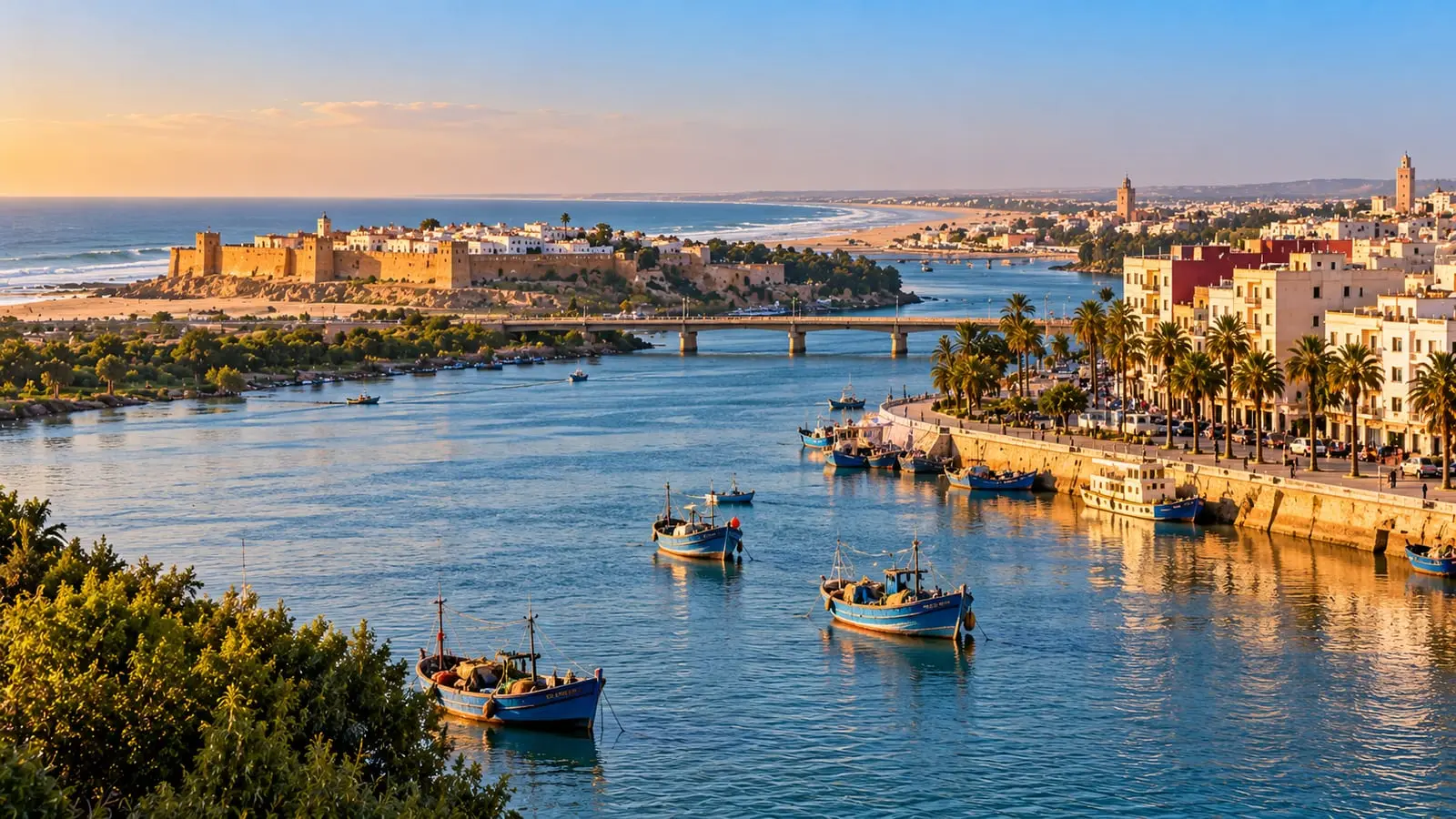
Between 1756 and 1790 Sultan Sidi Mohammed ben Abdallah rebuilt the town and its port, probably after the Portuguese left Mazagan in 1769, to fortify the coast between Rabat and El Jadida. He gave it the Arabic name ad-Dar al-Bayda, a translation of Casa Branca: today's old medina.
The port of wool and tea
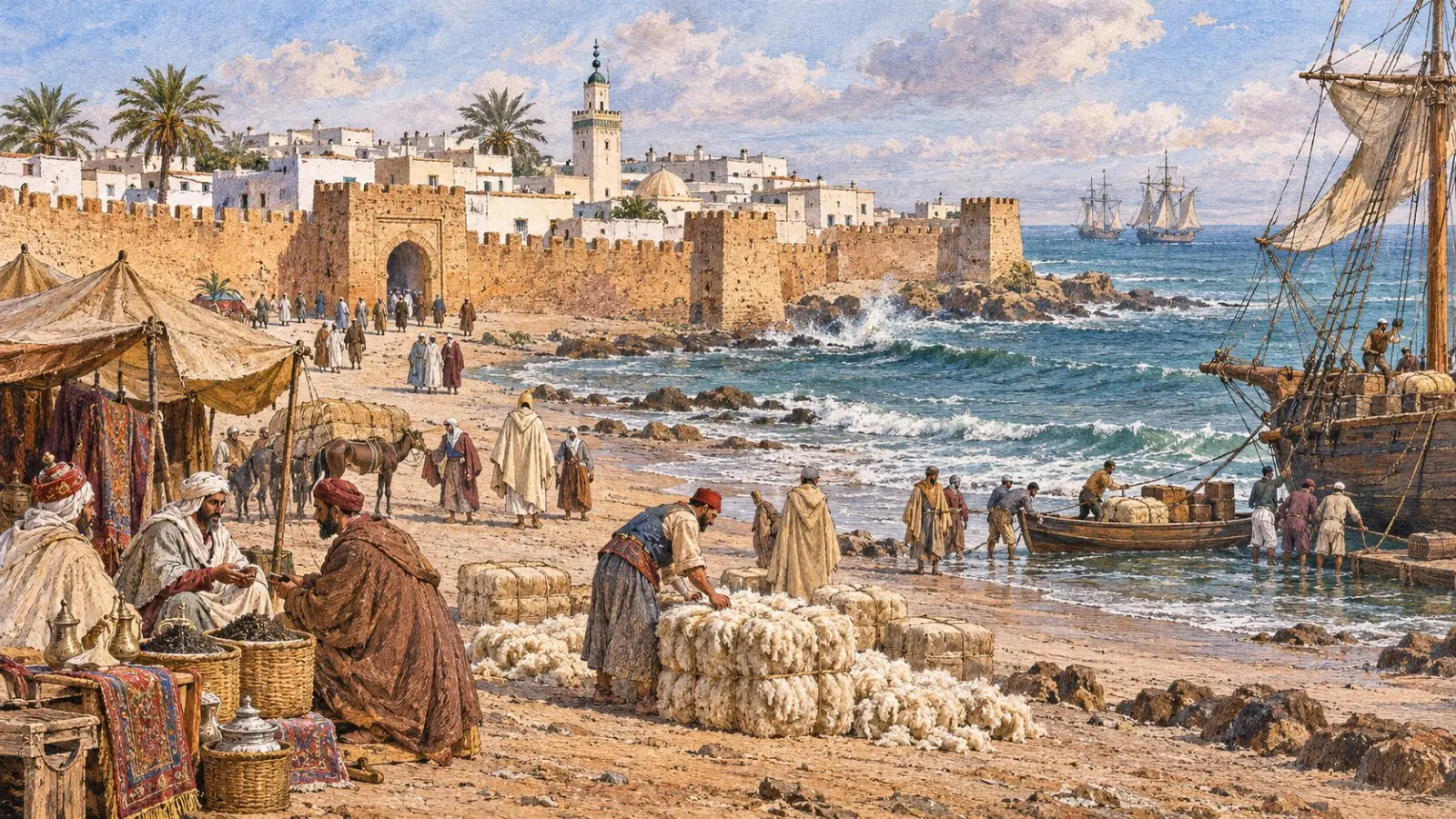
In the 19th century the town grew by exporting wool from the surrounding plains to British mills; in return English ships brought "gunpowder" green tea, which became the base of Moroccan mint tea.
Casablanca had about 5,000 inhabitants in the 1860s, 10,000 in the late 1880s and about 12,000 in the early 20th century: a modest port, far behind Fes, Marrakech or Essaouira.
The 1907 bombardment
The Algeciras Conference (1906) put French officers in charge of the port's customs and a French company in charge of building it. In June 1907 a railway was laid to a quarry, crossing the Sidi Belyout cemetery. Chaouia tribesmen attacked the train and killed nine European workers.
In August 1907 the French navy bombarded the city and landed troops. The toll was very heavy: 600 to 3,000 Moroccans killed according to estimates, and the Mellah was looted and burned. With the occupation of Oujda a few months earlier, this marked the start of the French conquest of Morocco, made official by the Treaty of Fes in March 1912.
The protectorate's boomtown
the Art Deco new town of the protectorate
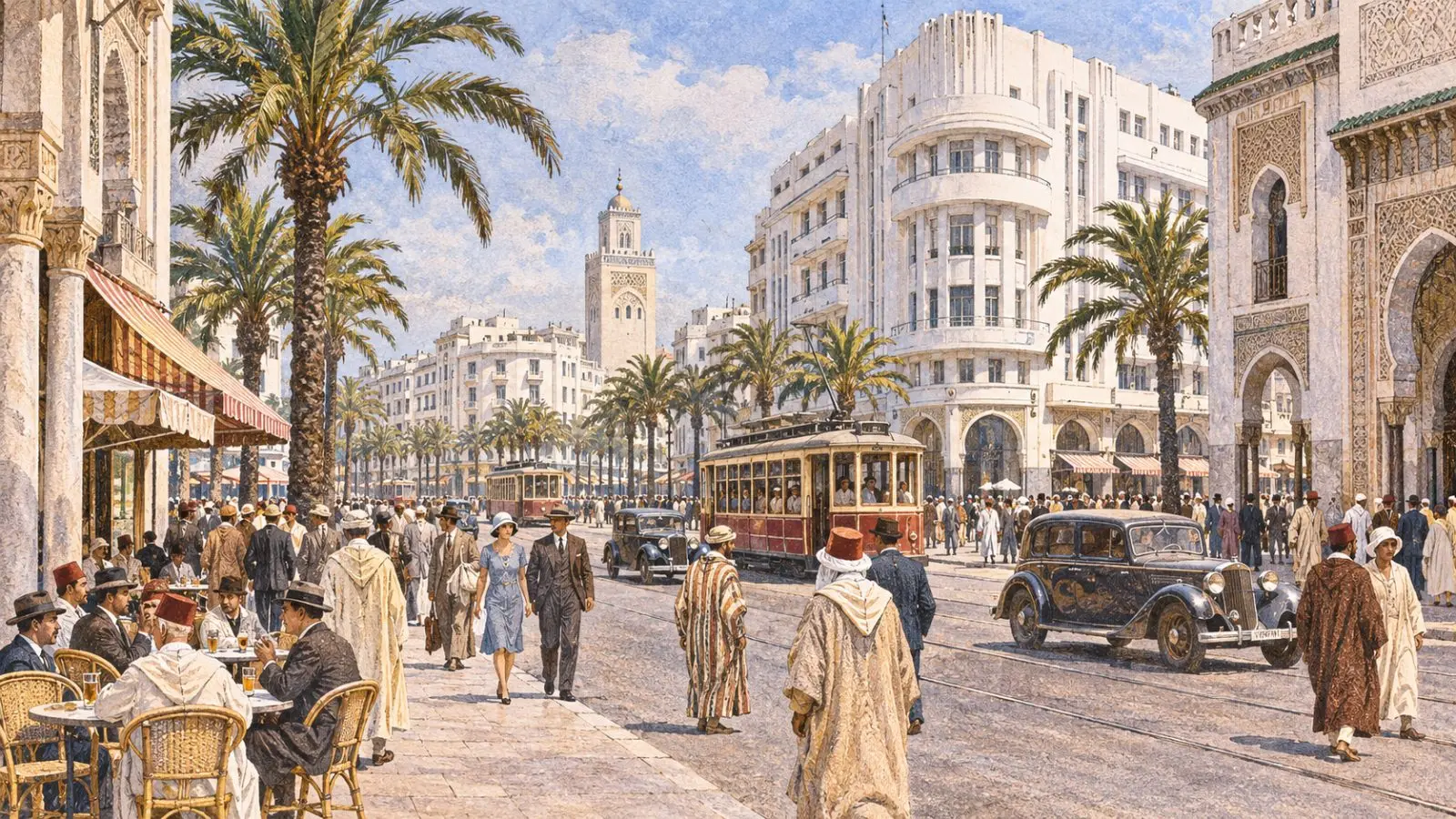
France made Rabat the administrative capital and Casablanca the economic capital. Lyautey commissioned the planner Henri Prost to design a European new town outside the medina, as well as a "new medina", the Habous quarter, for Moroccans arriving from other towns. The centre filled with Art Deco buildings, and the port became the country's busiest.
The population exploded: from 12,000 around 1907 to 110,000 in 1921, largely in shanty towns, and Europeans made up almost half the inhabitants. In 1937-1938 a typhoid epidemic was used as a pretext to move Moroccans from the centre to the Carrières Centrales.
1942-1943: war and the Anfa Conference
On 8 November 1942 General Patton's American troops landed in Morocco in Operation Torch. Casablanca, held by the Vichy regime, fell on 11 November; the naval battle went on until the 16th. Berrechid airfield, later Mohammed V airport, became a major American base.
In January 1943 Churchill and Roosevelt met at the Anfa hotel, with Generals de Gaulle and Giraud. The Allies adopted the principle of the Axis's "unconditional surrender". Roosevelt met Sultan Mohammed ben Youssef privately and expressed support for Moroccan independence after the war, which encouraged the nationalists.
Towards independence (1947-1956)
In the 1940s and 1950s Casablanca was a centre of the struggle against the protectorate. On 7 April 1947, on the eve of the sultan's Tangier speech, colonial army riflemen killed residents of working-class districts. On 7 and 8 December 1952 the city rose up after the assassination of Tunisian trade unionist Farhat Hached.
After Mohammed V's exile on 20 August 1953, the resistance fighter Mohammed Zerktouni organised the Central Market bombing on 25 December 1953. Morocco won independence in 1956, and major boulevards in the city now bear these resistance fighters' names.
Metropolis of independent Morocco
In January 1961 Mohammed V hosted African leaders in Casablanca, including Nasser, Nkrumah and Modibo Keita: the "Casablanca group". The city was also the main departure point for emigrating Moroccan Jews, notably between 1961 and 1964. It saw serious riots in March 1965 and June 1981, harshly repressed.
The Hassan II Mosque, with its 210-metre minaret, was inaugurated in 1993. In March 2000 tens of thousands of women marched here to reform women's legal status, a reform adopted with the new Moudawana in 2004. On 16 May 2003 suicide bombings killed 33 civilians. Casablanca joined UNESCO's Creative Cities Network in 2023.
— II —
CHAPTER III
Key dates
1468
The Portuguese destroy Anfa, then a corsair port.
1770
Sultan Mohammed ben Abdallah rebuilds the town: Dar el-Beida, “the white house”.
1943
Roosevelt and Churchill meet at the Casablanca Conference.
1993
The Hassan II Mosque is inaugurated over the ocean.
— III —
CHAPTER IV
Landmarks
1
The Hassan II Mosque
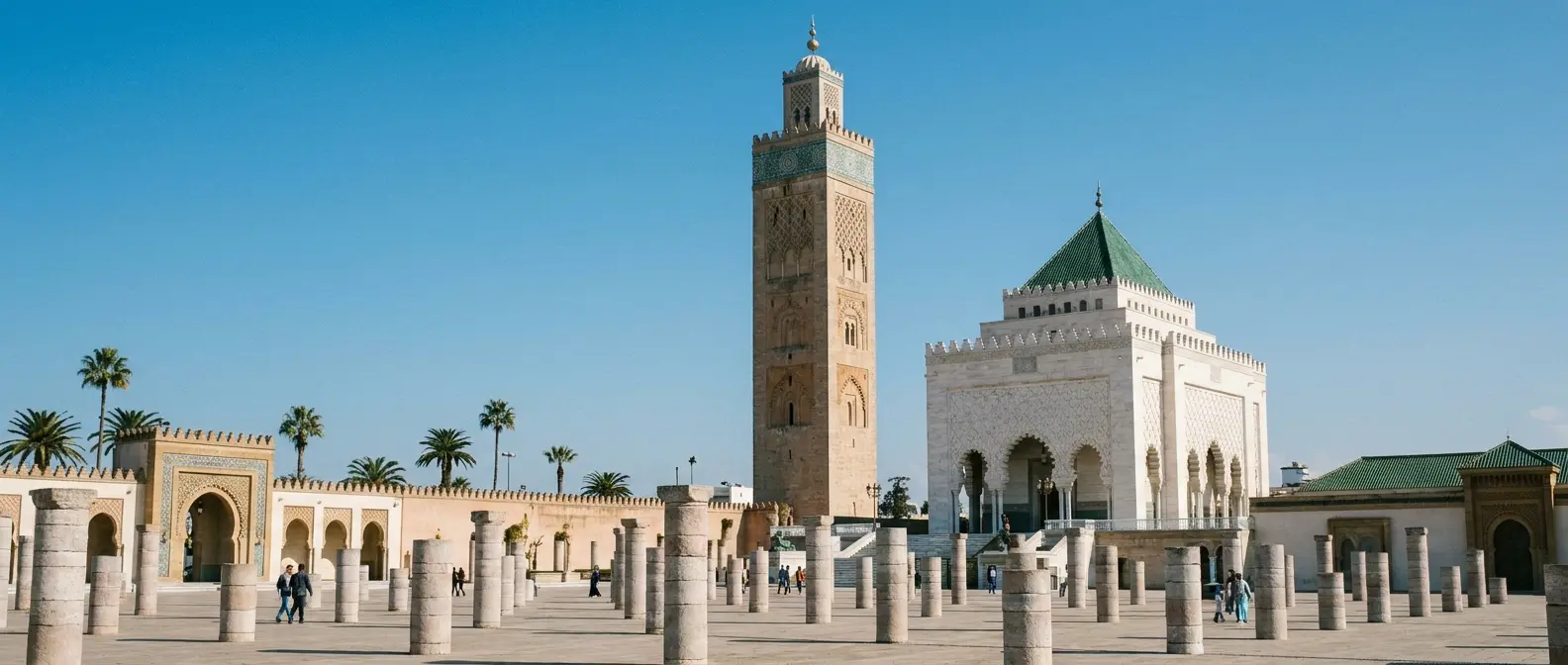
Opened in 1993, it juts out over the Atlantic; its 210 m minaret is one of the tallest in the world. It holds 25,000 worshippers inside and tens of thousands more on the esplanade. It is one of the few mosques in Morocco open to non-Muslims, on a guided tour.
2
The Art Deco centre
Around Boulevard Mohammed V and Place des Nations-Unies, hundreds of buildings from the 1920s to 1950s blend Art Deco with Moroccan motifs: zellige, wrought iron, carved friezes. The all-white former Sacré-Cœur cathedral is now a cultural venue.
3
The Habous quarter
The “new medina” built by the French from the late 1910s: arcades, orderly lanes, bookshops, pastry shops and the pasha's court. Here you buy olives, copperware and gazelle horns in a medina without the maze.
4
The old medina and the Corniche
The small 18th-century medina, backed against the port, keeps its walls and the Sqala with its cannons. Further west, the Ain Diab Corniche lines up beaches, cafés and the shrine of Sidi Abderrahmane, on an islet you can reach at low tide.
— IV —
CHAPTER V
People
SSidi Mohammed ben Abdallah1710–1790Alaouite sultan who refounded the town around 1770 and named it Dar al-Beida.
MMohammed Zerktouni1927–1954A leading figure of the Casablanca resistance; arrested in 1954, he took his own life rather than talk. A major boulevard bears his name.
NNass El Ghiwane1971A band born in Hay Mohammadi in the early 1970s that turned folk music and Gnawa into the voice of Moroccan youth.
— V —
CHAPTER VI
Culture and traditions
Raja versus Wydad
The Casablanca derby, between Wydad (founded 1937) and Raja (1949), is one of the most passionate in Africa. The tifos of the two ends, red against green, take weeks to prepare.
A city of every Morocco
Having come from the Souss, the Rif, the Chaouia or the Sahara, Casablancans invented a fast Darija full of French and Spanish words. This is where trends, Moroccan rap and new places are born.
Casa Anfa district hosts Morocco's fashion industry. The city's creative scene — galleries, music venues, street art — is the most dynamic in the country. The Corniche oceanfront is the city's social heart on weekends. The medina, though not as dramatic as Fes or Marrakech, retains authentic neighborhood life.
— VI —
CHAPTER VII
The people
The Bidaouis
Casablanca was built by migrants from all over Morocco, from Doukkala, Chaouia, the Souss and the Rif, over the past century. Bidaouis are known as hurried, direct and enterprising: it's the economic capital, where people come to "make a living".
Casa darija
Casablanca darija, fast and full of slang and French words, has become the country's "standard" darija thanks to TV, rap and social media.
— VII —
CHAPTER VIII
At the table
Fish from the central marketAt the central market you pick your sea bream, prawns or sea urchins at the stall, then have them grilled in the small eateries next door.
01The Hassan II Mosque minaret is 210 metres high, one of the tallest in the world.
02The film "Casablanca" (1942) was shot entirely in a Hollywood studio.
03The Raja-Wydad derby is one of Africa's most-watched and most spectacular football matches.
— IX —
Frequently asked questions about Casablanca
How many days do you need in Casablanca?
Allow 1–2 days to see Casablanca without rushing. That is the length we use in our itineraries.
When is the best time to visit Casablanca?
The best months for Casablanca are April, May, June, September and October.
How much does a day in Casablanca cost?
Per person per day, accommodation included: about $50 on a budget, $120 mid-range and $400 for a luxury stay.
How do you get to Casablanca?
Mohammed V Airport (CMN) is Morocco's main hub with flights worldwide. TGV train to Marrakech (2h20), Rabat (1h), Tangier (2h10). Well-connected by train and bus to all cities.
What is there to see in Casablanca?
The must-sees of Casablanca: Hassan II Mosque, Art Deco district, Morocco Mall and Corniche.
What should you eat in Casablanca?
To taste in Casablanca: Marrakech tagine, Kefta meatball tagine, Grilled merguez and Zaalouk.
Where should you stay in Casablanca?
The best areas to stay: Ville Nouvelle, Anfa and Corniche / Ain Diab.
Is Casablanca safe?
Yes, Casablanca welcomes many travellers every year. The precautions are those of any tourist destination: watch your belongings in crowds, politely turn down unofficial guides, agree on a taxi fare before getting in.