An old Atlantic anchorage
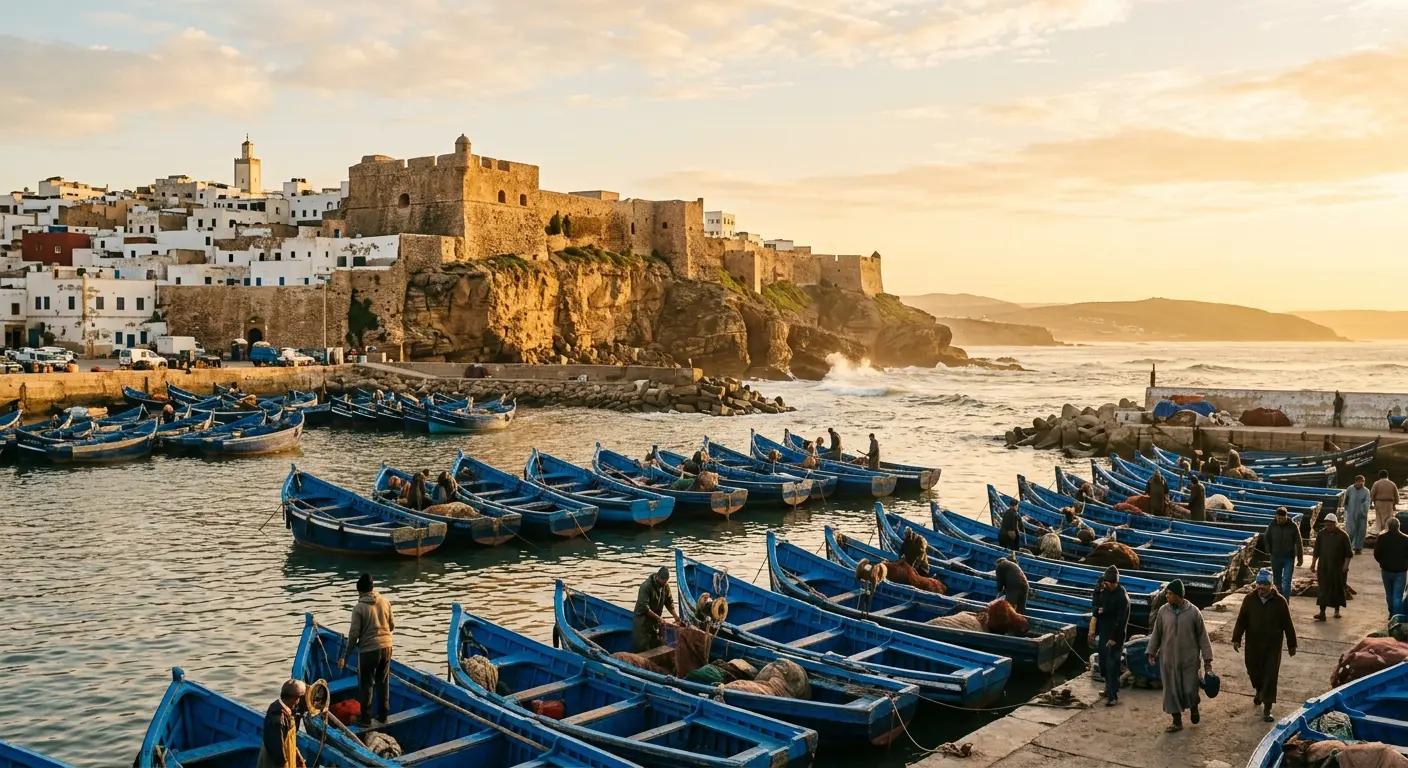
The site has been used as an anchorage since Antiquity. Some authors identify it with the port of Rutubis mentioned by Pliny the Elder, Rousibis in Ptolemy, or even Akra in Hanno's periplus; these are only hypotheses.
The name appears in the Middle Ages: "Mazighan" in the geographer al-Bakri in the 11th century, "Mazighen" in al-Idrisi in the 12th, Mesegan or Mazagem on European sea charts.
Mazagão, the Portuguese fortress (1514-1769)
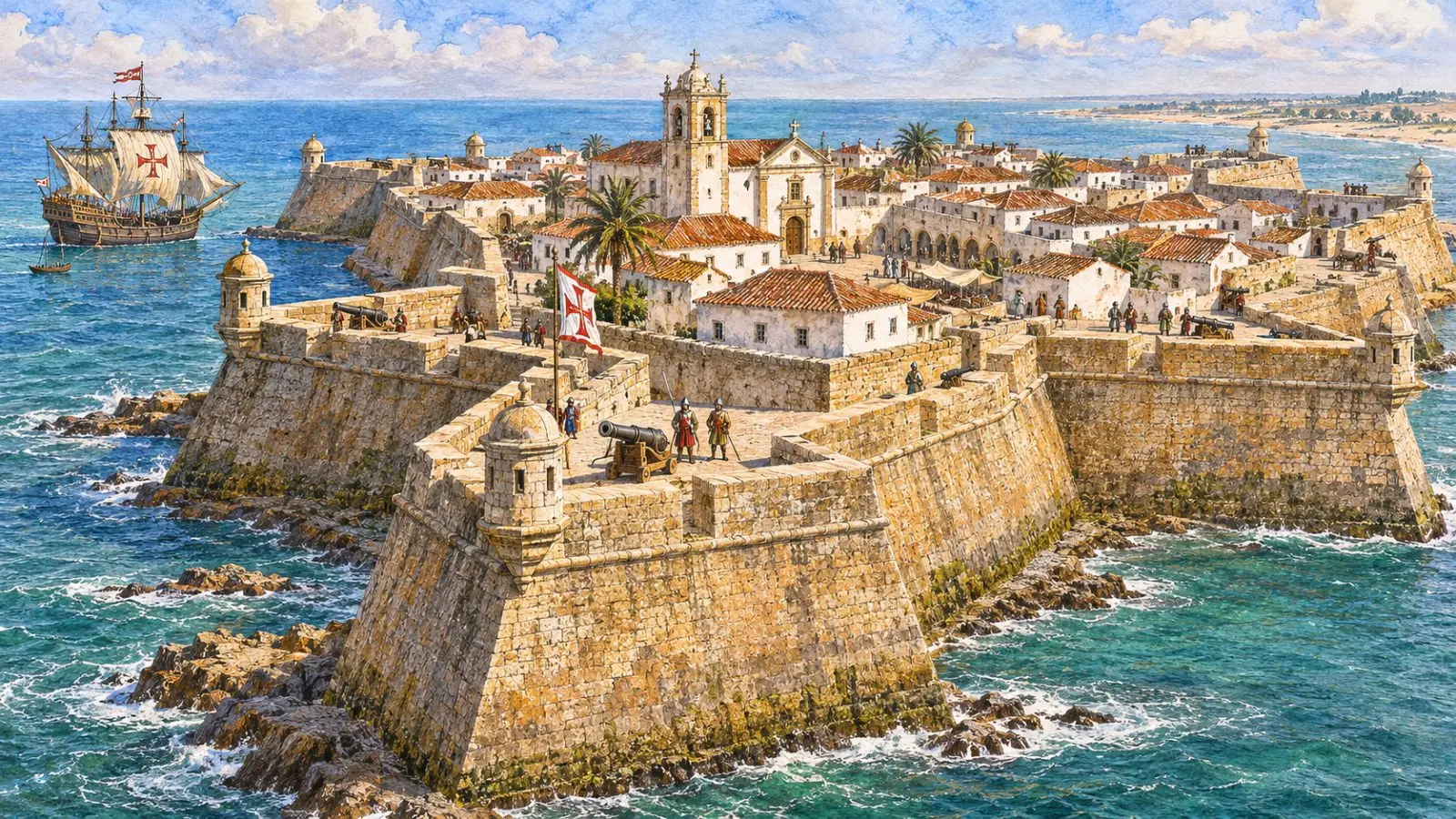
In 1502 the Portuguese captain Jorge de Mello, driven by a storm, took refuge in an old tower, al-Burayja. In 1514 the Portuguese built a square four-towered citadel on the site, the work of the architect brothers Diogo and Francisco de Arruda.
After Agadir fell in 1541, King John III abandoned Safi and Azemmour and concentrated his forces here: from 1541-1542 the citadel became a star-shaped fortified town with thick walls, able to house several thousand Portuguese. It held for more than two and a half centuries.
1769: the Portuguese leave and "the Ruined"
In 1769 Sultan Sidi Mohammed ben Abdallah besieged the town. Lisbon ordered an evacuation, and an agreement let the Portuguese leave unharmed. But before leaving they mined the bastions: when the Moroccans entered, the explosions destroyed the walls and caused many deaths.
The Portuguese inhabitants were sent to Brazil, where they founded Nova Mazagão, in today's state of Amapá. The Moroccan town, empty and in ruins, was nicknamed al-Mahdouma, "the Ruined".
El Jadida, "the New" (19th century)
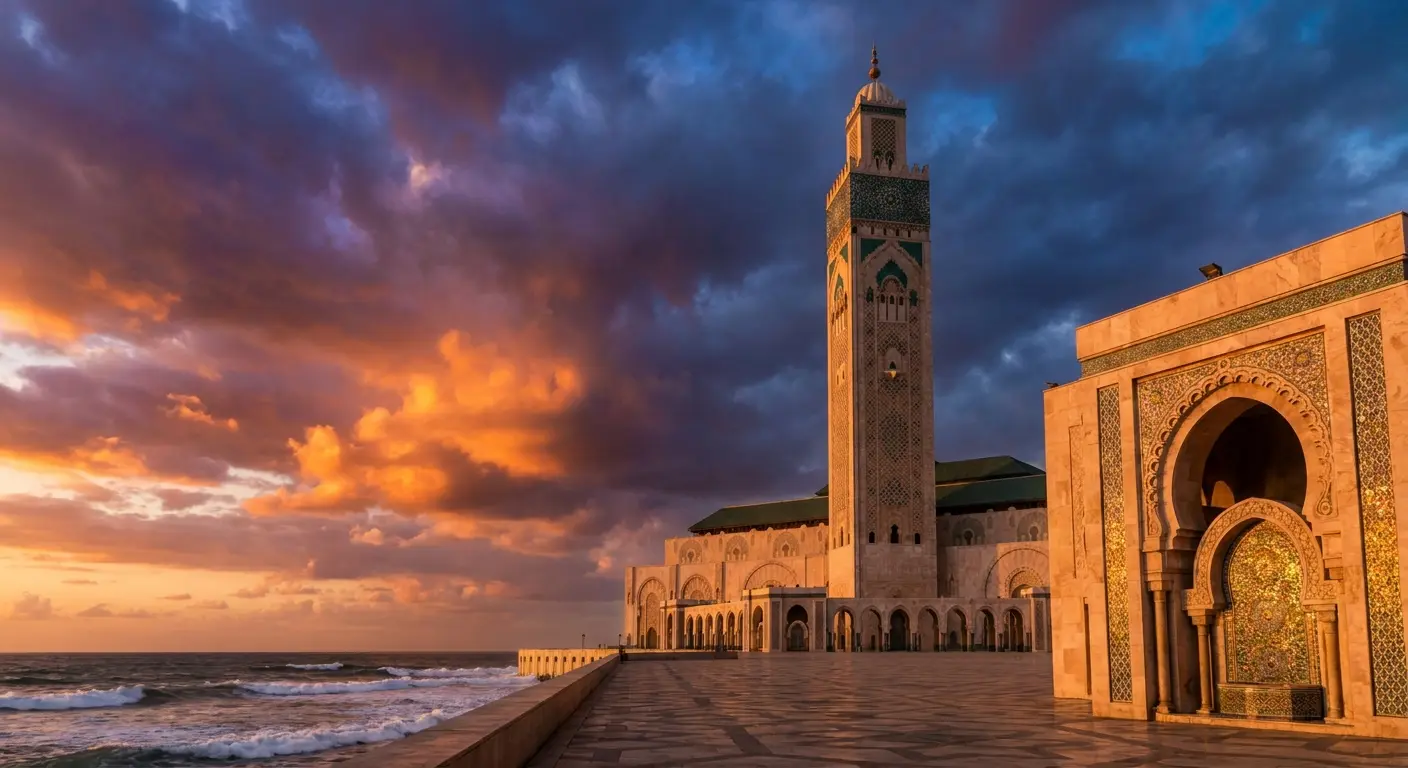
Sultan Moulay Abderrahmane, proclaimed in 1822, had the town restored and a mosque built; it then took the name El Jadida, "the New". European merchants, mainly English from Gibraltar, settled here, as did many people from the interior.
The town soon spread beyond the old Portuguese city, often called the Mellah because the Jewish community, very present, took part in the revival. In the early 20th century El Jadida, still called Mazagan by Europeans, was one of Morocco's main ports and outgrew neighbouring Azemmour.
Beach resort and World Heritage
Under the French protectorate, from 1912, a new town was built and El Jadida became one of Morocco's first beach resorts, with a casino in the 1930s. Its port declined in the face of Casablanca.
In the 1980s the large Jorf Lasfar industrial and port complex was created about twenty kilometres south. In 2004 the Portuguese City of Mazagan was listed as UNESCO World Heritage, an example of exchange between European and Moroccan cultures.