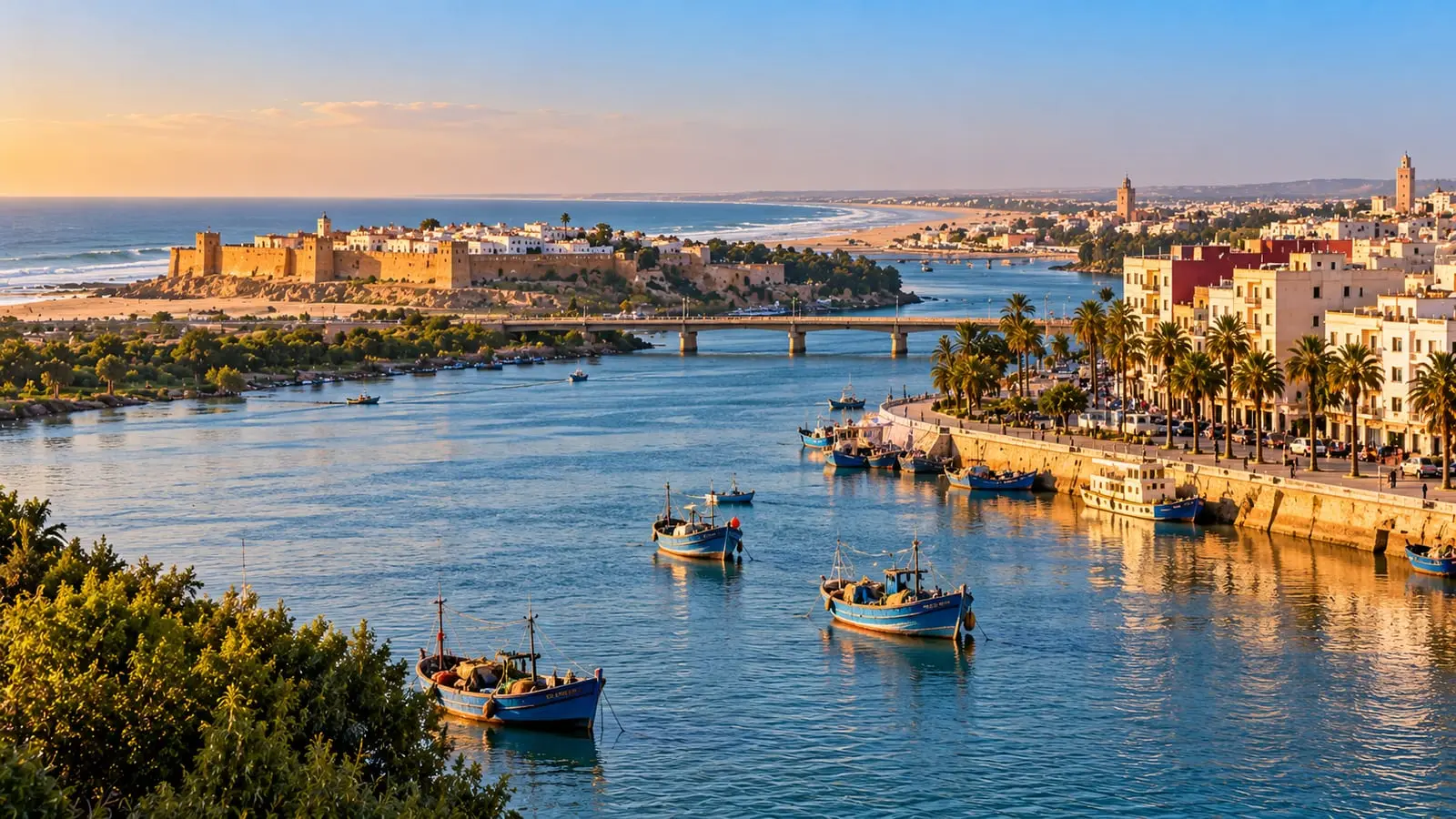
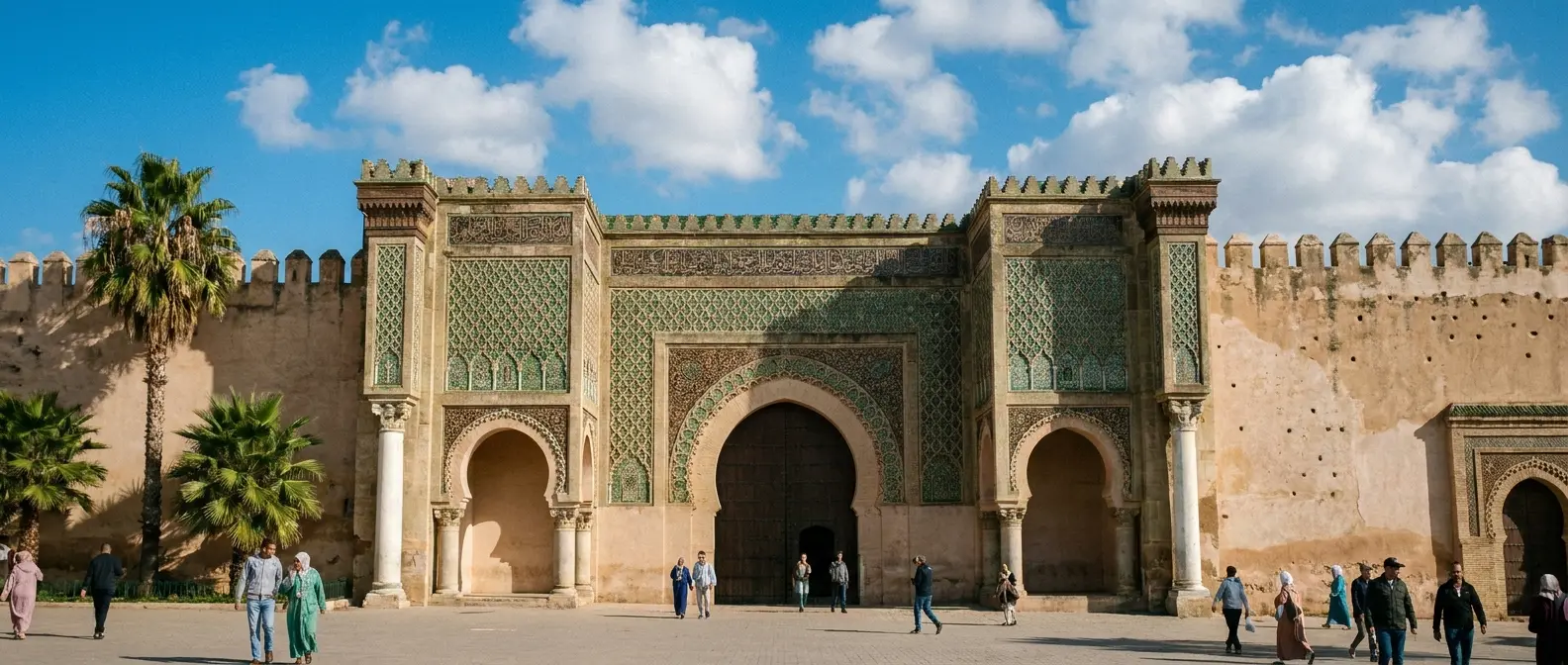
CCapital of Morocco since 1912, Rabat layers two thousand years of history on the banks of the Bou Regreg: Roman Sala, the Almohad ribat that gave it its name, the Moriscos' corsair republic, and the modern imperial city, listed by UNESCO in 2012.
The Phoenicians founded trading posts on the Atlantic coast, but whether one existed at Sala is still debated. In the 1st century BC locals still wrote in Neo-Punic; the region belonged to the Berber kingdom of Mauretania before being annexed by Rome.
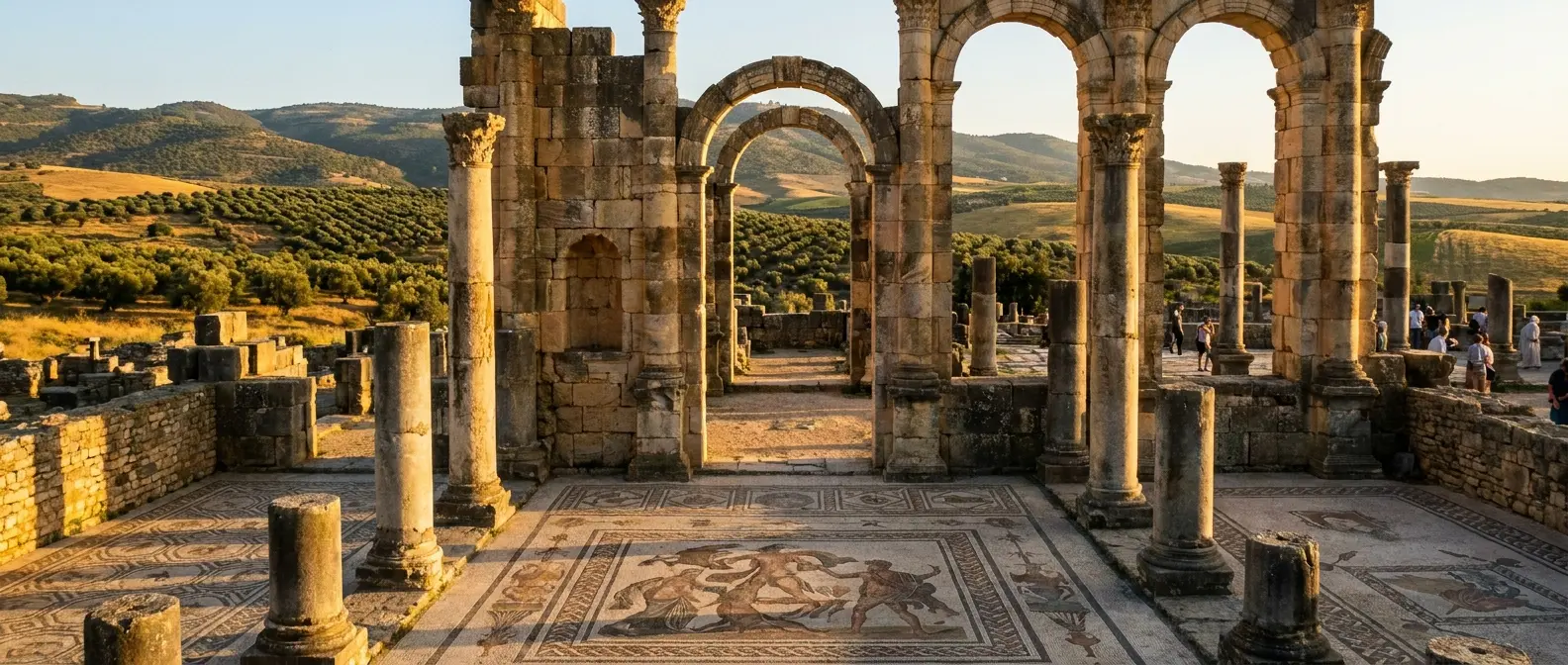
On the site of the Chellah the Romans built Sala Colonia, over older Mauretanian buildings. With Lixus it was one of the two main Roman naval posts on the Atlantic coast of Mauretania Tingitana; its port was a stop for ships sailing south to Anfa and Mogador island. The town emptied from the 5th century and was largely in ruins when the Arabs arrived in the 7th century.
The ribat and the Almohads' dream city
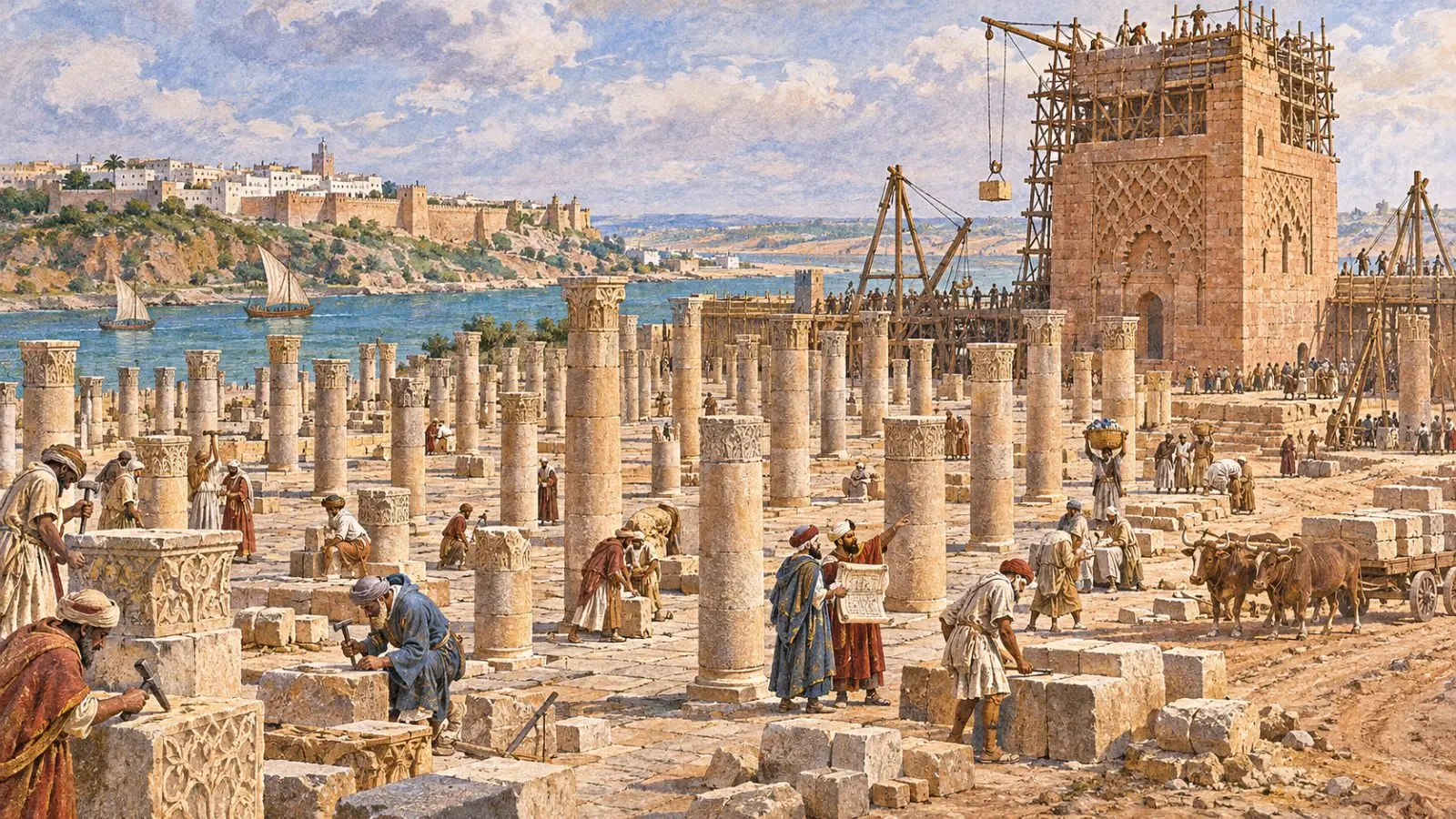
the Hassan mosque building site
In the 10th century a ribat, a fortified post held by warriors of the faith, was founded to fight the Barghawata to the south; Rabat's name comes from it. Around 1030 the town of Salé was born on the other bank. Around 1150 the Almohad caliph Abd al-Mu'min built a kasbah with palace and mosque on the site of today's Udayas kasbah, and had a canal dug to bring water: the site became a launch point for armies heading to al-Andalus.
Ya'qub al-Mansur (1184-1199) thought bigger: an imperial capital, Ribat al-Fath, with huge walls, monumental gates such as Bab er-Rouah and Bab Oudaya, and a gigantic mosque whose remains include Hassan Tower. When he died in 1199 everything remained unfinished, and the city was never really populated.
Salé takes the lead (13th-16th century)
Under the Marinids it was Salé, on the north bank, that prospered. The south bank declined so much that in 1515 Leo Africanus counted only about a hundred inhabited houses.
The Marinids still left two marks: a great mosque in today's medina, and on the site of ancient Sala, the Chellah, their dynasty's royal necropolis, ringed by walls with a monumental gate.
The Bou Regreg republic (1627-1666)
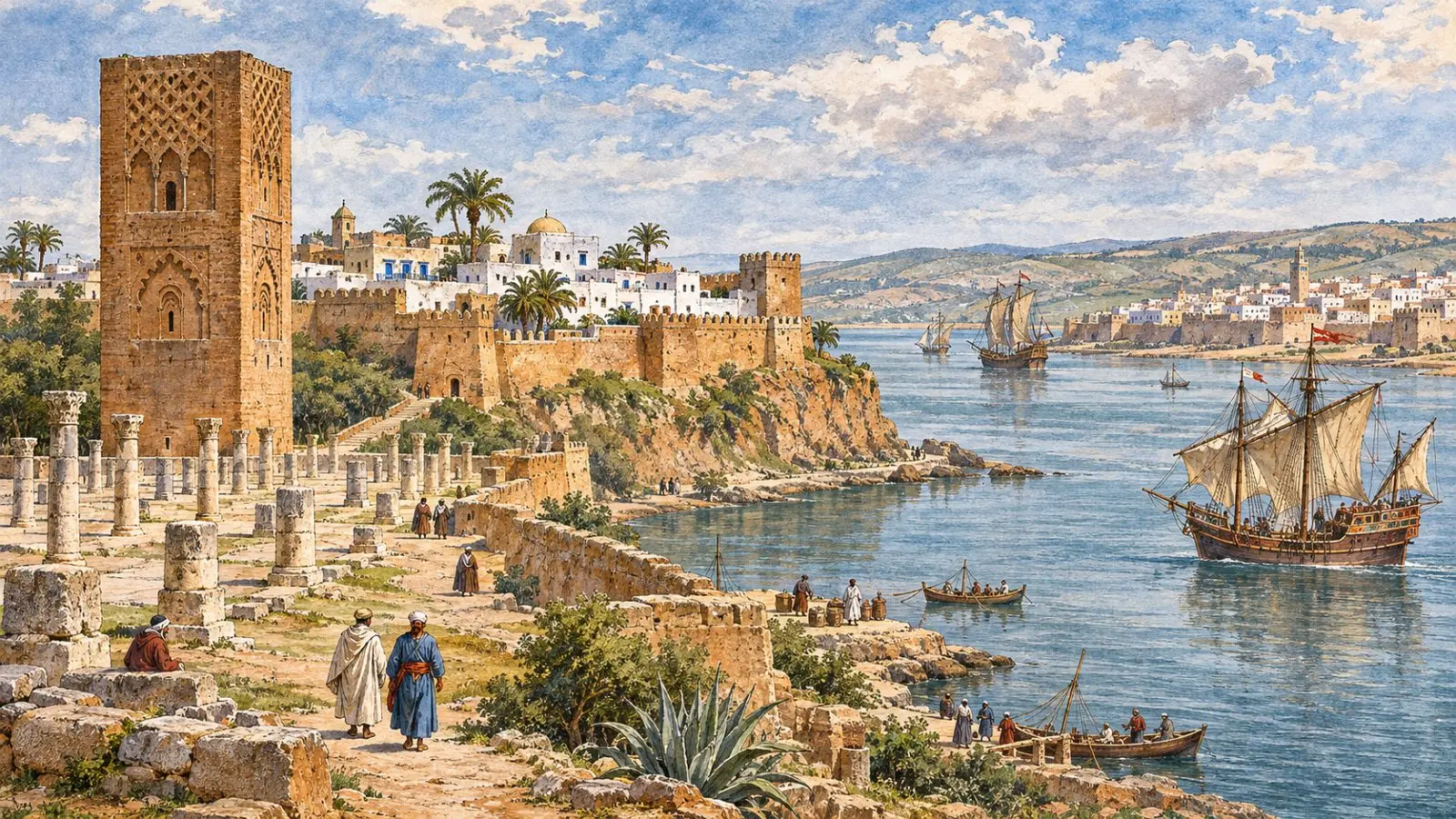
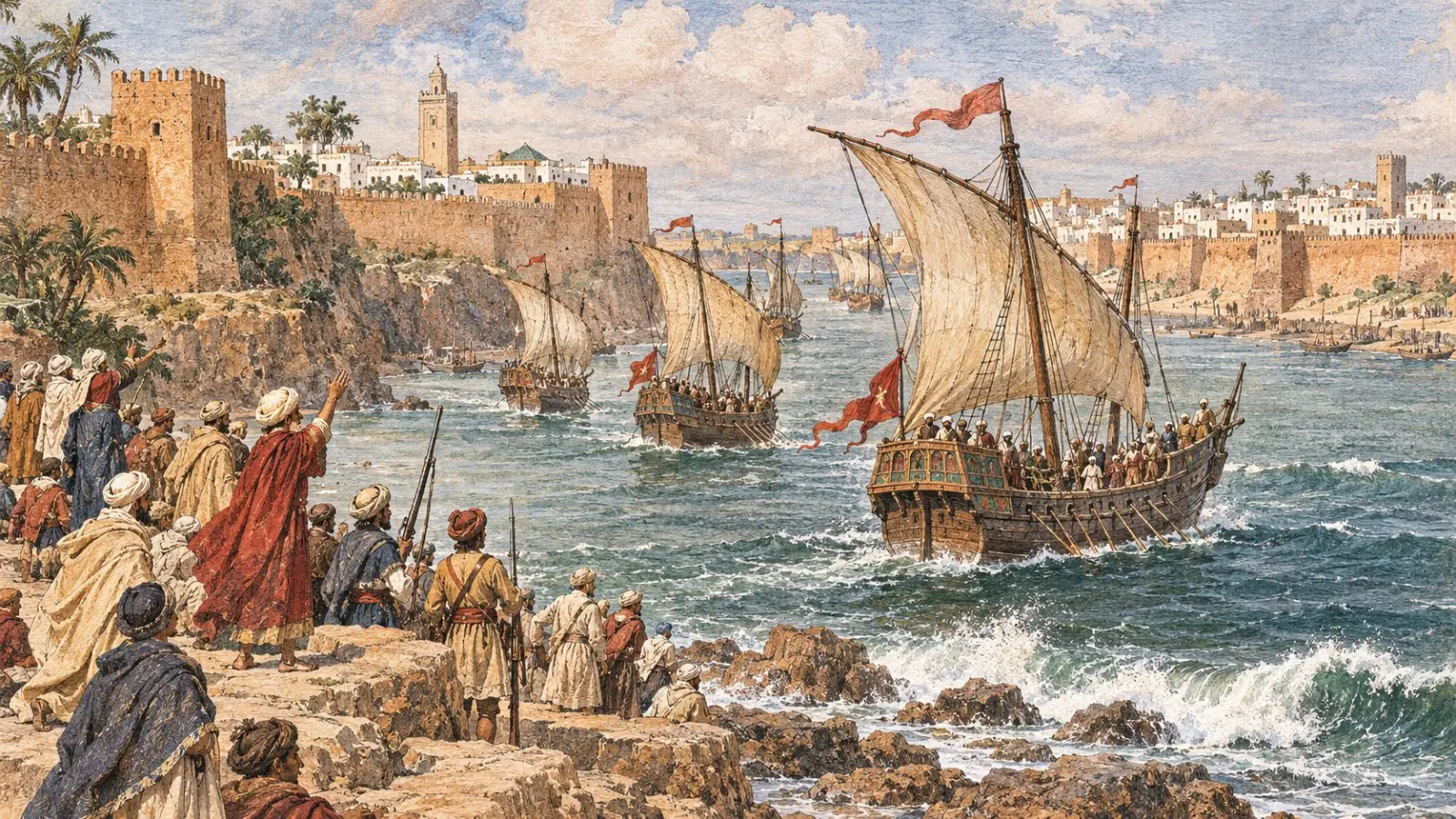
the corsairs of the Bou Regreg republic
In 1609 Philip III ordered the expulsion of the Moriscos from Spain. About 2,000 of them, from Hornachos near Badajoz, settled in the kasbah, and thousands more followed. In 1627 Rabat and Salé formed the autonomous Republic of Bou Regreg, which lived by privateering: its corsairs, the "Salé Rovers", attacked merchant ships as far as northern Europe.
The south bank, then called "New Salé", filled up; an "Andalusian Wall" marked the new medina, and Rue des Consuls became a main artery. The Alaouite founder Moulay Rashid took the city in 1666, but privateering went on until the early 19th century: in 1829 Austria bombarded the city after losing a ship.
City of the Alaouite sultans
Moulay Ismail (1672-1727) enlarged the kasbah, built a royal residence there, now a museum, and settled the Udaya military tribe, which gave it its name. Sidi Mohammed ben Abdallah (1757-1790) founded the royal palace, the Dar al-Makhzen, inside the old Almohad enclosure.
Moulay Slimane (1792-1822) built the Dar al-Bahr palace and several mosques, and created the Mellah in the east of the medina. In the early 19th century the walls were extended and the city covered about 840 hectares; it had 20,000 to 25,000 inhabitants around 1900.
Capital of the protectorate (1912-1956)
After the Treaty of Fes of March 1912 and the riots that followed, Resident-General Lyautey moved the capital from Fes to Rabat: it was on the coast, more accessible and close to Casablanca, which he already saw as the future economic centre. In 1913 he commissioned the planner Henri Prost to design the administrative new town, built beside the preserved medina.
The city grew fast: 33,714 inhabitants in the 1921 census, about 83,000 in 1936 and 156,000 in 1952. In 1921 a third of the population was European.
Capital of independent Morocco
At independence in 1956 Mohammed V kept Rabat as capital. Foreigners gradually left; in 1971 the city had about 368,000 inhabitants, 3.5% of them foreign. The American Rabat-Salé air base closed in the early 1960s.
The city hosted major summits: in 1969 the summit that gave birth to the Organisation of Islamic Cooperation; in 1974 the Arab summit that recognised the PLO as the sole representative of the Palestinian people. In 2012 Rabat was listed as UNESCO World Heritage, its 20th-century modern city included.
— II —
CHAPTER III
Key dates
40
Sala becomes a Roman town, at today's Chellah.
1195
Yaqub al-Mansur starts the Hassan Tower, never completed.
1912
Rabat becomes the capital of Morocco.
2012
Rabat is listed by UNESCO as a modern capital and historic city.
— III —
CHAPTER IV
Landmarks
1
The Kasbah of the Udayas
The Almohad fortress at the mouth of the Bou Regreg: a monumental 12th-century gate, white-and-blue lanes, an Andalusian garden and the Café Maure facing the sea.
2
The Hassan Tower
The unfinished 44 m minaret and its roughly 200 columns, remains of Yaqub al-Mansur's giant mosque, damaged by the 1755 earthquake.
3
The Mausoleum of Mohammed V
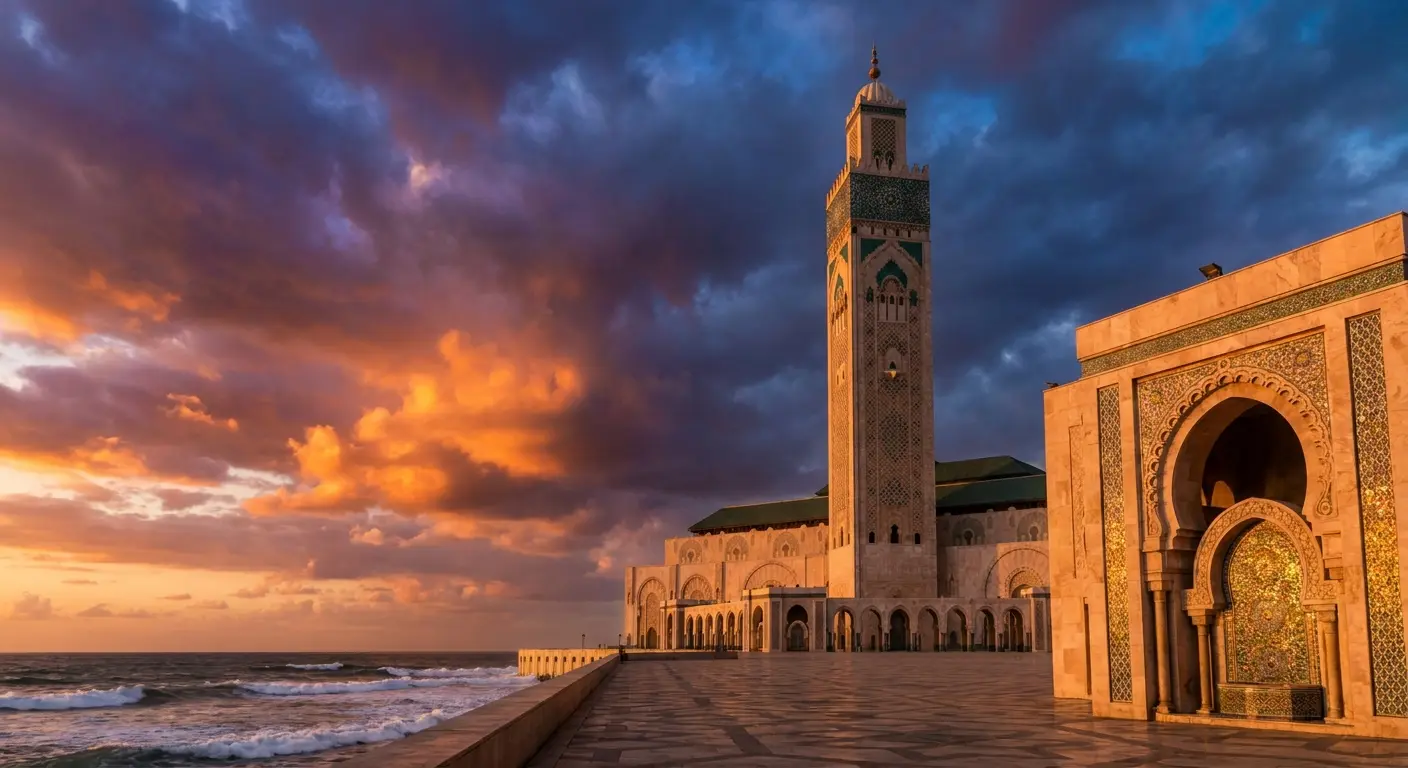
Completed in 1971, it holds the tombs of King Mohammed V, father of independence, and of his sons Hassan II and Moulay Abdallah, watched over by guards in ceremonial dress.
4
The Chellah
Roman ruins and a Merinid necropolis in a garden full of storks; a jazz festival is held there every summer.
— IV —
CHAPTER V
People
YYacoub al-Mansour1160–1199Almohad caliph, builder of Ribat al-Fath and the Hassan Tower.
MMohammed V1909–1961Sultan and then king, exiled by France in 1953 and returned in 1955; he led Morocco to independence in 1956.
— V —
CHAPTER VI
Culture and traditions
Capital of the arts
The Mohammed VI Museum of Modern and Contemporary Art (2014), the Mawazine festival every spring, and the renowned patterns of Rbati embroidery.
Rabat is famous for its distinctive embroidery (Rabati broderie) — a geometric style in blue on white linen. The Andalusian musical tradition brought by Moorish refugees survives in classical orchestras. The Kasbah des Oudaias retains a distinct Andalusian character: whitewashed walls, blue-painted details, and hanging gardens.
— VI —
CHAPTER VII
The people
The Rbatis
Rabat's old families, often of Andalusian origin, are known as discreet and attached to tradition: gold-thread embroidery, Rabat rugs, refined cooking. Today the city is mostly civil servants, diplomats and students from all over the country.
The capital's speech
Traditional Rbati darija, close to that of Fes and Salé, has a softened "r" and Andalusian turns of phrase. On the street you mostly hear the standard big-city darija, mixed with French.
01The name comes from "ribat", a fort where soldier-monks kept watch.
02Hassan Tower was meant to be the minaret of the world's largest mosque; work stopped when Sultan Yaqub al-Mansur died in 1199.
03Rabat has been World Heritage since 2012, including its 20th-century new town.
— IX —
Frequently asked questions about Rabat
How many days do you need in Rabat?
Allow 1–3 days to see Rabat without rushing. That is the length we use in our itineraries.
When is the best time to visit Rabat?
The best months for Rabat are April, May, June, September and October.
How much does a day in Rabat cost?
Per person per day, accommodation included: about $40 on a budget, $100 mid-range and $250 for a luxury stay.
How do you get to Rabat?
Rabat-Salé Airport (RBA) has direct European flights. Train connects to Casablanca (1h), Tangier (3h), Fes (3.5h). The train station is central and well-connected.
What is there to see in Rabat?
The must-sees of Rabat: Hassan Tower, Kasbah des Oudaias, Mohammed VI Museum of Modern Art and Chellah.
What should you eat in Rabat?
To taste in Rabat: Kefta meatball tagine, Pigeon pastilla, Couscous tfaya and Taktouka.
Where should you stay in Rabat?
The best areas to stay: Medina, Agdal and Kasbah des Oudaias.
Is Rabat safe?
Yes, Rabat welcomes many travellers every year. The precautions are those of any tourist destination: watch your belongings in crowds, politely turn down unofficial guides, agree on a taxi fare before getting in.