AA very old Atlantic port and a Portuguese fortress in the 16th century, Safi is the capital of Moroccan pottery and was long the world's leading sardine port. Its potters' hill still smokes from its kilns.
Historians disagree on Safi's age. Some, like the Moroccan historian Mohammed al-Kanuni, identify it with Thymiaterium, a trading post founded by the Carthaginian navigator Hanno; others, such as Henri Basset and Robert Ricard, think it more recent. It is in any case mentioned by al-Bakri in the 11th century and by al-Idrisi in the 12th, who describes it as a busy port.
The region then belonged to the Barghawata confederation, which long resisted before being subdued by the Almoravids and wiped out by the Almohads around 1149. Safi became the port of Marrakech, capital of both dynasties, replacing Ribat Kuz, today's Souira Kedima.
Abu Muhammad Salih, saint of the pilgrims
In the 13th century the Sufi Abu Muhammad Salih lived in Safi; he is now the city's patron saint. He organised Moroccan pilgrims' overland journey to Mecca, setting up waystations along the route to receive them. His tomb remains an important place of visitation.
The Portuguese (1488-1541)
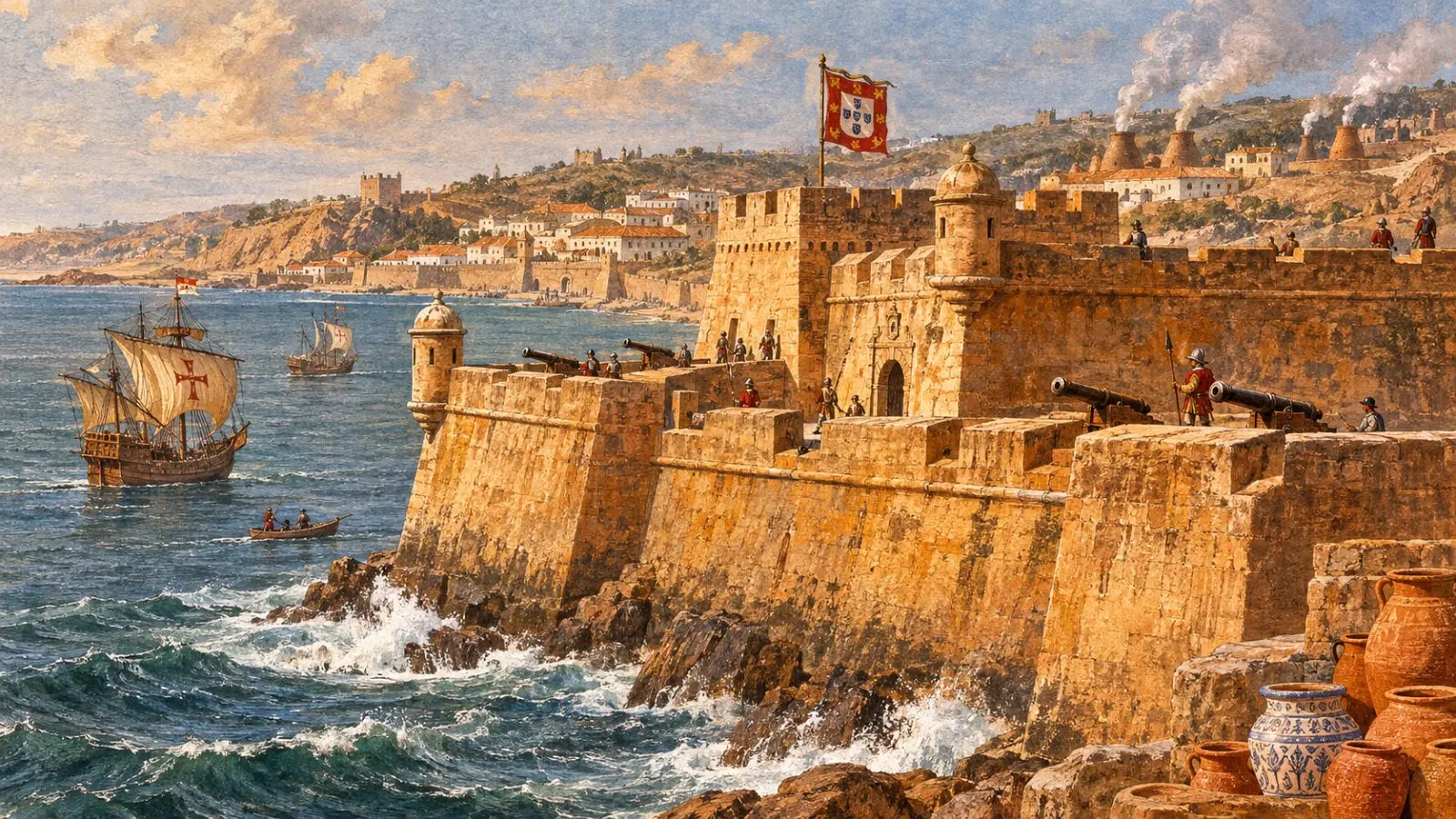
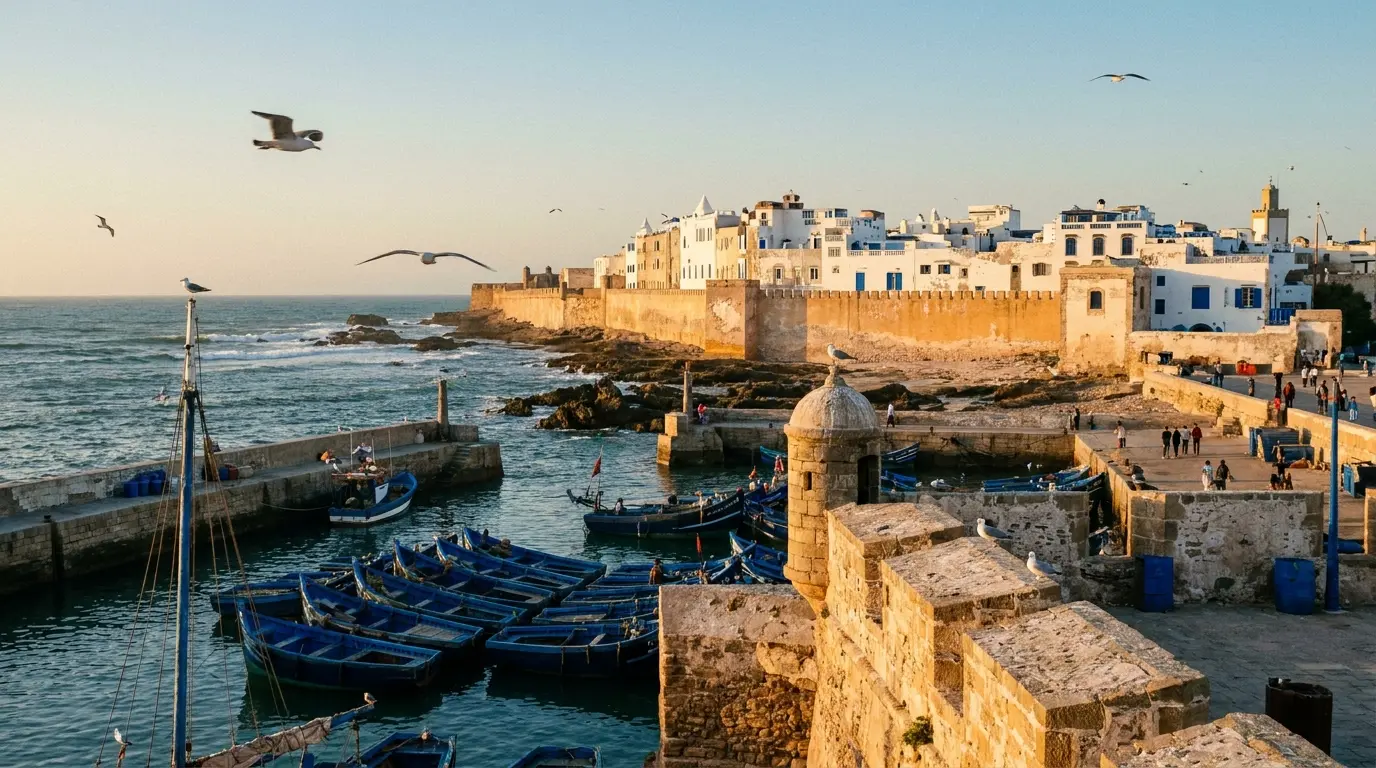
Safi came under Portuguese influence in 1488, and the Portuguese occupied it militarily from 1508. They built the Ksar el-Bahr, the "sea castle", and the Kechla fortress, and began a cathedral that was never finished.
Under pressure from the Saadian sharifs and lacking money and men to defend their strongholds, King John III decided in 1541 to abandon Safi and Azemmour. The Portuguese fortifications still stand today.
The ambassadors' port (1541-1765)
After the Portuguese left, Safi remained one of Morocco's safest ports and Marrakech's gateway to the sea: European ambassadors and merchants landed here. The diplomat Louis de Chénier, who lived here in 1767, described a roadstead where ships anchored safely except in winter southerly winds. In the mid-18th century the English and Dutch did most of the trade, and the monopoly of Safi's trade was granted to the Danes in 1751.
Everything changed with the founding of Mogador, today's Essaouira, in 1765: Sultan Sidi Mohammed ben Abdallah concentrated trade there and required Safi's European consuls to move. Safi then lost its standing as a major port.
Sardines, phosphates and Operation Torch
the potteries of Safi
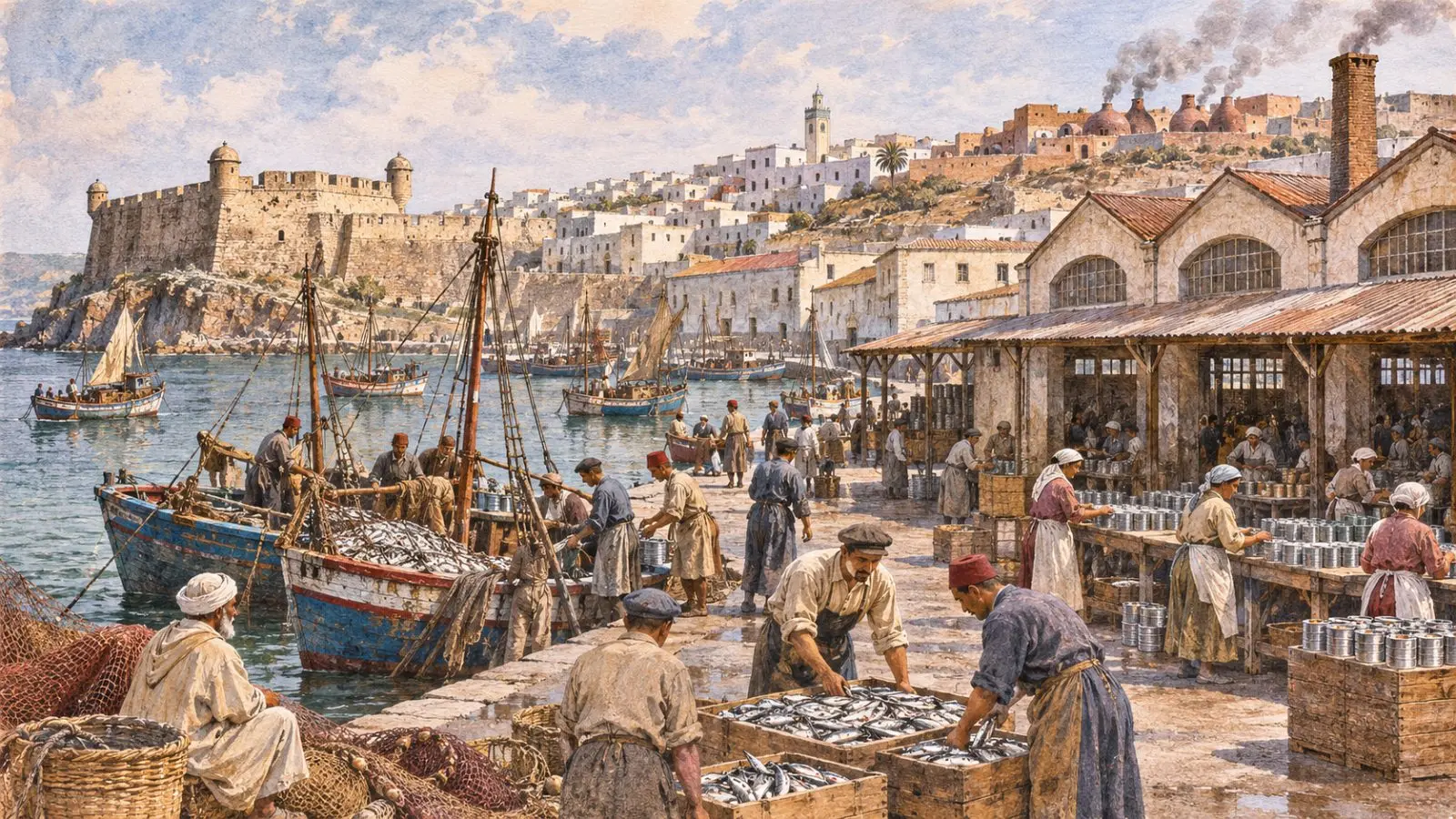
In the 20th century Safi became one of the world's leading sardine ports, with its canneries. On 8 November 1942, during Operation Torch, American troops landed here because its port could take tank-carrying ships; the French garrison surrendered that same afternoon.
In 1965 the Office Chérifien des Phosphates (OCP) opened a large chemical complex here, processing phosphate from Benguerir into phosphoric acid and fertiliser. Safi also remains the capital of Moroccan ceramics, with its potters' hill.
— II —
CHAPTER III
Key dates
1508–1541
The Portuguese hold Safi and build the sea fortress (Dar el-Bahr).
— III —
CHAPTER IV
Landmarks
1
The potters' hill
Workshops and wood kilns where you watch Safi's blue and multicoloured ceramics being thrown, glazed and fired.
2
Ksar el-Bahr
The wave-battered Portuguese fortress at the foot of the medina.
3
The national ceramics museum
Housed in the Kechla, the kasbah above the town, it traces pottery from Safi, Fez and Meknes.
— IV —
CHAPTER V
People
AAbou Mohammed Salih†1234Patron saint of Safi, a Sufi master who encouraged Maghrebi pilgrimage to Mecca.
— V —
CHAPTER VI
Culture and traditions
Surfing
The Safi wave, a long powerful right, draws top surfers when the winter swell arrives.
The pottery tradition dates back centuries — distinct blue and green geometric designs inspired by Islamic calligraphy. The Colline des Potiers (Potters' Hill) has over 100 workshops using traditional wood-fired kilns. Safi is Morocco's top surf destination for experienced surfers — the 'Safi Rights' wave is considered one of Africa's best.
— VI —
CHAPTER VII
The people
The Asfis
Safi is a town of potters, fishermen and phosphate workers. Its people, from the Arab Abda tribe and nearby countryside, are known as direct, warm and proud of their craft.
Aita, the song of the plain
The Abda region is one of the cradles of aita, a rural song carried by the sheikhat singers. The darija is that of the Atlantic plains, rough and colourful.
— VII —
CHAPTER VIII
At the table
Safi sardinesGrilled, stuffed with chermoula or as meatballs in tomato sauce: here sardines are cooked every way.
— VIII —
CHAPTER IX
Did you know?
01Safi was long the world's leading sardine port.
02In 1969 Thor Heyerdahl's Ra II expedition left Safi to cross the Atlantic on a papyrus boat.
03Safi's wave is considered one of Africa's best right-handers for surfers.
— IX —
Frequently asked questions about Safi
How many days do you need in Safi?
Allow 1–2 days to see Safi without rushing. That is the length we use in our itineraries.
When is the best time to visit Safi?
The best months for Safi are April, May, September and October.
How much does a day in Safi cost?
Per person per day, accommodation included: about $25 on a budget, $60 mid-range and $140 for a luxury stay.
How do you get to Safi?
CTM buses from Casablanca (3h), Marrakech (3h), Essaouira (2h). No train.
What is there to see in Safi?
The must-sees of Safi: Colline des Potiers, Dar el Bahar, National Ceramics Museum and Surf beach.
What should you eat in Safi?
To taste in Safi: Khobz, Moroccan mint tea, Oranges with cinnamon and Msemen.
Where should you stay in Safi?
The best areas to stay: Medina and Colline des Potiers.
Is Safi safe?
Yes, Safi welcomes many travellers every year. The precautions are those of any tourist destination: watch your belongings in crowds, politely turn down unofficial guides, agree on a taxi fare before getting in.