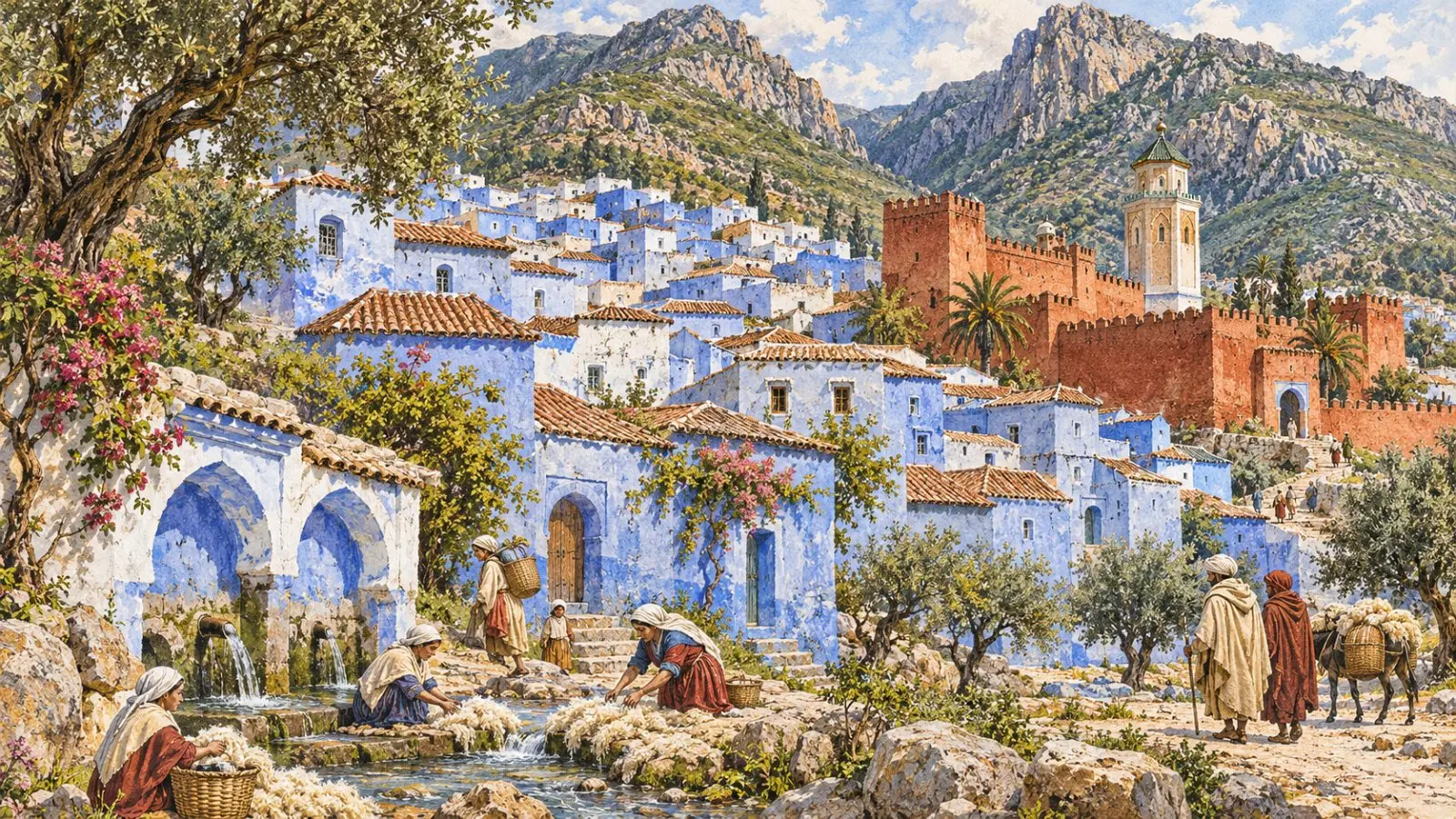
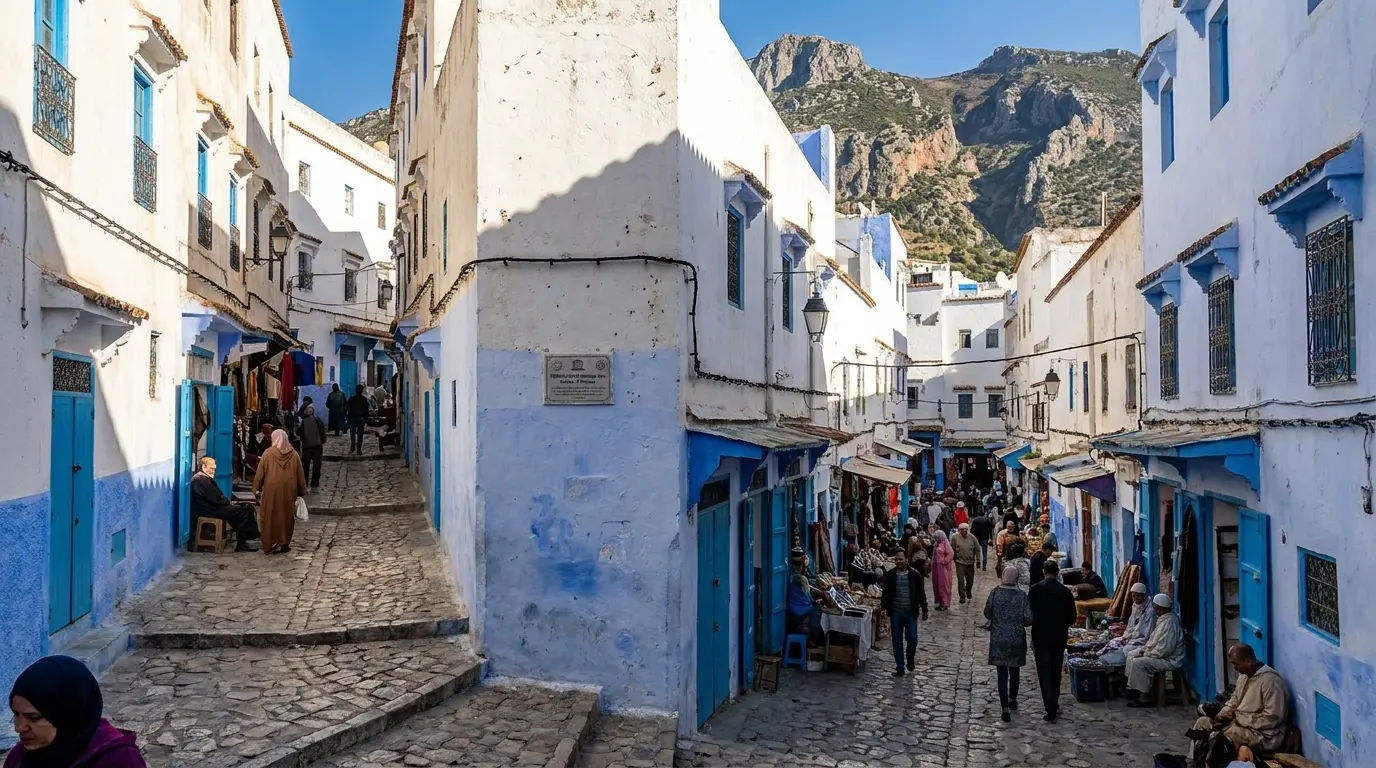
FFounded in 1471 as a fortress against the Portuguese, Chefchaouen (“Chaouen”) grew with the Andalusians driven out of Spain. Closed to foreigners until 1920, the blue city of the Rif kept a remarkably unified medina, at the foot of the mountain “horns” that give it its name.
Chefchaouen began as a simple kasbah founded in 1471 by the sharif Ali ibn Rashid al-Alami, a descendant of the saint Moulay Abdessalam ben Mashish and of Idris I. Born around 1440 in the nearby village of Gherzim, he went in 1460 to fight for the Kingdom of Granada, the last Muslim state in Spain, before returning to settle in the mountains around 1465.
At the time the Portuguese held the ports of northern Morocco. Ali ibn Rashid led the region's fighters and built the fortress to resist them. Work began in 1471 and was completed around 1480. The Great Mosque was built at the founding and also served as a place of learning.
The Banu Rashid principality (1471-1561)
For nearly a century the town was ruled by its founder's descendants, the Banu Rashid, nominally vassals of the Wattasid sultans of Fes. Ali ibn Rashid's daughter Aisha married the emir of Tetouan, Ali al-Mandri; known by the title Sayyida al-Hurra, "the free lady", she later governed Tetouan and allied with corsairs against the Portuguese and Spanish.
In 1561 the Saadians brought Chefchaouen back into the rest of Morocco, ending the principality's autonomy.
Refuge of the Andalusians
the arrival of the Andalusians
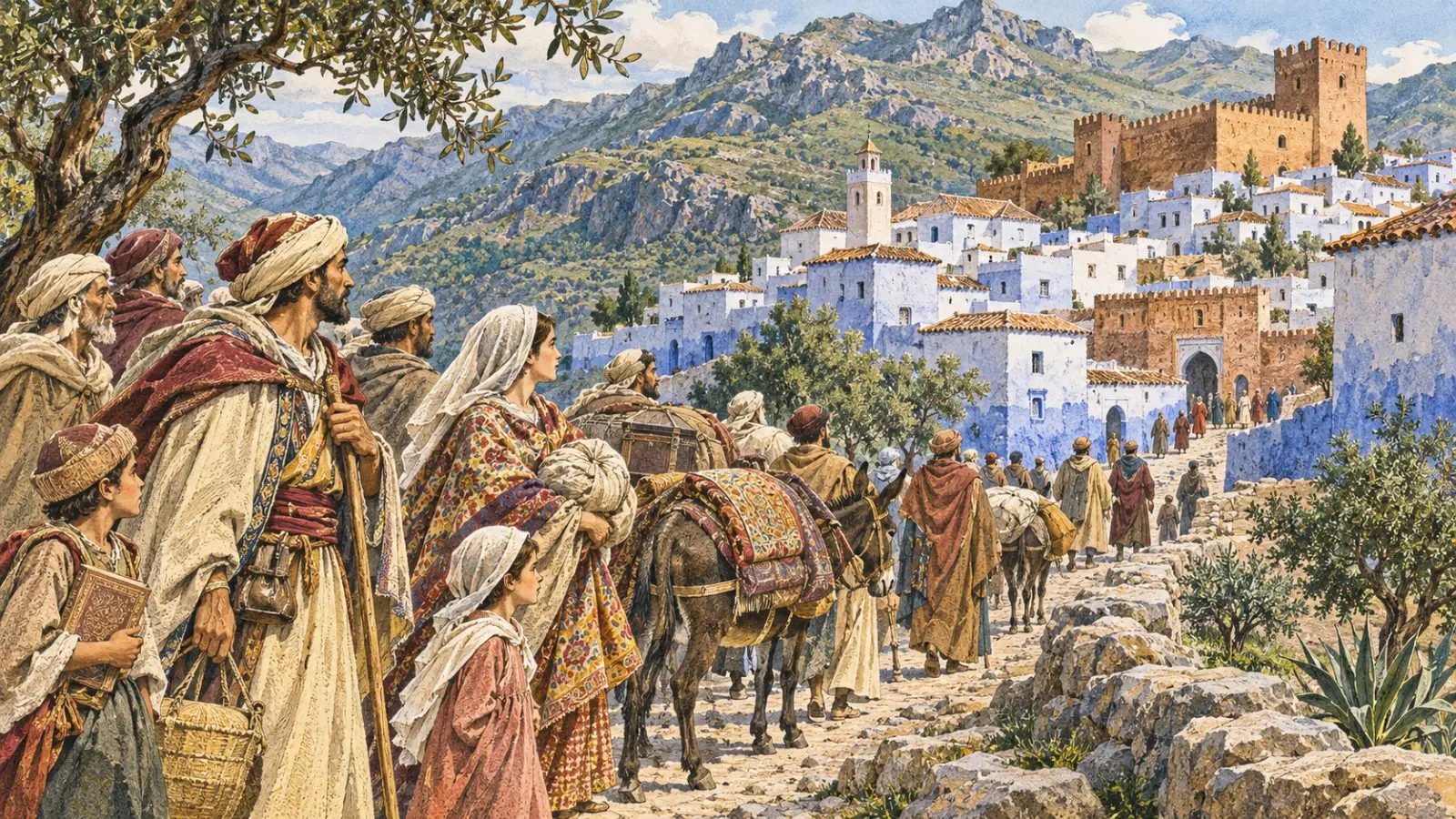
The fall of Granada in 1492 drove thousands of Spanish Muslims and Jews to Morocco. Some settled in Chefchaouen, a front-line town against the Portuguese, alongside the Ghomara mountain tribes. The last Moriscos, expelled from Spain by Philip III in 1609, were still arriving in the early 17th century.
These Andalusians built their quarters on the slopes in the style of Granada: narrow lanes, patio houses, tiled roofs. The town gained ramparts with about ten gates and several mosques. Andalusian poets and scholars settled here, and the culture of Granada blended with that of the Ghomara.
The forbidden town
For centuries Chefchaouen, a holy town, stayed closed to Christians. The first European to describe it was the French explorer Charles de Foucauld, who passed through in July 1883 disguised as a rabbi. He compared the town, with its tiled roofs and streams, to a peaceful village on the Rhine.
Thanks to him we know it then had three to four thousand inhabitants, including about ten Jewish families.
The Rif War (1920-1926)
In October 1920 the Spanish general Dámaso Berenguer occupied the town for the Spanish protectorate. During the Rif War the Spanish withdrew and from 1924 to 1926 Chefchaouen was part of Abd el-Krim al-Khattabi's Rif Republic.
In September 1925 a squadron of American volunteer pilots, fighting for France, bombed the town and hit civilians. After Abd el-Krim's defeat and exile to Réunion, the Spanish army retook Chefchaouen in 1926.
Independence and the blue town
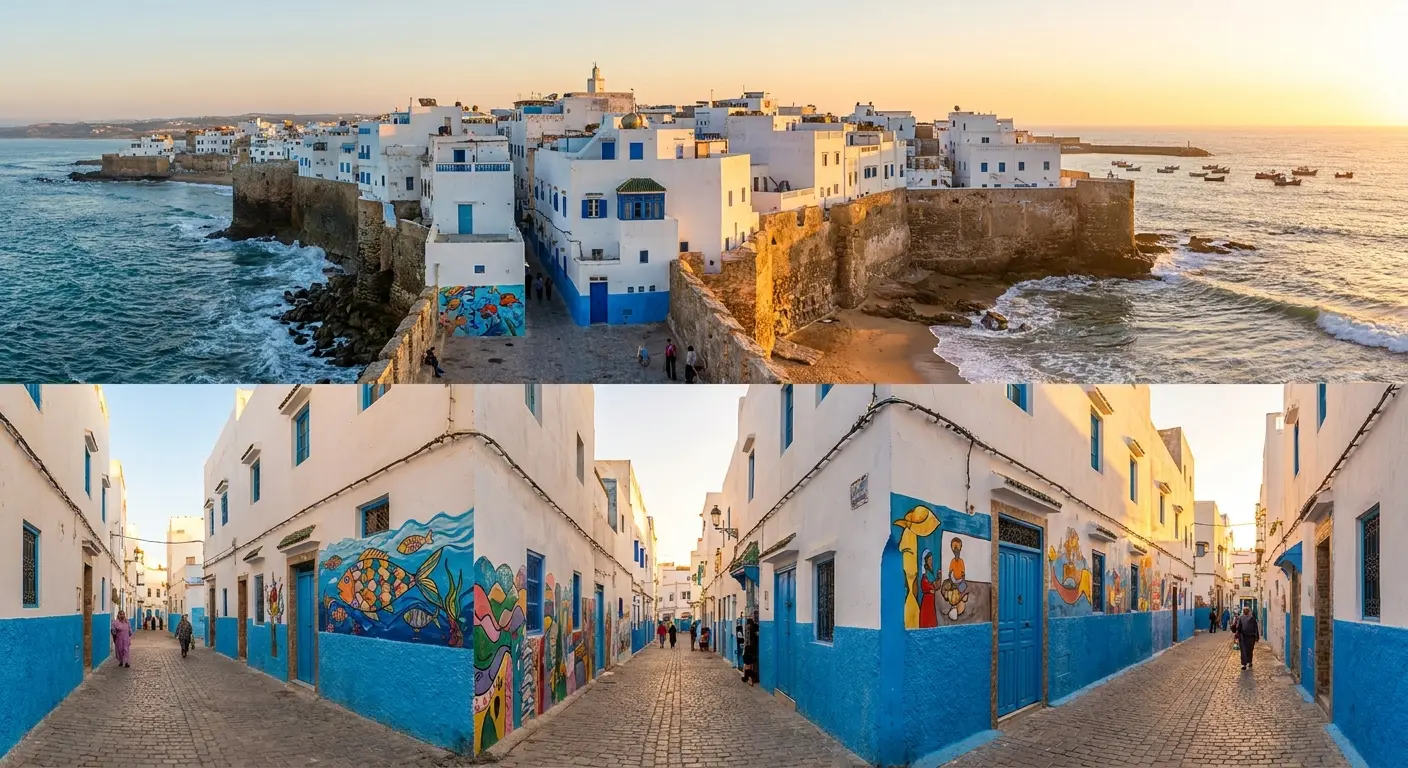
Chefchaouen returned to Morocco in 1956 with the end of the Spanish protectorate in the north. The blue walls that make it famous today are not an age-old tradition: their origin is debated, between the legacy of Jewish families, coolness and residents' taste, and the blue mostly spread in the 20th century.
Now one of Morocco's most photographed towns, Chefchaouen has its heritage recognised under the Mediterranean diet, listed by UNESCO in 2010.
— II —
CHAPTER III
Key dates
1471
Moulay Ali ben Rachid founds a fortress to resist the Portuguese.
1492
Muslims and Jews expelled from Andalusia settle here and shape the medina.
1920
Spanish troops enter the town, which becomes part of the protectorate.
— III —
CHAPTER IV
Landmarks
1
Outa el-Hammam square and the kasbah
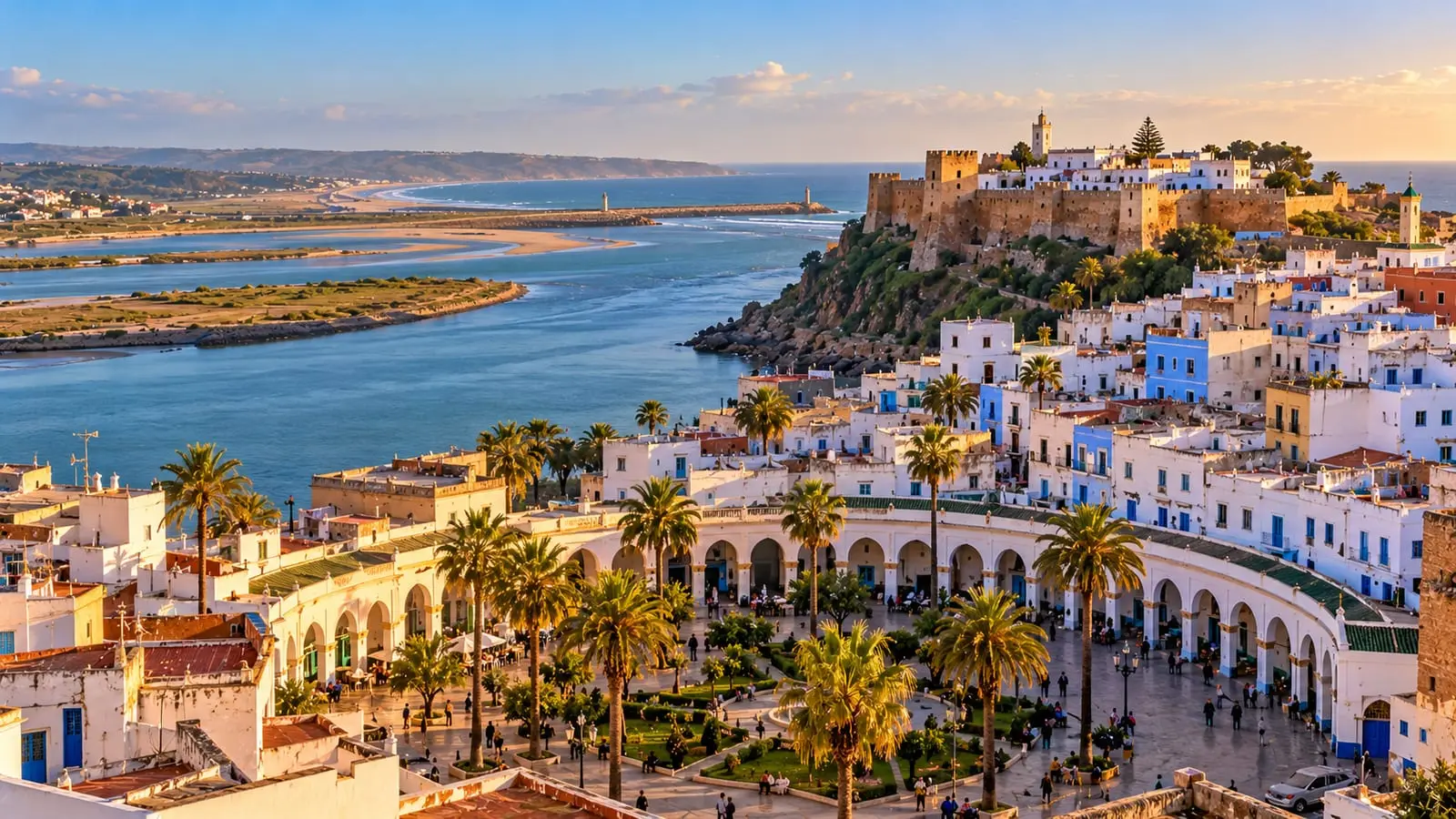
The shaded central square, lined with cafés, faces the red-earth kasbah of 1471, whose garden and small ethnographic museum tell the city's story.
2
Ras el-Maa
The spring that rises at the entrance of the medina, where women still wash laundry at the wash-houses; the path to the Spanish mosque starts here.
3
The Spanish mosque
Built by the Spanish in the 1920s and never used, it gives the finest view of the blue city at sunset, after a twenty-minute walk.
4
Talassemtane National Park
At the town's doorstep, Moroccan firs, cedars and gorges; God's Bridge (Akchour) and its waterfalls are the Rif's favourite hike.
— IV —
CHAPTER V
People
MMoulay Ali ben Rachid1440–1511Founder of the town in 1471 and leader of the resistance against the Portuguese in the north.
SSayyida al-Hurra1485–1561Daughter of Moulay Ali ben Rachid, she governed Tetouan and waged a corsair war against the Portuguese and Spanish.
— V —
CHAPTER VI
Culture and traditions
Jbala weaving
The Jbala mountain people weave wool into red-and-white striped blankets, and the women wear the pompom straw hat and the striped mendil.
Goat's cheese
Chaouen's jben, fresh goat's cheese wrapped in dwarf-palm leaves, is sold every morning by women coming down from the villages.
The town is famous for its weaving tradition — wool jalabas and blankets sold in the medina are locally produced. The Plaza Uta el-Hammam (central square) is the social heart. Traditional Andalusian music echoes through the evening. The surrounding Rif mountains have a complex relationship with cannabis cultivation — a reality that's part of the local economy.
— VI —
CHAPTER VII
The people
The Chaouanis
Residents descend from the Jbala mountain tribes and Andalusian families. Country women still wear the straw hat with wool pompoms and the red-and-white striped fouta when they come to sell at the market.
The Jebli dialect
Northern darija, called Jeblia, is recognisable by its "tch" sound, Spanish loanwords and sing-song intonation. Many residents also speak Spanish.
Goat tagine and jbenMountain cooking: slow-cooked kid, fresh cheese, valley honey and wood-fired bread.
— VIII —
CHAPTER IX
Did you know?
01Nobody really knows why the town is blue: Jewish tradition, coolness or keeping mosquitoes away, explanations vary.
02The name comes from the Berber "ichawen", horns, for the two peaks above the town.
03Chefchaouen's cuisine was listed by UNESCO as part of the Mediterranean diet in 2010.
— IX —
Frequently asked questions about Chefchaouen
How many days do you need in Chefchaouen?
Allow 1–3 days to see Chefchaouen without rushing. That is the length we use in our itineraries.
When is the best time to visit Chefchaouen?
The best months for Chefchaouen are April, May, June, September and October.
How much does a day in Chefchaouen cost?
Per person per day, accommodation included: about $30 on a budget, $70 mid-range and $150 for a luxury stay.
How do you get to Chefchaouen?
No direct train. CTM buses from Tangier (3h), Fes (4.5h), Casablanca (6h). Grand taxis from Tétouan (1h) are the fastest local option.
What is there to see in Chefchaouen?
The must-sees of Chefchaouen: Plaza Uta el-Hammam, The Blue Medina, Spanish Mosque and Kasbah Museum.
What should you eat in Chefchaouen?
To taste in Chefchaouen: Bissara, Khobz, Moroccan mint tea and Oranges with cinnamon.
Where should you stay in Chefchaouen?
The best areas to stay: Medina and Bab Souk area.
Is Chefchaouen safe?
Yes, Chefchaouen welcomes many travellers every year. The precautions are those of any tourist destination: watch your belongings in crowds, politely turn down unofficial guides, agree on a taxi fare before getting in.