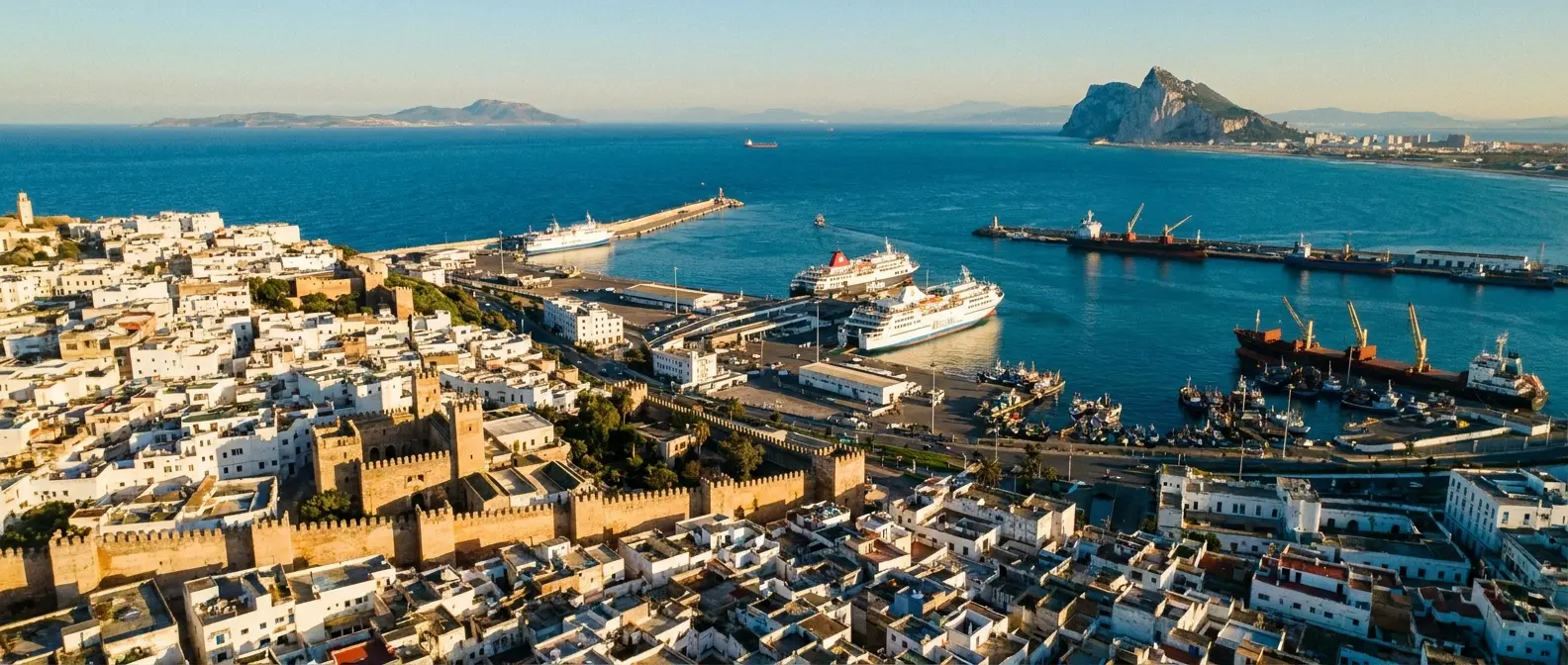
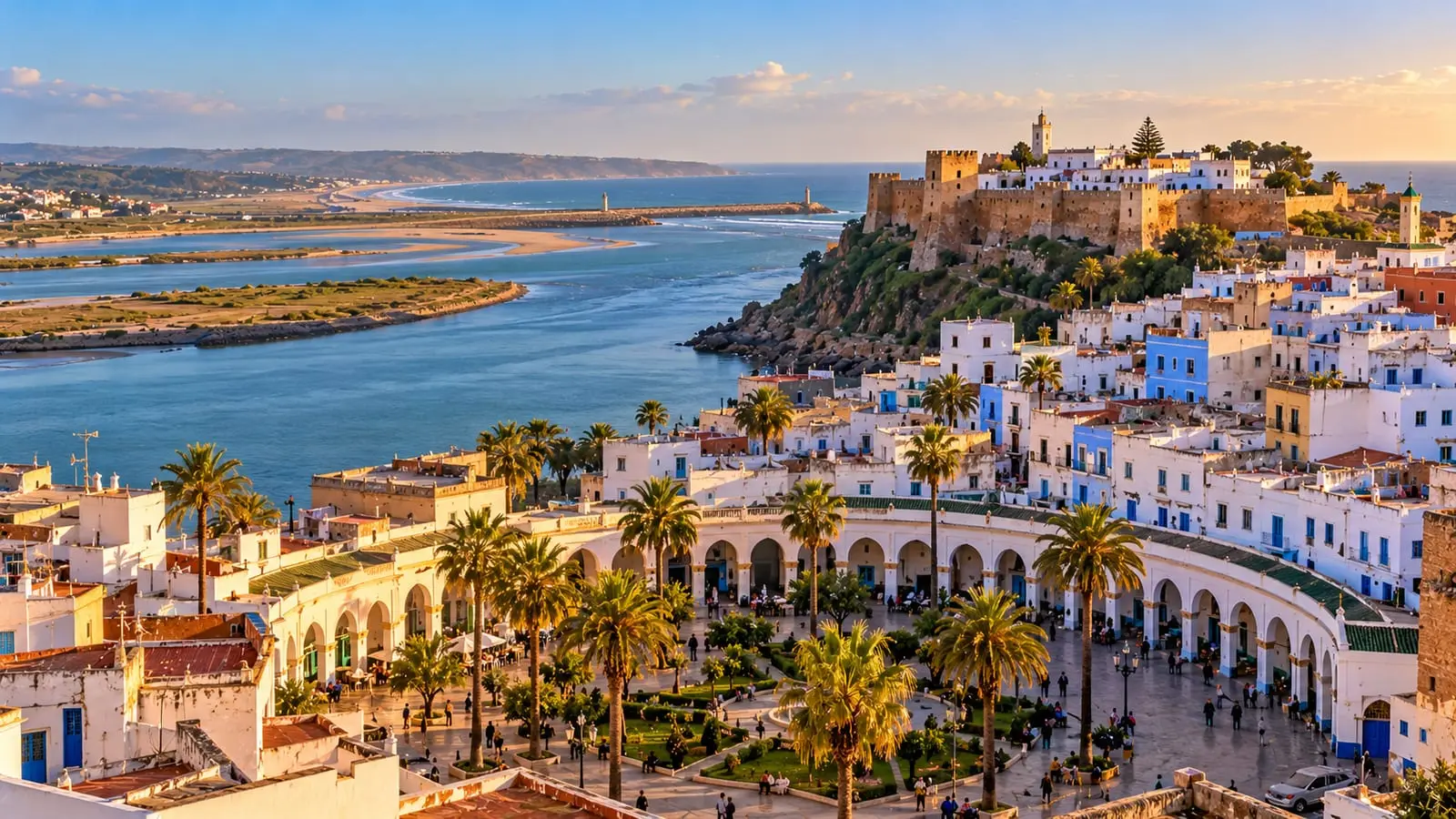
RRazed by the Castilians around 1400, Tetouan was reborn at the end of the 15th century thanks to refugees from Granada. Its white medina, listed by UNESCO in 1997, is the most Andalusian in Morocco; the city later served as capital of the Spanish protectorate from 1913 to 1956.
A few kilometres from the town lies the ancient site of Tamuda, a Mauretanian city of the 3rd century BC where Phoenician and Roman objects have been found.
In 1286 the Marinids built a kasbah and a mosque at Tetouan. In 1305 Sultan Abu Thabit enlarged and fortified the town as a base against Ceuta, held by a rebel prince. But Tetouan was also a corsair haven: in 1399 the Castilians destroyed it, and in 1436 the Portuguese of Ceuta raided it again.
The town of the Andalusians (late 15th century)
the Andalusians rebuild Tetouan
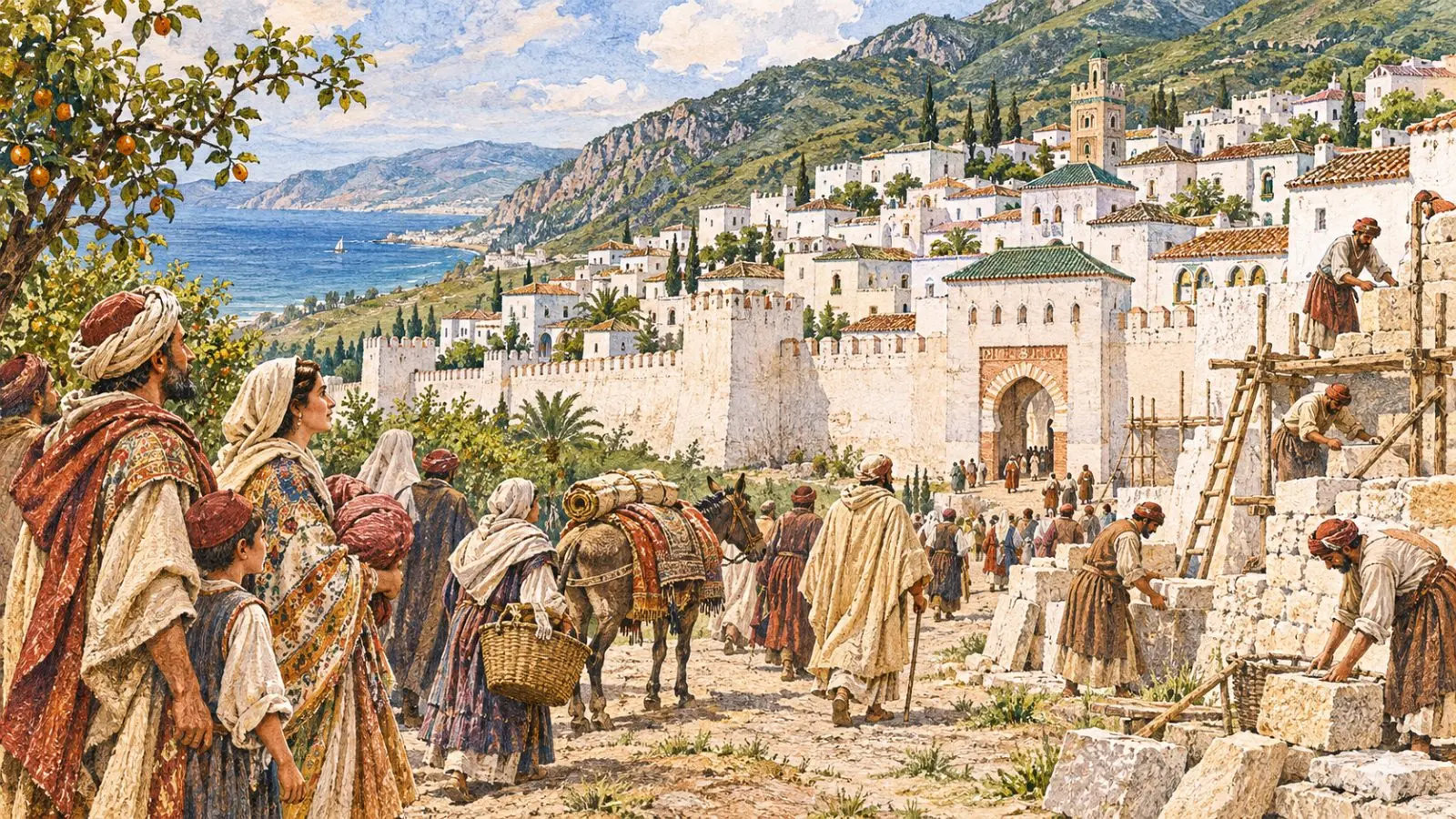
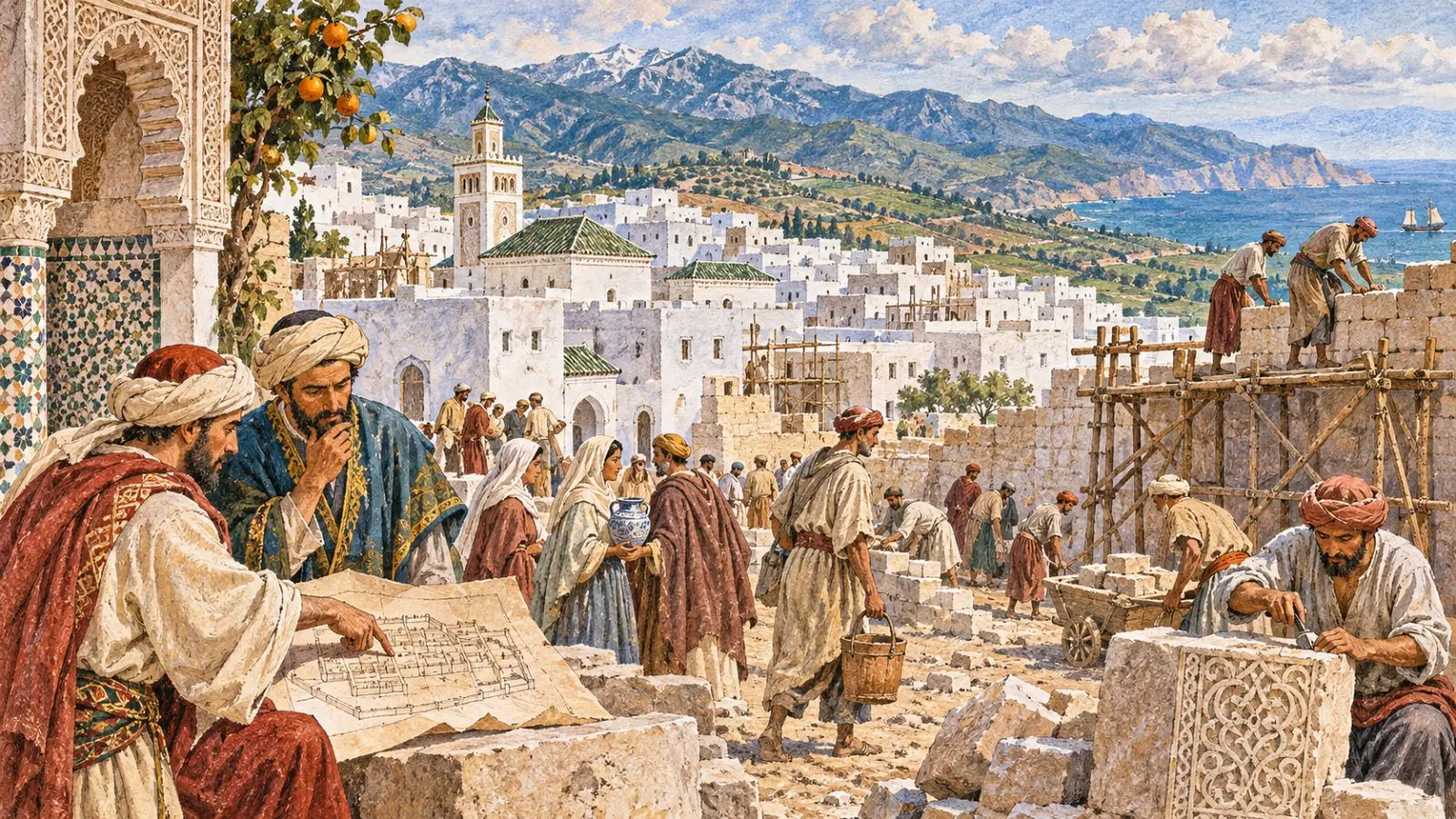
In the late 15th century the ruined town was rebuilt by Muslims and Jews expelled from Spain. The Andalusians, led by Ali al-Mandri, a captain of Boabdil, the last Nasrid king of Granada, first raised the walls, then filled the enclosure with houses. In conflict with the neighbouring Beni Hozmar tribe, they sought the protection of the Wattasid sultan, who sent eighty soldiers, and paid to keep their autonomy.
The town stayed autonomous from the Saadians. Sayyida al-Hurra, al-Mandri's wife and daughter of Chefchaouen's founder, governed it for part of the 16th century.
Corsairs and mazmorras (16th-17th century)
From the 1530s Tetouan became one of the main privateering centres of the western Mediterranean. For the Moriscos, driven from Spain by the forced conversions of 1501-1526, it was revenge for the Reconquista. The Castilians destroyed the port in 1565.
Christian captives were held in the mazmorras, a network of underground caves where a chapel, Our Lady of Sorrows, served prisoners and the clergy who came to negotiate their ransom. Cervantes mentions these "caves of Tetouan" in several works. Rediscovered in the early 20th century, they have never been excavated, as they lie beneath inhabited houses.
Alaouites and Algerians (17th-19th century)
In the 17th century the town was ruled by the wealthy al-Naqsis family. Moulay Ismail took it at the end of the century despite fierce resistance. The Alaouite governor of Tangier restored stability and built the Mechouar palace and the Pasha mosque, the oldest mosque still standing in the town.
The Sephardic Jewish community, which spoke Haketia, a Judaeo-Spanish, suffered a pogrom in 1790 under Sultan Moulay Yazid; many then left for Gibraltar. After 1830, Algerians fleeing the French conquest settled in Tetouan.
The 1860 war and the Spanish protectorate
In 1859 Spain declared war on Morocco after a dispute over Ceuta's borders. General Leopoldo O'Donnell took Tetouan on 4 February 1860 and was made Duke of Tetuán. The Spanish left the town in May 1862, in return for a heavy indemnity.
From 1913 to 1956 Tetouan was the capital of the Spanish protectorate in northern Morocco, seat of the sultan's khalifa and the Spanish High Commissioner. The Spanish built a new town beside the medina, the Ensanche, with its white façades.
A centre of nationalism
Tetouan was one of the most active towns in the struggle against colonisation. The nationalist movement there was led by Abdelkhalek Torres, with Abdessalam Bennouna and the historian Mohammed Daoud, linked to the Arab nationalists; the Lebanese emir Shakib Arslan met them in Tetouan in August 1930.
The town returned to independent Morocco in 1956. Its medina, one of the most complete in the country, was listed as UNESCO World Heritage in 1997.
— II —
CHAPTER III
Key dates
1484
Andalusian refugees led by Sidi Ali al-Mandari rebuild the town.
1913–1956
Capital of the Spanish protectorate.
1997
The medina is listed by UNESCO.
— III —
CHAPTER IV
Landmarks
1
The medina
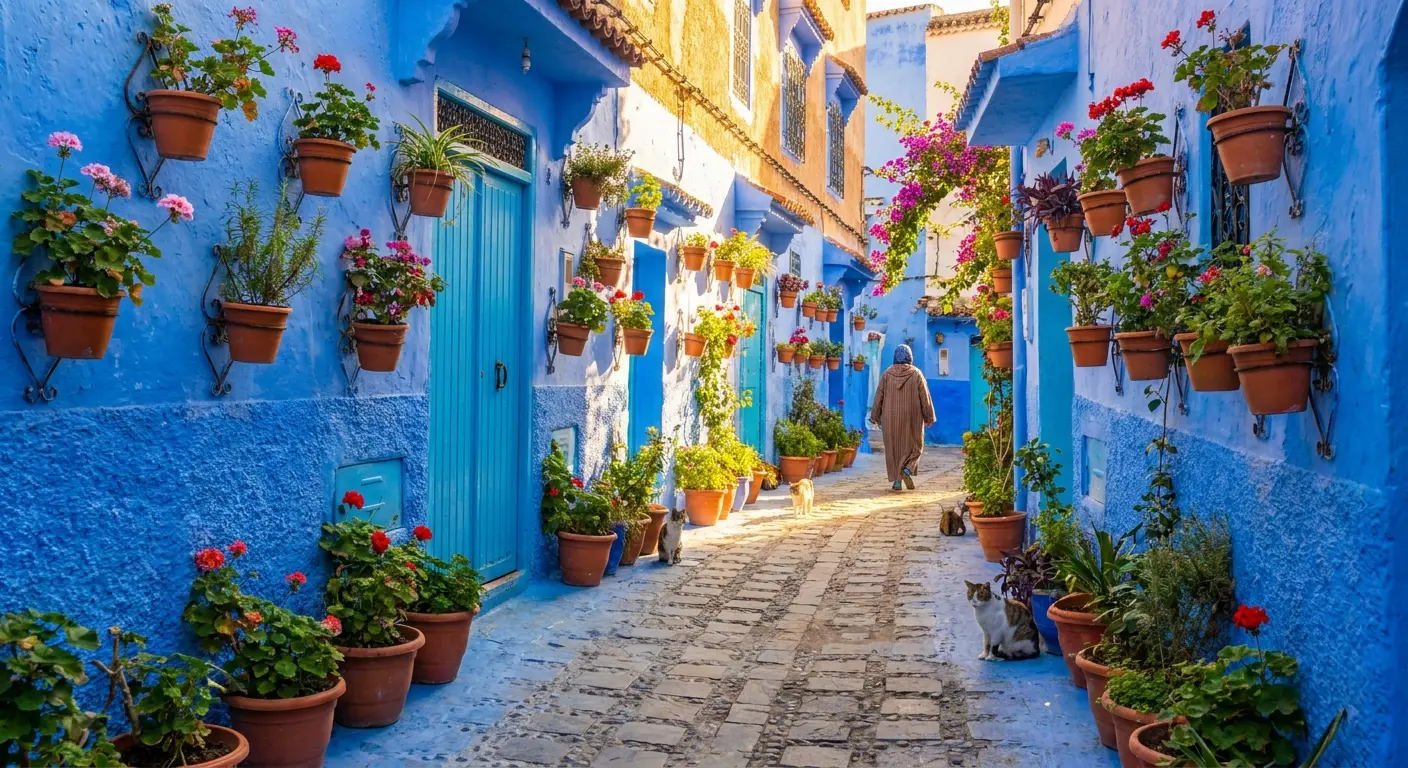
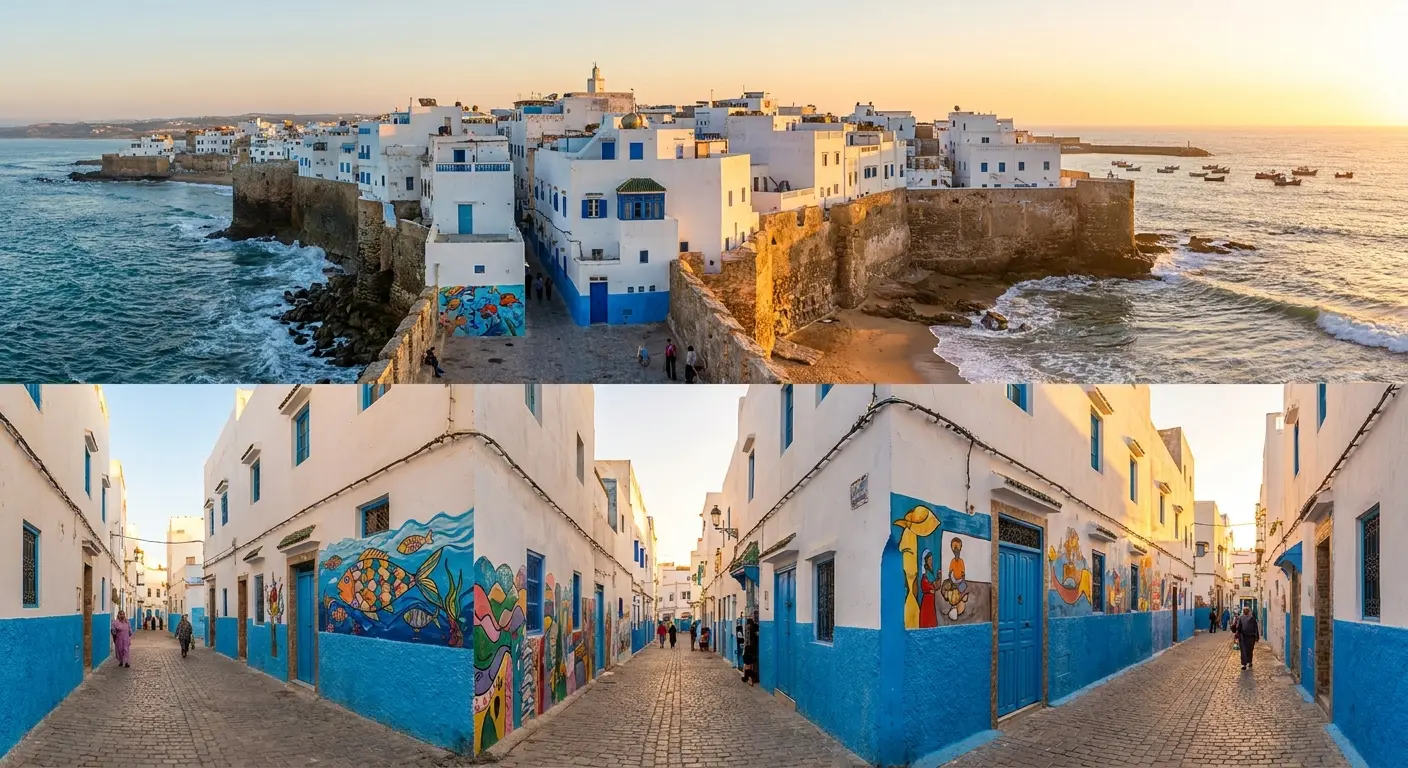
Seven gates, whitewashed lanes, souks grouped by trade and Andalusian courtyard houses: an intact medina with few tourists.
2
The school of arts and crafts
Opposite Bab el-Okla, masters train apprentices in zellige, carved plaster and painted wood, in a building they decorated themselves.
3
The Ensanche and Hassan II square
Between the royal palace and Boulevard Mohammed V, Spanish buildings from the 1920s–1950s form one of the finest colonial ensembles in North Africa.
— IV —
CHAPTER V
People
SSayyida al-Hurra1485–1561Governor of Tetouan and ally of the corsairs, one of the few women to have held power in Morocco.
MMariano Bertuchi1884–1955A Spanish painter in love with Morocco, he founded Tetouan's fine arts school in 1945.
— V —
CHAPTER VI
Culture and traditions
Andalusian music
Inherited from Granada, al-ala music is handed down here from orchestra to orchestra; Tetouan weddings remain among the most refined in Morocco.
Andalusian music (malhun and gharnati) is performed at the Royal Conservatory. The embroidery tradition (Tetouani broderie) uses silk thread in distinctly Andalusian floral patterns. The medina's white-and-blue architecture is maintained as a cultural obligation — repainting in any other color is prohibited.
— VI —
CHAPTER VII
The people
The Tetouanis
Tetouan's old families descend from Andalusians from Granada who arrived at the end of the 15th century. They have kept a cuisine, music and wedding costumes unique to the city, and a strong attachment to their "Andalusian" identity.
The Tetouan accent
Tetouani darija is soft and sing-song, with many Spanish words; it's recognisable by its diminutives and politeness.
— VII —
CHAPTER VIII
At the table
Tetouan cookingGentle and fragrant, brought from Andalusia: chicken with almonds, fish from Martil and delicate pastries with honey and orange blossom.
— VIII —
CHAPTER IX
Did you know?
01Tetouan was the capital of the Spanish protectorate in northern Morocco from 1913 to 1956.
02It's nicknamed "the white dove" for its whitewashed houses.
03Its medina has been on UNESCO's World Heritage list since 1997.
— IX —
Frequently asked questions about Tetouan
How many days do you need in Tetouan?
Allow 1–2 days to see Tetouan without rushing. That is the length we use in our itineraries.
When is the best time to visit Tetouan?
The best months for Tetouan are April, May, September and October.
How much does a day in Tetouan cost?
Per person per day, accommodation included: about $30 on a budget, $70 mid-range and $160 for a luxury stay.
How do you get to Tetouan?
CTM buses from Tangier (1h), Chefchaouen (1.5h), Rabat (4h). No airport or train.
What is there to see in Tetouan?
The must-sees of Tetouan: Medina, Archaeological Museum, Mellah and Royal Palace.
What should you eat in Tetouan?
To taste in Tetouan: Bissara, Ghriba, Fekkas and Khobz.
Where should you stay in Tetouan?
The best areas to stay: Medina and Ensanche (Spanish quarter).
Is Tetouan safe?
Yes, Tetouan welcomes many travellers every year. The precautions are those of any tourist destination: watch your belongings in crowds, politely turn down unofficial guides, agree on a taxi fare before getting in.