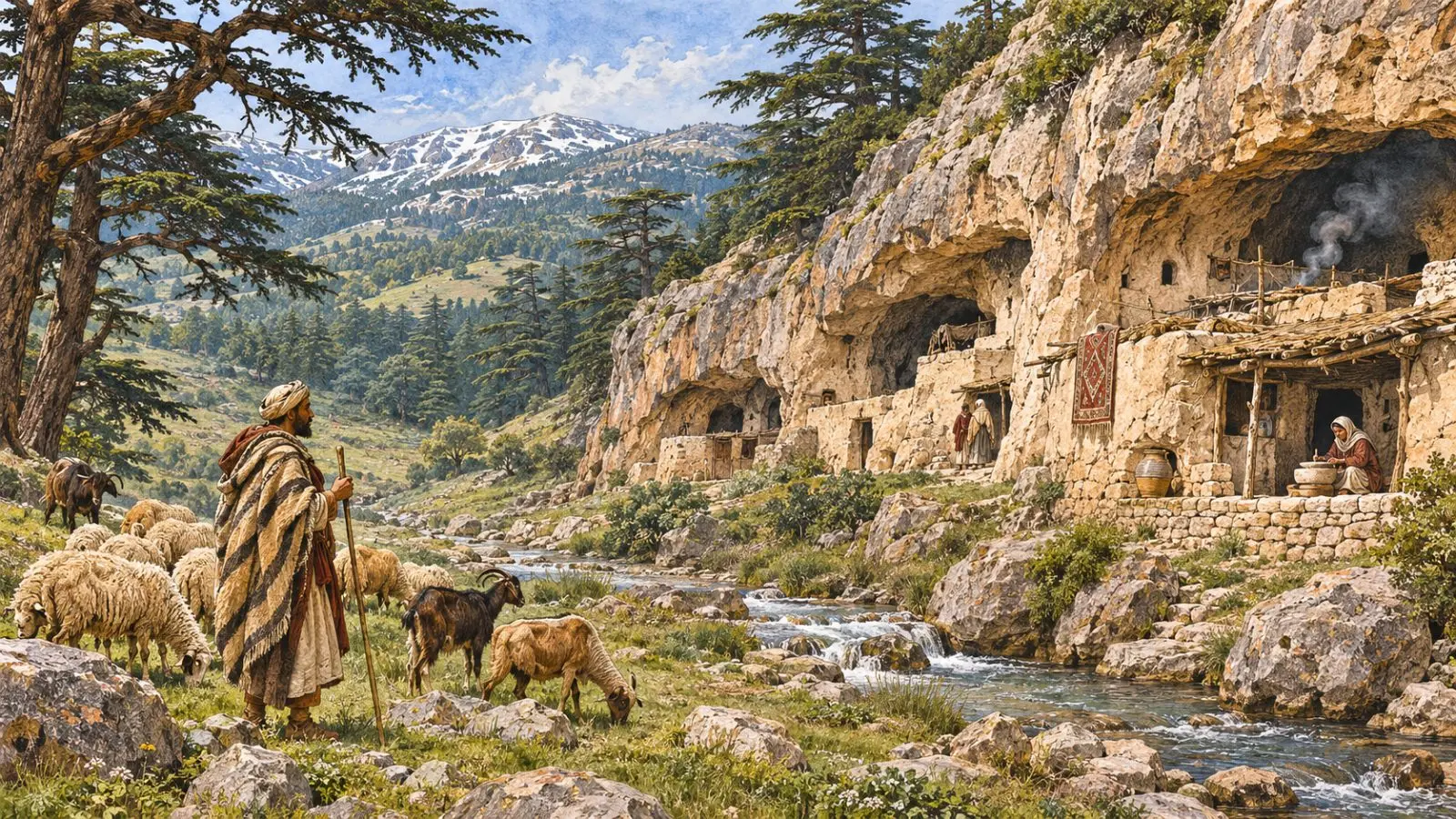
the cave dwellings of the Tizguit valley

THE BOOK OF

Ifrane — All about Ifrane

إفران

History, places, people, culture and food of Ifrane, told by two Moroccans.

10 chapters3 min readBy Yassine and Issam
Things to do in Ifrane
CONTENTS · I
  1. I. At a glance
  2. II. History
  3. III. Key dates
  4. IV. Landmarks
  5. V. People
  6. VI. Culture and traditions
  7. VII. The people
  8. VIII. At the table
  9. IX. Did you know?
  10. X. Frequently asked questions

CHAPTER I

At a glance

Steep roofs, chalets and flowered parks at 1,650 m: Ifrane, “Morocco's Switzerland”, was created in 1929 as a summer resort of the protectorate. It is also one of the coldest towns in Africa and home to Al Akhawayn University.

Arabic name
إفران
Coordinates
33.5228, -5.1072
Best months
Jun, Jul, Aug, Dec, Jan

CHAPTER II

History

The Tizguit caves (16th-17th century)

The first permanent village was founded in the 16th century by a sharif, Sidi Abdeslam, in the Tizguit valley, 9 km downstream from today's town. Its homes were first caves dug into the limestone cliff, hence the name Ifrane, "caves" in Amazigh. Residents only began building above ground some fifty years ago; the caves are still used as stables and storage.

In the mid-17th century Sidi Abdeslam's zawiya received a large land grant from the Alaouite sultan Moulay Rashid, from upstream of Ifrane down to the El Hajeb escarpment.
Herders and resistance (19th century-1922)

In the late 19th century Amazigh herding tribes, the Beni Mguild and Ait Seghrouchen, came from the upper Moulouya to graze their flocks on the plateau. Farmed land on the valley floor was private property; pastures belonged collectively to the tribe.

The tribes of the Ifrane-Azrou area resisted the French conquest from 1913 to 1917; higher in the mountains, at Timahdite and Jbel Fazzaz, resistance went on until 1922.

The 1929 hill station

The modern town was created in 1929 by the French administration on fifty hectares of land taken from the zawiya. It was a "hill station" for settler families from Fes, Meknes and the Saiss plain escaping the summer heat: a garden city of Basque, Jura or Savoy-style chalets, planted with lilacs, plane trees, chestnuts and limes brought from Europe.

A royal palace was built for Sultan Mohammed V. During the Second World War the town's prison served as a POW camp. Across a ravine grew Timdiqin, the quarter where Moroccans working for the holidaymakers lived.

Moroccan Ifrane

After independence the French houses were gradually bought by Moroccans; the town grew, gained a mosque, a market and housing, and Timdiqin was rebuilt. In 1979 Ifrane became a provincial capital.

In 1995 Al Akhawayn University opened, an English-language public university on the American model, which revived the town. Ifrane became a summer and winter resort much loved by Moroccans, with the snow of Michlifen and the cedars of the national park.

CHAPTER III

Key dates

  1. 1929

    The French found Ifrane as a mountain resort in Alpine style.

  2. 1935

    −24 °C is recorded, still among the coldest temperatures measured in Africa.

  3. 1995

    Al Akhawayn University opens.

CHAPTER IV

Landmarks

1

The stone lion

Carved in limestone during the Second World War, it recalls the vanished Atlas lion; it is the photo everyone takes.

2

The lakes and forest

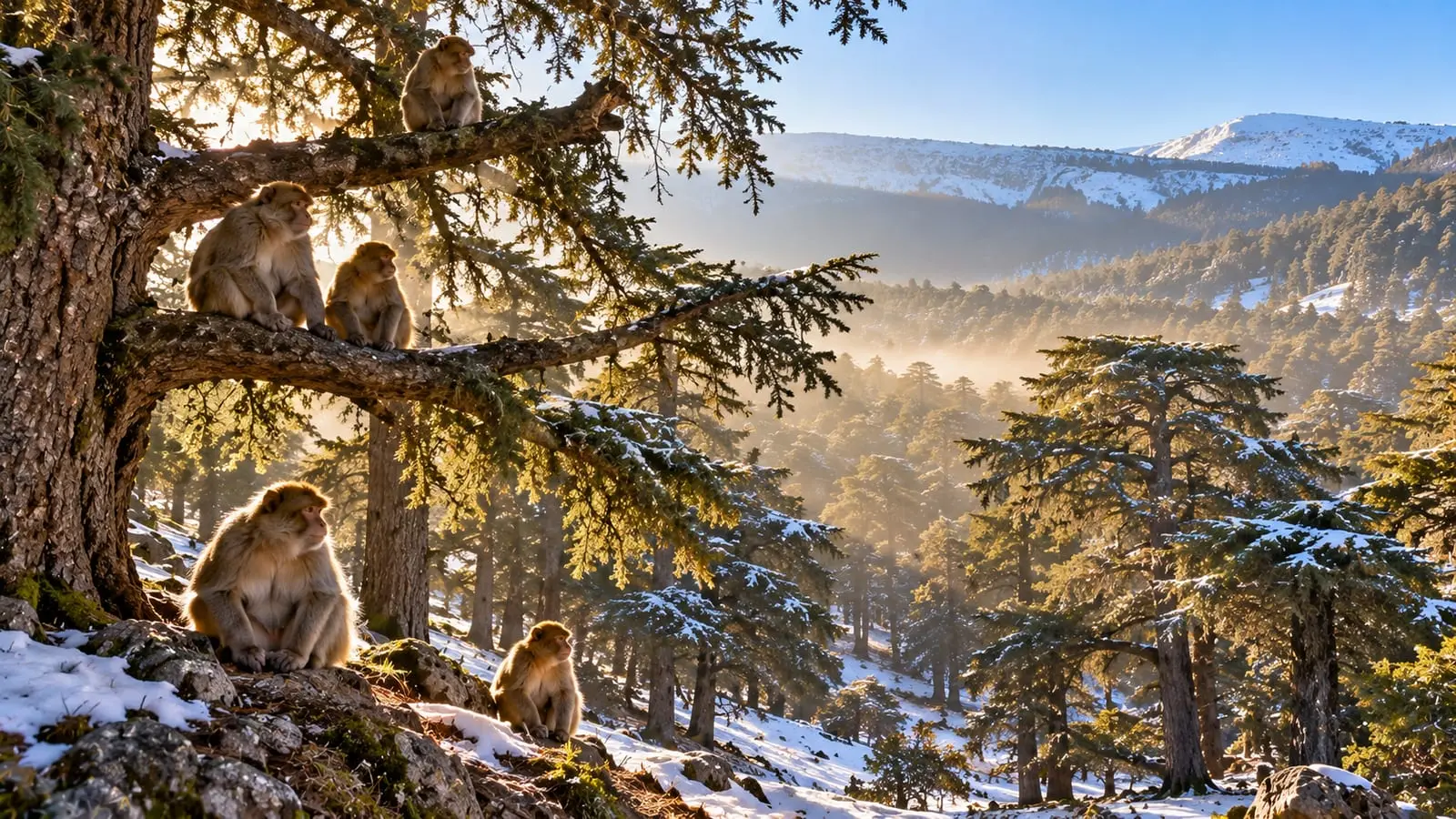
Dayet Aoua, Afenourir and the Vittel springs: walks among cedars and holm oaks, with Barbary macaques coming right to the roadside.

3

Michlifen

An old crater where people ski when there is snow, between December and February.

CHAPTER V

People

  • Hassan II1929–1999He made Ifrane a royal summer residence and founded Al Akhawayn University there.

CHAPTER VI

Culture and traditions

Snow and cool air

In winter Moroccans come from all over the country to see the snow; in summer Ifrane stays cool while Fez swelters.

Ifrane is the rare Moroccan city with a ski culture — Michlifen ski resort is 20km away. The cedar forests of the Middle Atlas are habitat for the endangered Barbary macaque — feeding the monkeys at Azrou (15km away) is a popular activity. Trout fishing in the Oum er-Rbia river headwaters is a French-era tradition that continues.

CHAPTER VII

The people

Students and mountain people

Ifrane mixes two worlds: students at Al Akhawayn University, from all over Morocco and abroad, and the Beni Mguild Amazigh mountain tribes, sheep herders.

Ifrane's languages

Middle Atlas Tamazight is spoken in the villages; on campus you mostly hear English, the university's teaching language.

CHAPTER VIII

At the table

Middle Atlas troutThe rivers and fish farms nearby supply grilled trout, eaten by the lakes.

CHAPTER IX

Did you know?

  • In 1935 Ifrane recorded −23.9 °C, one of the coldest temperatures ever measured in Africa.
  • "Ifrane" means "caves" in Amazigh: people once lived in hollows in the valley.
  • The town is often cited as one of the cleanest in Africa.

Frequently asked questions about Ifrane

How many days do you need in Ifrane?

Allow 1–2 days to see Ifrane without rushing. That is the length we use in our itineraries.

When is the best time to visit Ifrane?

The best months for Ifrane are June, July, August, December and January.

How much does a day in Ifrane cost?

Per person per day, accommodation included: about $40 on a budget, $90 mid-range and $200 for a luxury stay.

How do you get to Ifrane?

CTM bus from Fes (1.5h). Grand taxis from Azrou and Meknès. No train or airport — driving is recommended.

What is there to see in Ifrane?

The must-sees of Ifrane: Ifrane National Park, City center, Dayet Aoua Lake and Azrou cedar forest.

What should you eat in Ifrane?

To taste in Ifrane: Rfissa, Khobz, Moroccan mint tea and Oranges with cinnamon.

Where should you stay in Ifrane?

The best areas to stay: City center.

Is Ifrane safe?

Yes, Ifrane welcomes many travellers every year. The precautions are those of any tourist destination: watch your belongings in crowds, politely turn down unofficial guides, agree on a taxi fare before getting in.

Is Ifrane good for families?

Yes, Ifrane is easy to visit with children.

Sources

To go further and check what we write.

Other sources

Read next

THE END

Now go and see Ifrane.

By Yassine and Issam · Spotted a mistake? Tell us