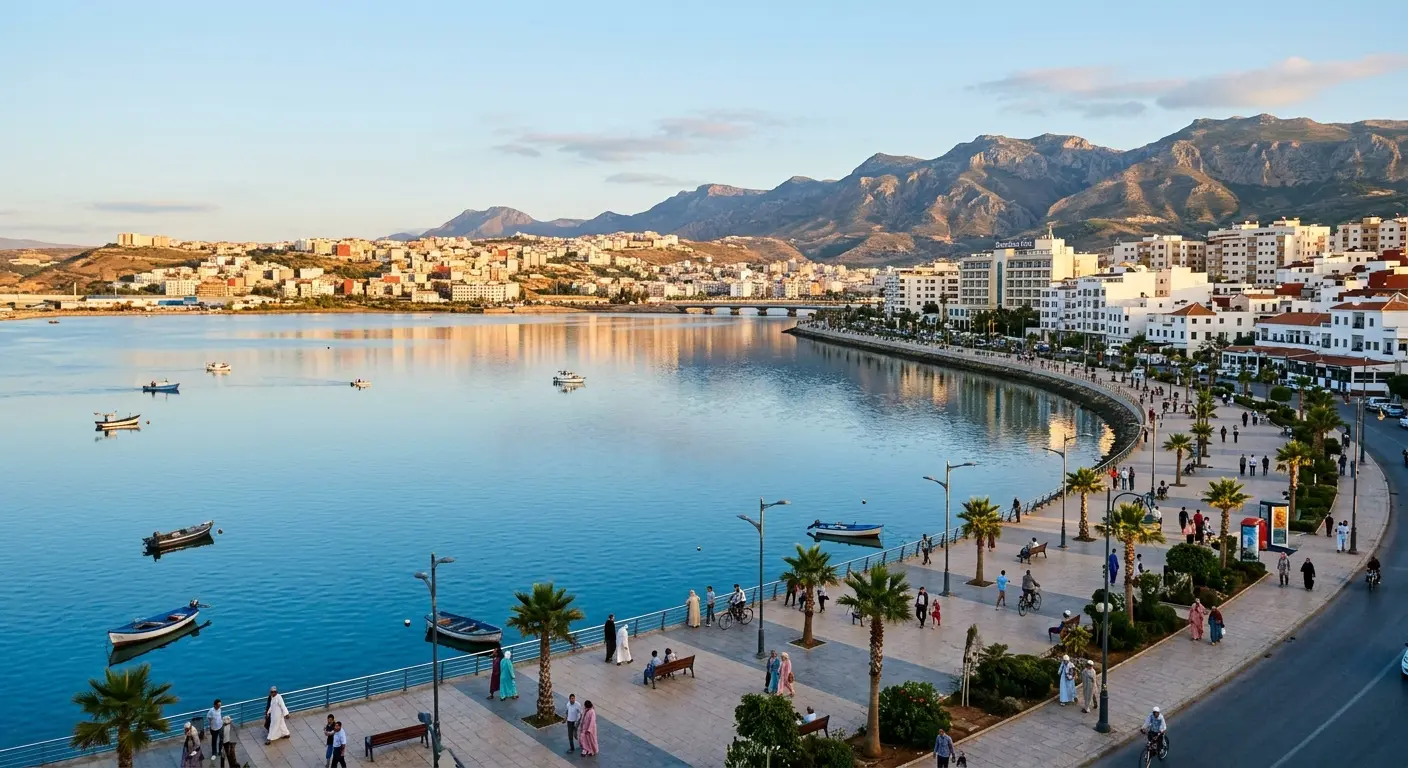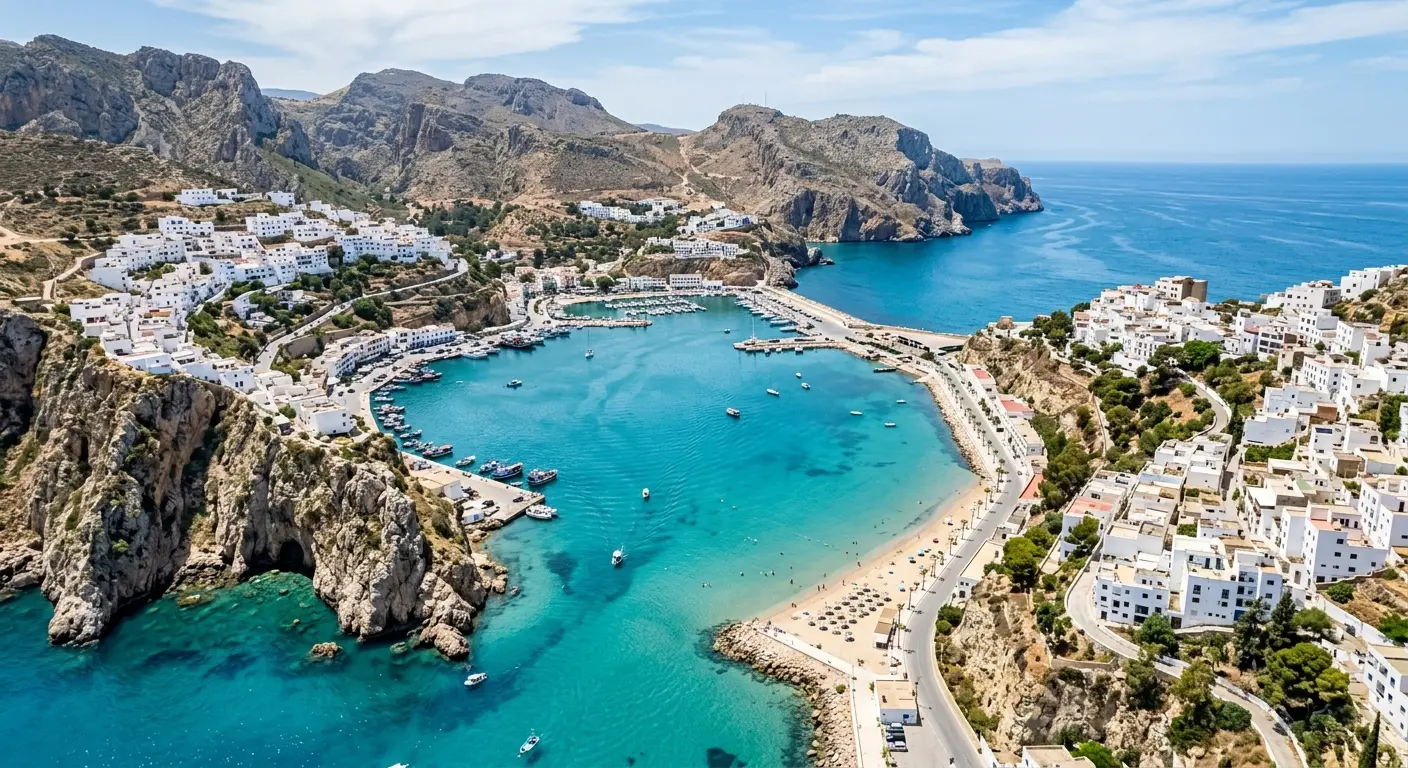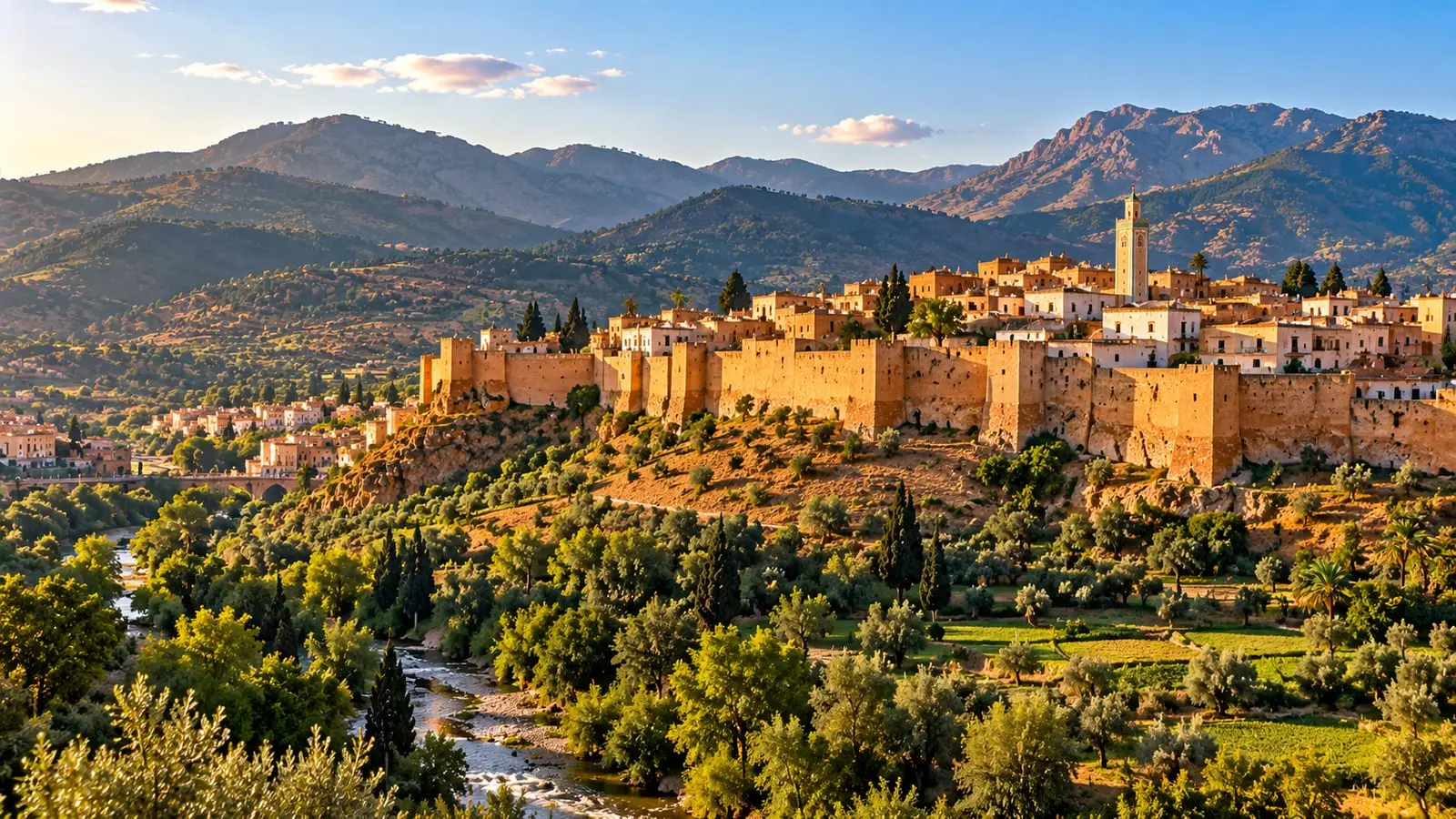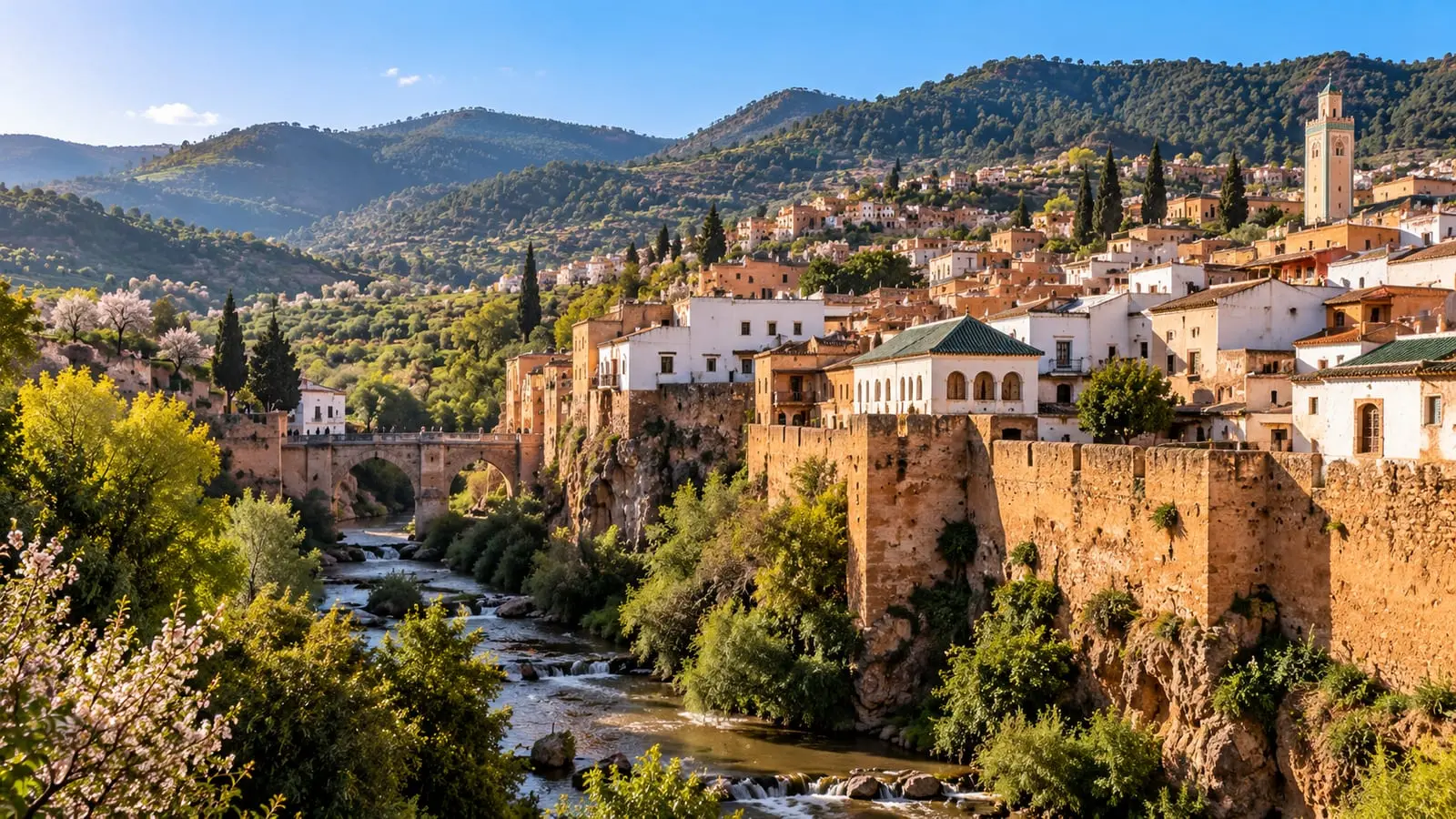
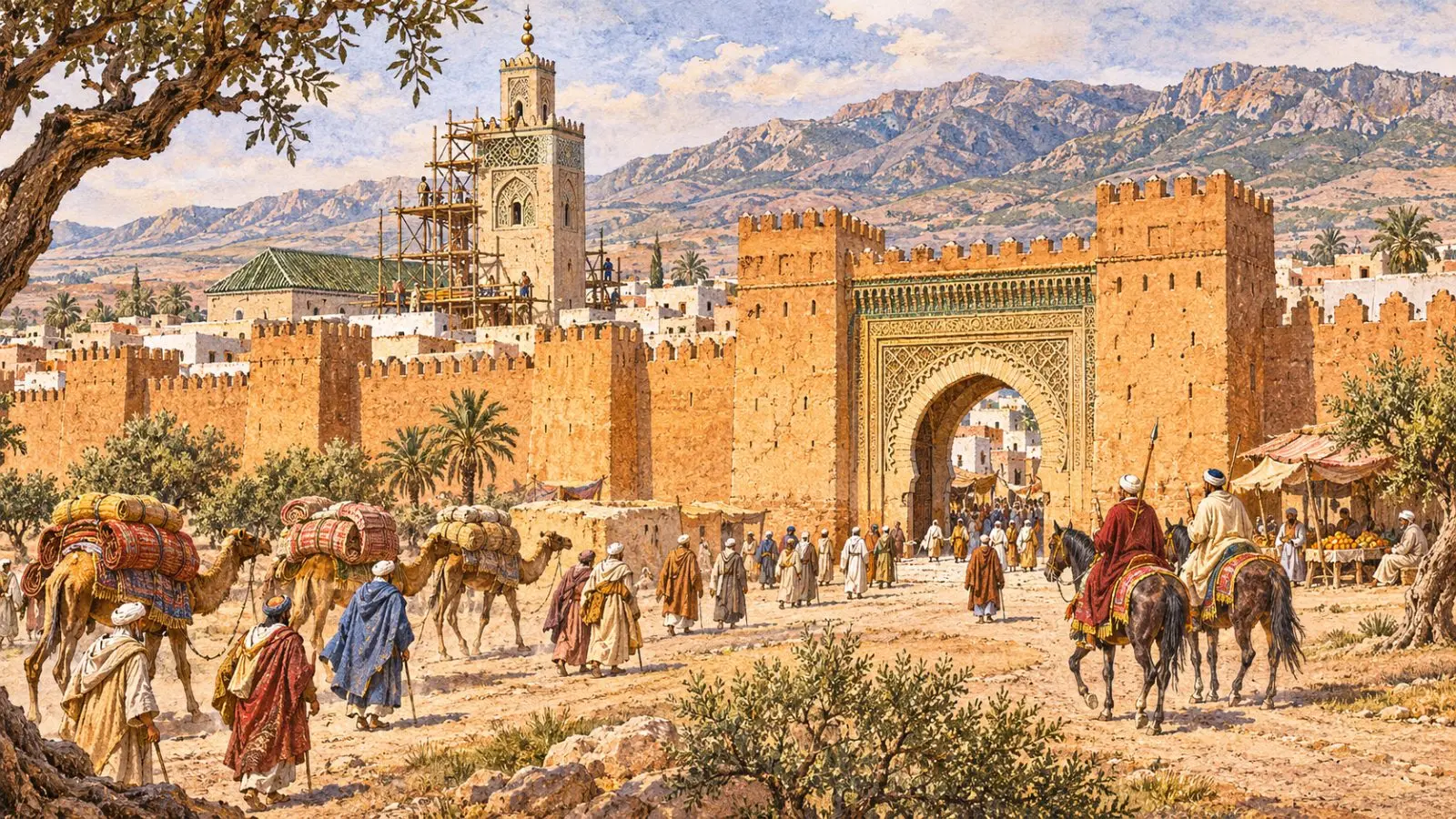
Oujda around 1300, under the Marinids

THE BOOK OF

Oujda — All about Oujda

وجدة

History, places, people, culture and food of Oujda, told by two Moroccans.

10 chapters4 min readBy Yassine and Issam
Things to do in Oujda
CONTENTS · I
  1. I. At a glance
  2. II. History
  3. III. Key dates
  4. IV. Landmarks
  5. V. People
  6. VI. Culture and traditions
  7. VII. The people
  8. VIII. At the table
  9. IX. Did you know?
  10. X. Frequently asked questions

CHAPTER I

At a glance

Founded in 994 by a Zenata chief, Oujda is the main city of the Oriental region, a few kilometres from Algeria. Contested for centuries between Fez and Tlemcen, it keeps a lively medina, Gharnati music and a cuisine all its own.

Arabic name
وجدة
Other names
Wajda
Region
Oriental
Coordinates
34.6805, -1.9076
Best months
Mar, Apr, May, Oct, Nov

CHAPTER II

History

Founded by Ziri ibn Atiyya (994)

Some evidence suggests a settlement in Roman times, controlled by Berbers rather than Rome. But the town was founded in 994 by Ziri ibn Atiyya, chief of the Zenata Maghrawa tribe. Allowed to settle in the Fes region, he felt insecure there and preferred to move closer to the central Maghreb, his tribe's homeland: he placed a garrison and his possessions at Oujda and appointed a relative as governor.

Oujda is thus one of Morocco's oldest towns still inhabited.
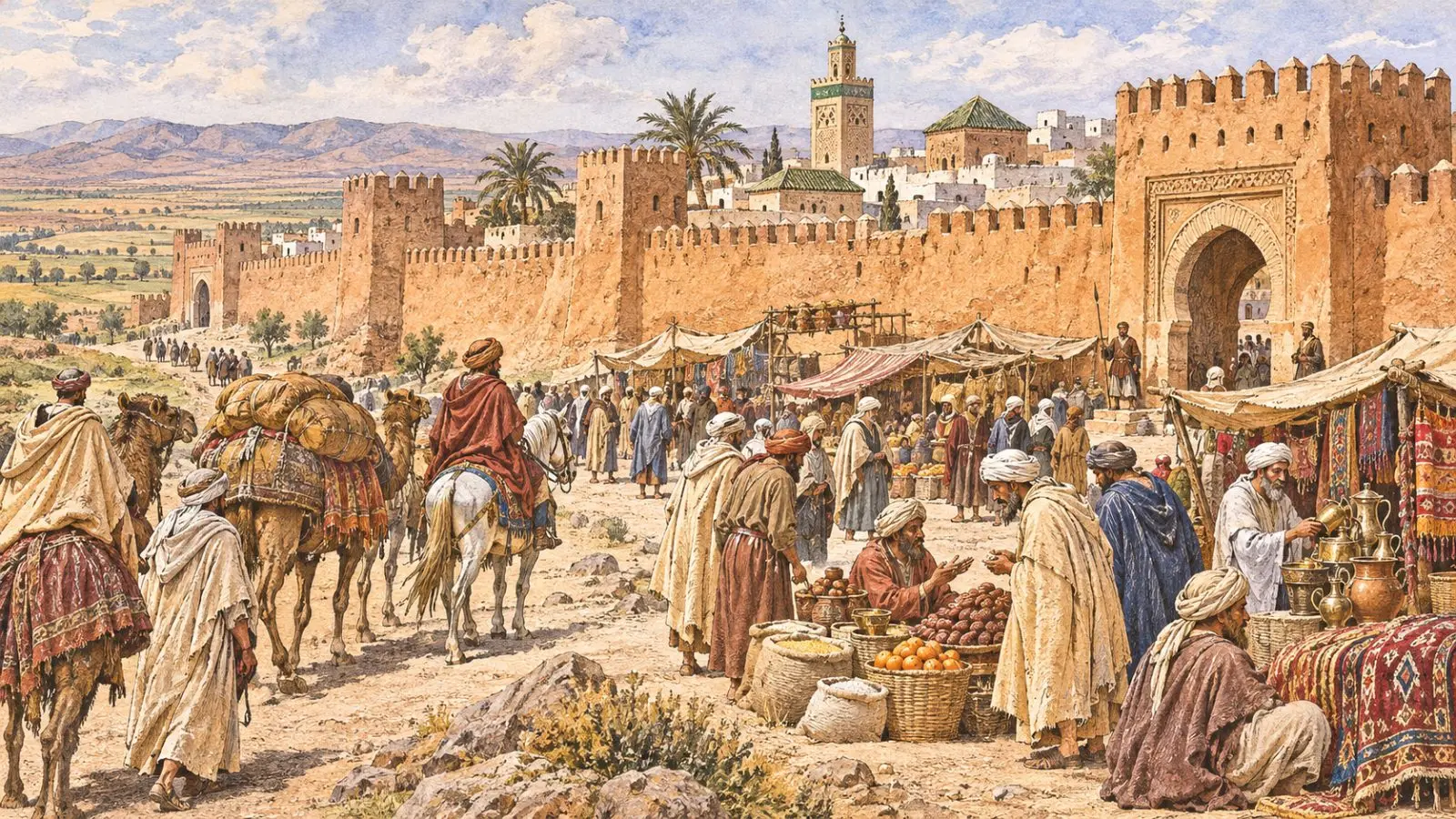
Between Fes and Tlemcen (11th-14th century)

Oujda, a stage between Fes and Tlemcen

In the mid-11th century a new walled quarter was added to the original core. Yusuf ibn Tashfin took the town in 1079; in the following century the Almohads controlled it and Caliph Muhammad al-Nasir strengthened its walls.

A frontier town, Oujda was disputed between the Marinids of Fes and the Abdalwadids of Tlemcen. The Marinid sultan Abu Yusuf Ya'qub destroyed it in 1271 after defeating Yaghmorasan; his successor Abu Ya'qub Yusuf retook it in 1296, razed the remaining fortifications and then rebuilt it with new walls, a palace and the present Great Mosque. Around 1325 Sultan Abu al-Hasan took it once more.

Frontier town facing the Ottomans (16th-18th century)

From the 16th century Oujda was disputed between Morocco's sharifian dynasties, the Saadians then the Alaouites, and the Ottoman Empire to the east. It was often attached to the province of Tlemcen.

During Moulay Ismail's long reign (1672-1727) it was firmly held by the Alaouites, with new fortifications and garrisons. After his death instability returned; only in 1795 was the town retaken by the Alaouites and permanently incorporated into Morocco.

Isly and the French occupation (1844-1956)

Because Morocco supported the Algerian emir Abd el-Kader, the French army occupied Oujda in 1844; the Battle of Isly, lost by Morocco on 14 August 1844, was fought just west of the town. The French came back in 1859.

In March 1907 General Lyautey occupied Oujda again, making it the military base for the conquest of eastern Morocco, even before the 1912 protectorate. The modern town was developed during this period.

Oujda in the 20th century

Close to the border with French Algeria, Oujda was in 1948 a crossing point for Moroccan Jews trying to reach Israel. In June 1948 anti-Jewish riots in Oujda and nearby Jerada killed 47 Jews.

After independence in 1956 Oujda became the capital of the Oriental region. The border with Algeria has been closed since 1994, cutting the town off from neighbouring Tlemcen. It keeps a strong tradition of gharnati music, inherited from al-Andalus, and hosts Mohammed I University.

CHAPTER III

Key dates

  1. 994

    Ziri ibn Atiyya founds Oujda.

  2. 1907

    French troops occupy the town.

CHAPTER IV

Landmarks

1

The medina and Bab Sidi Abdelouahab

The great gate opens onto lively souks, the market square and the Merinid Great Mosque.

2

The Sidi Yahia oasis

A grove and a shrine revered by Muslims and, in the past, by the town's Jews.

3

Saidia and Figuig

To the north, Saidia's long Mediterranean beach; to the south, the Figuig oasis and its ksour.

CHAPTER V

People

  • Ziri ibn Atiyya†1001Chief of the Maghrawa and founder of Oujda in 994.

CHAPTER VI

Culture and traditions

Gharnati and rai

Oujda cherishes Gharnati Andalusian music, which came from Granada via Tlemcen, as well as the rai of the Oriental; a rai festival is held here regularly.

Oujda has a rich musical heritage: Raï music — the contemporary North African popular genre — has deep roots here and in nearby Algeria. The city also preserves classical Andalusian malhun music traditions. The Thursday livestock market at Sidi Yahia Oasis (10km away) is one of the region's most authentic rural markets. Pottery from the Figuig oasis region is sold throughout Oujda's souks.

CHAPTER VII

The people

The Oujdis

Capital of the Oriental region, Oujda has always looked towards neighbouring Algeria: families split across the border, shared cuisine and music. Its people are known as generous and proud of a city long remote from the rest of the country.

The Oriental accent

Oujda darija is close to western Algerian Arabic; other Moroccans spot it at once, with words of its own like "wach rak" for "how are you".

CHAPTER VIII

At the table

KarantikaA baked chickpea flan sprinkled with cumin and chilli, sold hot in bread: Oujda's favourite snack.

CHAPTER IX

Did you know?

  • Oujda is one of Morocco's oldest cities, founded in 994 by Ziri ibn Atiyya.
  • Rai, born in neighbouring Algeria, is hugely popular in Oujda, which hosts a festival devoted to it.
  • Clementines from Berkane, an hour away, are among the country's most famous.

Frequently asked questions about Oujda

How many days do you need in Oujda?

Allow 1–3 days to see Oujda without rushing. That is the length we use in our itineraries.

When is the best time to visit Oujda?

The best months for Oujda are March, April, May, October and November.

How much does a day in Oujda cost?

Per person per day, accommodation included: about $30 on a budget, $70 mid-range and $150 for a luxury stay.

How do you get to Oujda?

Oujda Angads Airport (OUD) receives flights from Casablanca, Paris and Brussels. Trains connect to Fes (4.5h) and Casablanca (9h). CTM buses serve all major cities. The Algerian border at Zouj Bghal is currently closed to foreign nationals.

What is there to see in Oujda?

The must-sees of Oujda: Medina of Oujda, Sidi Yahia Oasis, Beni Snassen Mountains and Barrage Mohammed V.

What should you eat in Oujda?

To taste in Oujda: Khobz, Moroccan mint tea, Oranges with cinnamon and Msemen.

Where should you stay in Oujda?

The best areas to stay: Medina, Ville Nouvelle and Sidi Maâfa.

Is Oujda safe?

Yes, Oujda welcomes many travellers every year. The precautions are those of any tourist destination: watch your belongings in crowds, politely turn down unofficial guides, agree on a taxi fare before getting in.

Is Oujda good for families?

Yes, Oujda is easy to visit with children.

Sources

To go further and check what we write.

Other sources

Read next

THE END

Now go and see Oujda.

By Yassine and Issam · Spotted a mistake? Tell us